The Cow Passport Panic
Traceability, Trust, and the Future of Farming
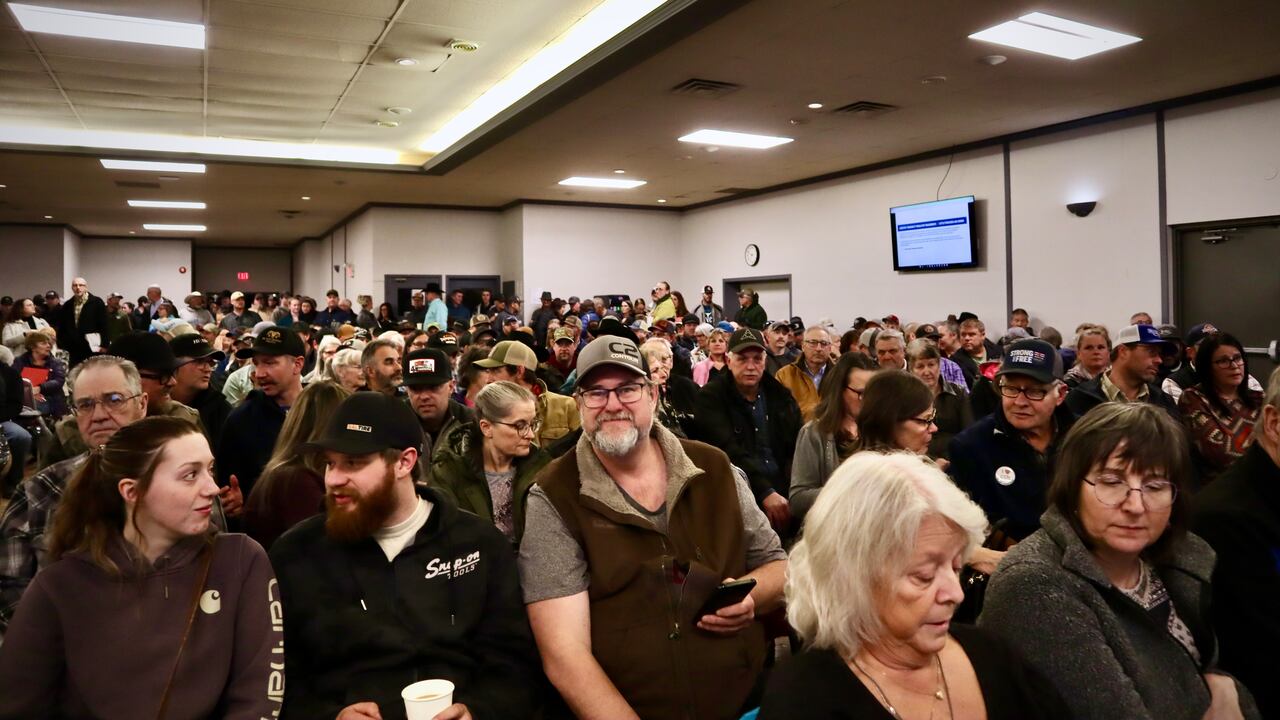
A government agency proposed faster reporting for animal movements. That sounds dull enough to die quietly in a consultation PDF.
It did not.
By January 2026, a Canadian livestock traceability file had turned into a fight about bureaucracy, disease, farm work, surveillance, food, and trust. The Canadian Food Inspection Agency said traceability helps protect animal health, public health, food safety, and market access. Producers and organizers heard something else: another rule, another deadline, another system built far from the barn and dropped onto people who would have to make it work.
The disputed change was simple on its face. CFIA consultation material said the proposal would reduce some reporting timelines for the departure and receipt of animals from 30 days to 7 days. The agency described the aim as better, faster data for disease response and market access.
Then the file escaped its paperwork.
It became a story about whether Ottawa understands rural life. It became a story about whether farmers were being asked to cooperate or being managed. It became a story about who gets to decide what counts as a reasonable burden when the public interest runs through someone else's daily work.
On January 10, 2026, CFIA said it would "not proceed with implementation at this time." The agency tied the pause to the ongoing spread of bird flu in Canada, including record high cases of highly pathogenic avian influenza among birds and detections in dairy cattle. It also said it would keep engaging provinces, territories, national industry organizations, and Canadians.
That pause is the clean administrative fact. The messier question is why a traceability rule could become so politically charged in the first place.
This report is a snapshot of the dispute from late 2025 through February 2026. The companion Claim Ledger separates verified facts, actor claims, interpretations, and open questions.
The boring thing that was not boring
Traceability means being able to follow an animal or food product from one point in the supply chain to another. In ordinary language: if something goes wrong, can officials reconstruct where animals came from, where they went, and who may be affected?
That matters during outbreaks. Highly pathogenic avian influenza is not a vibes-based risk. CFIA describes avian influenza as a viral disease caused by influenza A viruses, affecting mainly domestic poultry and wild birds. The highly pathogenic form can cause severe illness and sudden death in poultry.
In that world, time matters. Movement matters. Missing information matters.
A slow traceability system does not cause an outbreak. A faster one does not magically solve one. But during a disease response, delay is not neutral. If officials need to know where animals moved, a 30-day reporting window and a 7-day reporting window are not the same thing.
That is the regulator's logic. It is not absurd. It is also not the whole story.
The whole story begins when a rule designed for system visibility lands on farms as system workload.
What the proposal looked like from Ottawa
From inside a regulatory office, the proposal probably looked like maintenance. Modernization. Tightening up timelines. Making the database more useful before the next emergency.
CFIA's public rationale was familiar and defensible: traceability supports disease response, food safety, public health, and market access. The consultation summary says the proposal aimed to improve the timeliness and quality of data collected for disease response, including outbreaks, and for market access.
That is the language of preparedness. It asks: what happens if the system needs better information quickly?
This is how bureaucracies often think when they are doing their job properly. They look at a future failure and try to make it less damaging before it happens. They see gaps before the public sees consequences. They build procedures for bad days.
But paperwork has a strange property. It always looks lighter to the person who issues it than to the person who has to carry it.
For producers, the question was not only whether traceability is good in principle. It was: what exactly are we being asked to do, how often, with what equipment, under what penalties, on whose timeline, and for what demonstrated gain?
That is where the file started to change shape.
What it looked like from the farm gate
The source material for this snapshot describes town halls in Alberta in January 2026, including a major meeting in Innisfail and further discussion in places such as Drayton Valley and Stettler County. It also describes petitions and online attention around the issue, though the exact scale of those efforts remains reported rather than independently verified in this package.
The important part is the translation.
CFIA spoke about timeliness and data quality. Producers and opponents spoke about forms, tags, databases, deadlines, compliance risk, older farmers, small operations, and the cumulative fatigue of being told that the next administrative layer is only a small one.
That translation changed the politics. A reporting timeline stopped being a reporting timeline. It became one more proof point in a larger argument about whether rural people are governed with them or over them.
Some actors reportedly said the existing system "worked perfectly." Others argued that CFIA should show where the current system had failed before imposing new burdens. Some framed the proposal as a disproportionate hit to small producers. Others warned of a redundant "double traceability system." The phrase "digital ID for food" entered the picture.
Those claims are not all verified facts. Some remain actor claims in the ledger for exactly that reason. But rhetoric does not need to be legally precise to be politically powerful. It only needs to make people feel that their unease has a name.
"Digital ID for food" is effective because it moves the issue out of the filing cabinet. It turns an administrative system into a symbol. Suddenly the argument is not about whether animal movements should be reported in 7 days or 30 days. It is about surveillance, control, sovereignty, and whether food production is being pulled into a digital governance machine.
That is a much bigger story. It travels faster.
The trust problem
The traceability fight was not just a communication failure. Better wording may have helped, but the problem ran deeper than wording.
Trust has to exist before an explanation can do its work. Without it, even accurate information arrives damaged.
In this dispute, trust appears to have been weak in several ways at once.
First, the process problem: did consultation feel meaningful, or did it feel like a box had already been checked? A process can be formally open and still be experienced as closed. That distinction matters. People can tell when they are being invited to shape a decision and when they are being invited to react to one.
Second, the evidence problem: what counts as proof? Regulators tend to think in probabilities. A disease may spread. Delays may matter. A better system may reduce harm when timing becomes critical. Many producers think operationally. What failed? What problem is this new burden solving? What will it cost in time, equipment, attention, and stress?
Neither side is automatically irrational. They are using different tests.
Third, the burden problem: even a universal rule does not land equally. A large operation with staff, software, and administrative slack may absorb a reporting change differently than a small producer doing the work at the edge of available time. The strongest distributional concern in the source set is not proof of unequal enforcement. It is the recurring claim that smaller producers would feel the rule more sharply.
That claim deserves care. It should not be inflated beyond the evidence. But it also should not be dismissed. Administrative systems often describe equality from above and produce unevenness below.
Fourth, the memory problem: people do not meet a new institution fresh each time. They bring old conflicts with them. The source set refers to prior CFIA disputes, including the BC ostrich culling controversy, as part of the atmosphere around this case. That does not mean one case explains the other. It means institutional memory sticks. Once an agency becomes associated with coercion or indifference in one fight, later proposals may be received through that residue.
That is how a technical file becomes a legitimacy problem.
Why the bigger story won attention
Technical nuance is slow. It asks readers to hold several things in their heads at once: disease risk, reporting timelines, legal text, consultation procedure, data systems, market access, producer burden, and uncertainty.
Outrage is faster.
A phrase like "digital ID for food" does more political work in four words than a regulator can do in four pages. It gives the audience a villain, a trajectory, and a warning. It says: this is not about a form; this is about the future being built around you.
That does not mean everyone using that language is cynical. Some people may have been reaching for the strongest available language to describe a real feeling of distrust. Others may have sincerely believed the surveillance frame. Still others may have recognized that a symbolic phrase can organize attention better than a procedural objection.
Digital environments reward that compression. Consultation documents do not go viral. Moral stories do.
This is the uncomfortable part for institutions: being technically right is not the same as being publicly legible. A policy can have a legitimate public purpose and still lose the interpretive battle. Once people decide the file is really about control, every clarification sounds like management. Every gap becomes suspicious. Every burden becomes evidence.
What CFIA's pause does and does not prove
The January 10 pause matters. It is the main administrative turn in the story.
But it should not be overread.
CFIA said it would not proceed with implementation at that time and tied the decision to the ongoing spread of bird flu in Canada. The statement placed the pause in a real animal-health context. It did not say, in the material reviewed here, that public backlash caused the pause.
So the careful version is this: the pause happened amid visible public controversy, and the official explanation emphasized HPAI pressure and continued engagement. The available material does not prove exactly how much any one pressure source contributed.
That caution is not academic fussiness. It is the whole discipline of the case. If the point is to understand how stories overtake facts, the analysis has to avoid doing the same thing.
What this case reveals
The traceability dispute is useful because it is small enough to follow and large enough to matter.
It sits where food systems actually live: between biology and bureaucracy, between markets and barns, between public health and private labour, between official risk models and local experience.
Food systems are fragile in a specific way. They are not fragile because they are always failing. They are fragile because they must coordinate living things, movement, trade, disease control, and public confidence at the same time. Traceability exists because outbreaks happen and because market access depends on confidence that the system can account for itself when things go wrong.
Democratic systems have their own fragility. They depend on people believing that rules are made for reasons they can inspect, challenge, and understand. When that belief weakens, every technical adjustment becomes available for a larger story about domination or betrayal.
The dangerous zone is where those fragilities meet.
A government agency sees an information gap. Producers see another administrative demand. Political actors see a symbol. Online networks see a story with legs. The public sees fragments. By the time everyone is arguing, they are no longer arguing about the same object.
The lesson is not "explain better"
Explaining better helps. But the lesson is not that agencies need warmer language and nicer diagrams.
The lesson is that governance now includes the narrative environment around the rule. If a policy depends on cooperation, then public legibility is not decoration. It is infrastructure.
That means clearer boundaries between what is changing and what is not. It means showing the evidence for why a burden is necessary before people conclude the burden is the point. It means distinguishing confirmed requirements from anticipated consequences. It means treating small producers' practical constraints as design facts, not public relations obstacles.
It also means taking conspiratorial framing seriously without surrendering to it. Dismissing producers as paranoid would erase real concerns about process, burden, and trust. Treating every surveillance claim as proven would erase the actual disease-response and market-access reasons traceability exists.
The harder task is to hold both truths at once: animal-health preparedness is real, and institutional distrust is real. A good policy has to survive contact with both.
What this is not
This is not a defense of CFIA. The official record shows a real disease-response context, but that does not answer every practical question about implementation or burden.
This is not proof of a coordinated conspiracy. The material reviewed here documents rhetoric, reported events, amplification patterns, and legitimacy fractures. It does not establish a centrally directed campaign.
This is not an argument that skepticism is illegitimate. In low-trust environments, skepticism often attaches to real questions even when it travels through exaggerated frames.
And this is not a verdict on every detail of the traceability proposal. The snapshot still has open questions: the exact line-by-line legal wording, the full before-and-after comparison, the measurable outbreak-response gain, the representativeness of meeting and petition activity, and the degree to which amplification was coordinated or emergent.
The point is narrower and, I think, more important.
A 30-day-to-7-day reporting change became a story about control because the public no longer receives technical governance as merely technical. Every rule arrives inside a weather system of memory, pressure, suspicion, and competing explanations.
That is the case study.
Not traceability as paperwork. Traceability as a warning about how quickly public purpose can lose the room when trust is already thin.
For the evidence map behind this report, see the Claim Ledger.