Pressure Systems edition
El Niño Heat Storms Meet Oil Windfalls
November 9, 2026
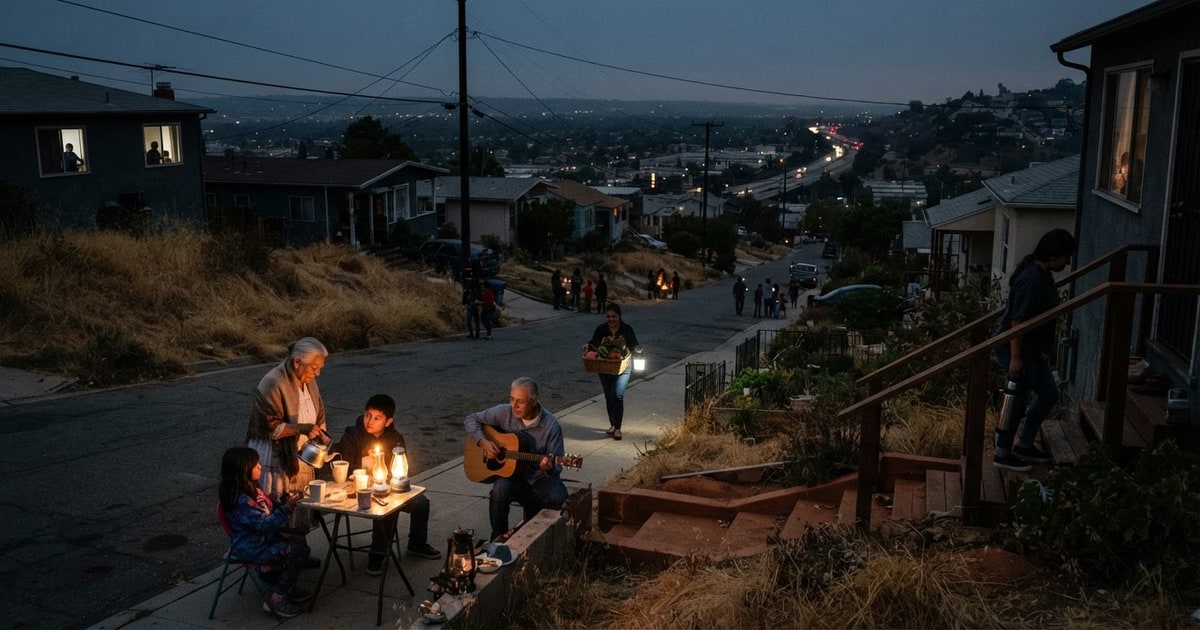
What this edition shows
US oil firms are banking $130bn from the Iran war as household energy bills climb, while the 2026-27 El Niño pushes Bolivia into drought, Indonesia into peat-fire haze, and Europe and Canada into record heat. The physical feedbacks—dry soils and high pressure amplifying heatwaves, weakening Atlantic currents, rising greenhouse gases—are outpacing the institutions meant to respond: Canada has repealed its consumer carbon tax, national climate plans omit AMOC risk, and health systems face heat, smoke, and kidney disease without emergency-scale mobilization.
Reporting and analysis behind this edition 12 sources
-
How US oil firms profit $130bn from Iran war as household bills surge
As energy from the Gulf and Russia take a hit, American oil and gas firms are the big gainers.
-
El Niño 2026-27 as a polycrisis: What happens when health and energy systems fail simultaneously?
Open any news feed from the past few months, and the disasters arrive in a stream: smoke reaching dangerous levels throughout Canada and flash floods in Ottawa, Montréal and Toronto; heat and drought arriving together on every continent. Driven by climate change, these events are happening more ofte…
-
Misinformation won: How divisive politics doomed Canada’s carbon tax
Canada’s consumer carbon tax is dead and buried, repealed in 2025. Given the divisive politics that surrounded the carbon tax, many are probably happy never to think about it again. However, research we published last month offers important lessons about how toxic politics threatens the quality of C…
-
An unexpected feedback loop may be driving mega heatwaves
Dry soil and high pressure can amplify extreme heat, helping to explain why regions like Europe are suffering record-shattering heatwaves much earlier than climate models predicted
-
Bolivia declares state of emergency over El Nino weather pattern
Drought is affecting 78,000 families and has led to loss of over 75,000 cattle, as El Nino due to peak in late 2026.
-
Key Atlantic currents could collapse this century, but the risk is missing from almost all national climate plans – new study
The system of currents that keeps north-western Europe relatively mild is already weakening. (Illustration shows Atlantic surface currents and eddies, with arrows showing the Amoc's warm northward surface flow and cold southward return flow at depth.) Brenden Jongman / NASA and NOAA data / Amoc path…
-
Indonesia’s El Niño-driven peat fires are choking the region – and releasing centuries of stored carbon
Right now, people in parts of Indonesia are inhaling what may be the most polluted atmosphere on Earth. As the historically large 2026 El Niño intensifies, parts of south east Asia have been plunged into an air quality crisis of catastrophic proportions. Smoke from fires has driven concentrations of…
-
Climate change is killing hundreds of thousands – a kidney specialist’s concerns
Climate campaigners highlight the threat climate change poses to human health. New research reveals its growing toll on lives worldwide. Joe Kuis/Shutterstock The evidence that climate change threatens human health has never been stronger. Yet a new report suggests that world leaders are giving less…
-
When the term 'heatwave' is no longer enough
A groundbreaking Reuters investigation explains that massive “heat storms” now “swarm the planet.”
-
Major greenhouse gases rise again to record levels
Levels of carbon dioxide, methane and nitrous oxide in the atmosphere continued to rise in 2025, along with a lesser-known gas with a more powerful warming effect
-
Why the WHO must declare climate change a public health emergency
Across the world, people have felt the impacts of climate change firsthand. The northern hemisphere has had another record-breaking summer season of heat and extreme weather events. The south now faces a summer of heatwaves, flooding, wildfires and droughts. This is driven by decades of climate chan…
-
The worse climate change gets, the harder it becomes to stop it
Wildfire haze turns San Francisco orange, September 2020. hkalkan / shutterstock This year may be seen as a turning point in the climate crisis. The UN has accepted that global warming is going to exceed 1.5°C, while climate scientists have concluded that the rate of warming has effectively doubled…