Pressure Systems edition
Super El Nino and Wildfires Strain Global Water and Shipping
August 24, 2026
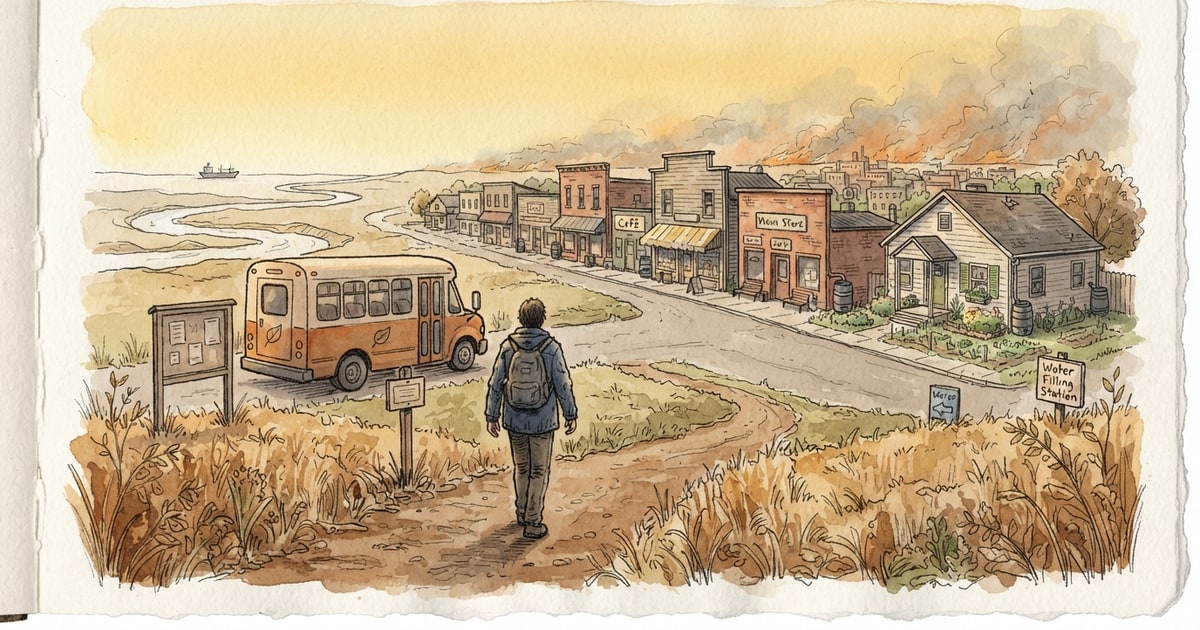
What this edition shows
As a record-breaking super El Niño intensifies, severe droughts, shrinking reservoirs like Lake Mead, and historic wildfires across British Columbia, the US Northwest, and Indonesia are overwhelming public infrastructure and emergency systems. These compounding ecological crises are already forcing trade restrictions across vital transit routes like the Panama Canal while exposing deep vulnerabilities in regional water and land stewardship.
Reporting and analysis behind this edition 15 sources
-
‘Off the charts’ El Niño is already the strongest since records began
Renowned climate scientist James Hansen says the developing super El Niño has already "blown past" previous events with months to go before it peaks
-
The Super El Niño Won’t Fix the West’s Water Crisis
“People have talked about the Colorado River crisis for decades—we’re now in it,” says one expert. “Everyone you talk to is like, ‘Shit, man.’”
-
Super El Niño could lead to mega CO2 emissions from Indonesian fires
Intense fires are already burning in Indonesia, and there could be much worse to come as the Super El Niño ramps up
-
Panama Canal to reduce shipping as ‘extreme’ El Nino approaches
Panama Canal will cut daily transits from 40 to 32 vessels by September 15, risking slower shipping and higher costs.
-
Governments brace for historic El Nino impacts on global weather extremes
Sri Lanka earmarks $14m to fight severe drought, offering families 75 litres of water every two-three days.
-
Greenland meltwater is intensifying European heatwaves
The cooling of the North Atlantic is creating waviness in the jet stream and high-pressure ridging over Europe, a study finds
-
Colorado River water conservation efforts get only halfway to a solution
A view over Lake Mead shows how far the lake's level has fallen. AP Photo/Ty ONeil In August 2026 the nation’s two largest reservoirs, Lake Mead and Lake Powell, both on the Colorado River, hit their lowest levels since they first began to be filled in 1936 and 1963, respectively. The federal govern…
-
As Canada burns, it’s time to rethink what national security means
There are legitimate reasons to consider strengthening Canada’s capacity to respond to military threats. But climate disruption is already among the most persistent and predictable threats that we face.
-
Canada’s wildfire season is taking a heavy toll on First Nations
Thousands have been forced from their homes as Indigenous leaders raise concerns about firefighting resources, emergency assistance and who decides when communities are safe.
-
New satellite images show Europe’s disappearing rivers due to drought
Half of Europe’s land is experiencing drought with rivers running low from the Danube to the Rhine.
-
Water supply for three US states drips down, Lake Mead at record low
The largest reservoir in the United States, located on the border of Arizona and Nevada, just hit a record low.
-
Climate Breakdown is here: Why won’t governments act?
Adapting to an over-heated planet means very little unless it is accompanied by addressing the root causes of climate breakdown.
-
The ‘new reality’ of B.C. wildfires is anything but ‘normal’
Wildfires are ranging across B.C. Fire scientist Mike Flannigan has ideas about how to protect people and the planet — as climate change intensifies
-
‘Unprecedented, dangerous territory’: US north-west reckons with a summer of historic wildfires
Extreme conditions in Washington and Oregon have fueled fast-moving fires, leaving the region draped in toxic plumes – and the danger isn’t over Piles of twisted metal and ashen debris line the cul-de-sacs where the tranquil suburbs of Spokane, Washington, once stood. The scale of devastation from a…
-
Canada’s out-of-control wildfire crisis is cooking up a future nobody wants to live in
Canada’s calm, low-fire summers are gone, cooked away by unchecked fossil fuel burning. Here’s what we’ve replaced them with and where we are headed if we don’t stop feeding the fire weather beast.