Pressure Systems edition
Gut Microbiomes and Hibernate Memories Rewrite Biological Puzzles
August 17, 2026
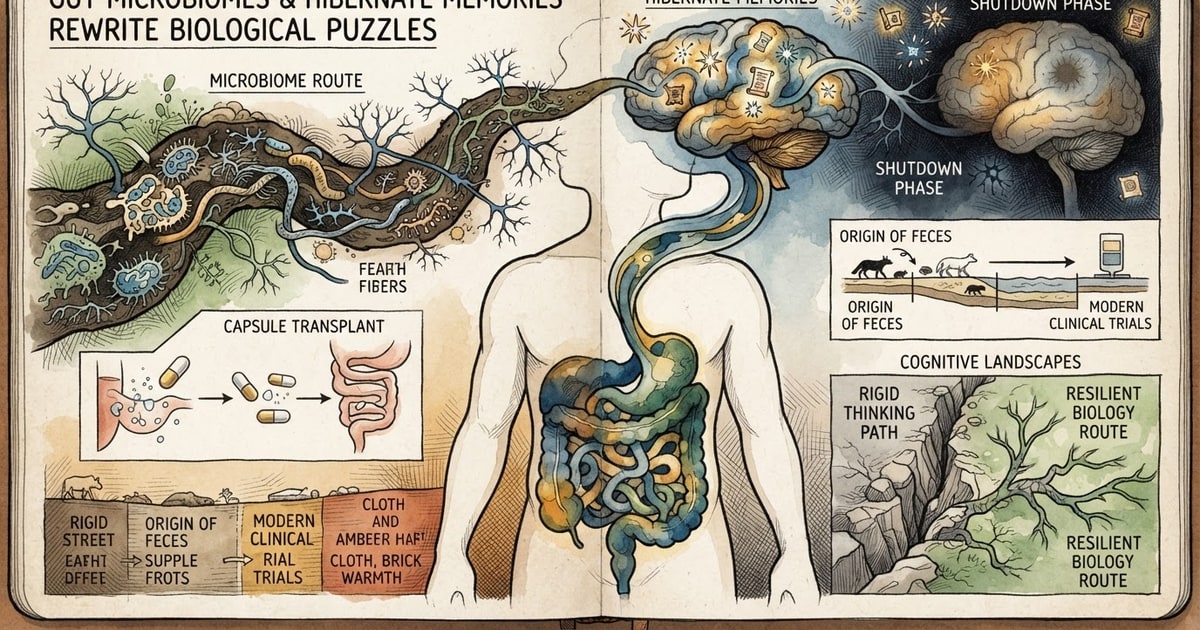
What this edition shows
Clinical trials transplanting faecal capsules to treat peanut allergies and new discoveries linking gut metabolites to Alzheimer's brain barriers reveal the deep physiological power of microbiomes. Simultaneously, experiments showing mice retaining memories after brain shutdowns during hibernation challenge conventional neuroscience and expand our understanding of biological resilience.
Reporting and analysis behind this edition 5 sources
-
Swallowing faecal capsules reduces peanut allergy in six adults
Altering the gut microbiomes of people with peanut allergy using faeces donated from an allergy-free individual improved their peanut tolerance in a clinical trial
-
There’s a New Link Between Gut Health and Alzheimer’s Disease
Researchers found that a metabolite produced by gut bacteria can weaken the barrier that protects the brain and promote changes associated with the cognitive disease.
-
On the origin of feces: how animal poo drove Earth’s greatest evolutionary event
Kimmig & Bicknell / Trends in Ecology & Evolution, CC BY As all children learn, everyone poos. But when did this begin? And what evolutionary and environmental changes accompanied the dawn of dung? Going further, is the evolution of excrement the reason we exist? Our new research suggests the evolut…
-
Leor Zmigrod on why rigid thinking makes us vulnerable to extremism
Leor Zmigrod discusses her research into the link between cognitive style and political extremism.
-
Memories Mysteriously Survive After Brain Shutdown, And Scientists Don’t Know Why
Mice can access memories after hibernation, a state that largely shuts their brains off and reduces synapses, suggesting that memories are stored across shifting neural systems.