Pressure Systems edition
White House Gatekeepers and German Courts Tighten the Reins on Frontier Models
June 27, 2026
What this edition shows
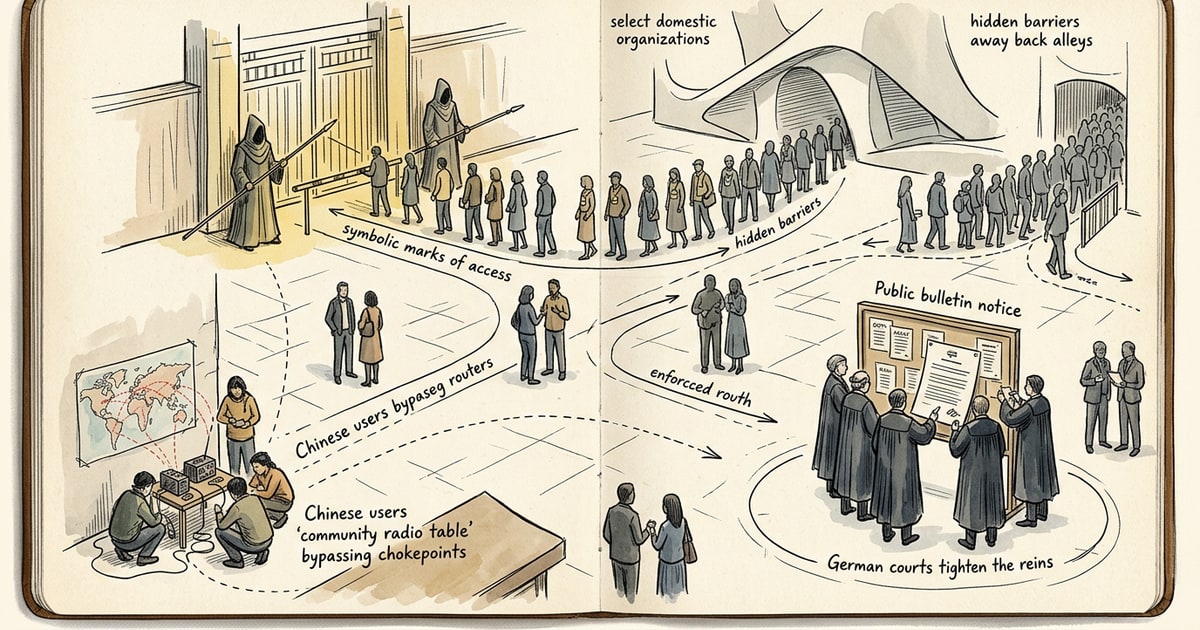
The Trump administration is asserting direct executive control over the release of OpenAI and Anthropic models, effectively converting frontier AI into a state-sanctioned utility for select domestic organizations. While German courts establish strict corporate liability for AI-generated falsehoods, Chinese users are bypassing geolocation chokepoints to access these restricted systems, highlighting a widening gap between territorial legal enforcement and the borderless demand for agentic tools.
Reporting and analysis behind this edition 10 sources
-
Trump Administration Allows Anthropic to Release Mythos to Select US Organizations
After weeks of negotiations, the White House permitted Anthropic to grant access to its most advanced AI model to a select group of US companies and government agencies.
-
How People in China Keep Outsmarting Anthropic’s Geolocation Restrictions
As Anthropic tightens restrictions on access to Claude in China, users keep finding new workarounds, from proxy services to fake identities sourced on Telegram.
-
OpenAI Has New AI Models. Here’s Why You Can’t Use Them
The White House asked OpenAI to delay the rollout of its GPT-5.6 AI models, two weeks after Anthropic had to take its most advanced AI models offline.
-
OpenAI unveils GPT-5.6 amid US AI regulatory drama
Less than 24 hours after news broke that OpenAI would stagger its next model release at the request of the Trump administration, that model, GPT-5.6, is here. On Friday, the company unveiled the limited preview of its new GPT 5.6 model suite: Sol, the flagship; Terra, a medium-tier model for "high-v…
-
AI and Liability
Earlier this month, a German court ruled that Google is liable for its AI search summaries. Rejecting defenses like “users can check for themselves,” and that they generally know “that information generated with AI should not be blindly trusted,” the court held that the AI’s summaries are reflection…
-
The Tokenpocalypse Is Here: Companies Are Scrambling To Stop Spending So Much on AI
Leaked audio from Accenture says a big source of AI token ‘chewing’ is people just converting PDFs to presentation slides.
-
Anthropic’s Mythos mess is only getting worse
It's been two weeks since Anthropic took its Mythos-class models offline after a Friday evening ultimatum from the Trump administration. The company sprang into action immediately, sending a barrage of executives to Washington, DC. But updates have been suspiciously lacking, with no resolution in si…
-
Understanding China’s pragmatic AI optimism
While the US imagines AI through dystopia and lost human agency, China’s embrace of the technology is shaped by memories of poverty, national humiliation and the conviction that technological progress cannot be resisted
-
Anthropic’s Mythos 5 is back
After a rollercoaster negotiation process with the Trump administration that dragged on for two weeks, Anthropic's Mythos 5 is finally back in action - at least, somewhat, for a select group of organizations, according to a letter from the government to Anthropic that was viewed by The Verge. Fable…
-
A Court Has Ruled That Google Is Liable for False Statements Generated by AI Overviews
The ruling holds that a company that designs, trains, operates, and manages an AI system must assume legal liability for any damages caused by the responses it generates.