299: Facebook, Fuel, and the Far Right
Conspiracy and the organization of grievance
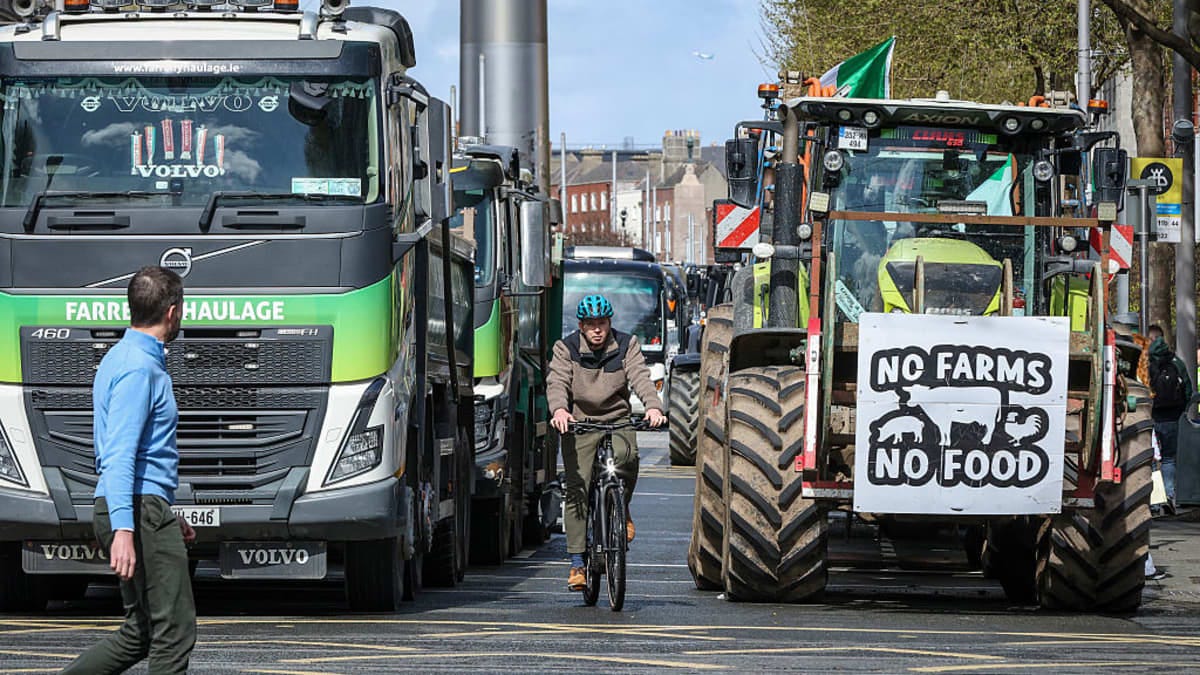
Ireland did not just run low on petrol this weekend. It ran headlong into a political formation that has been assembling in plain sight.
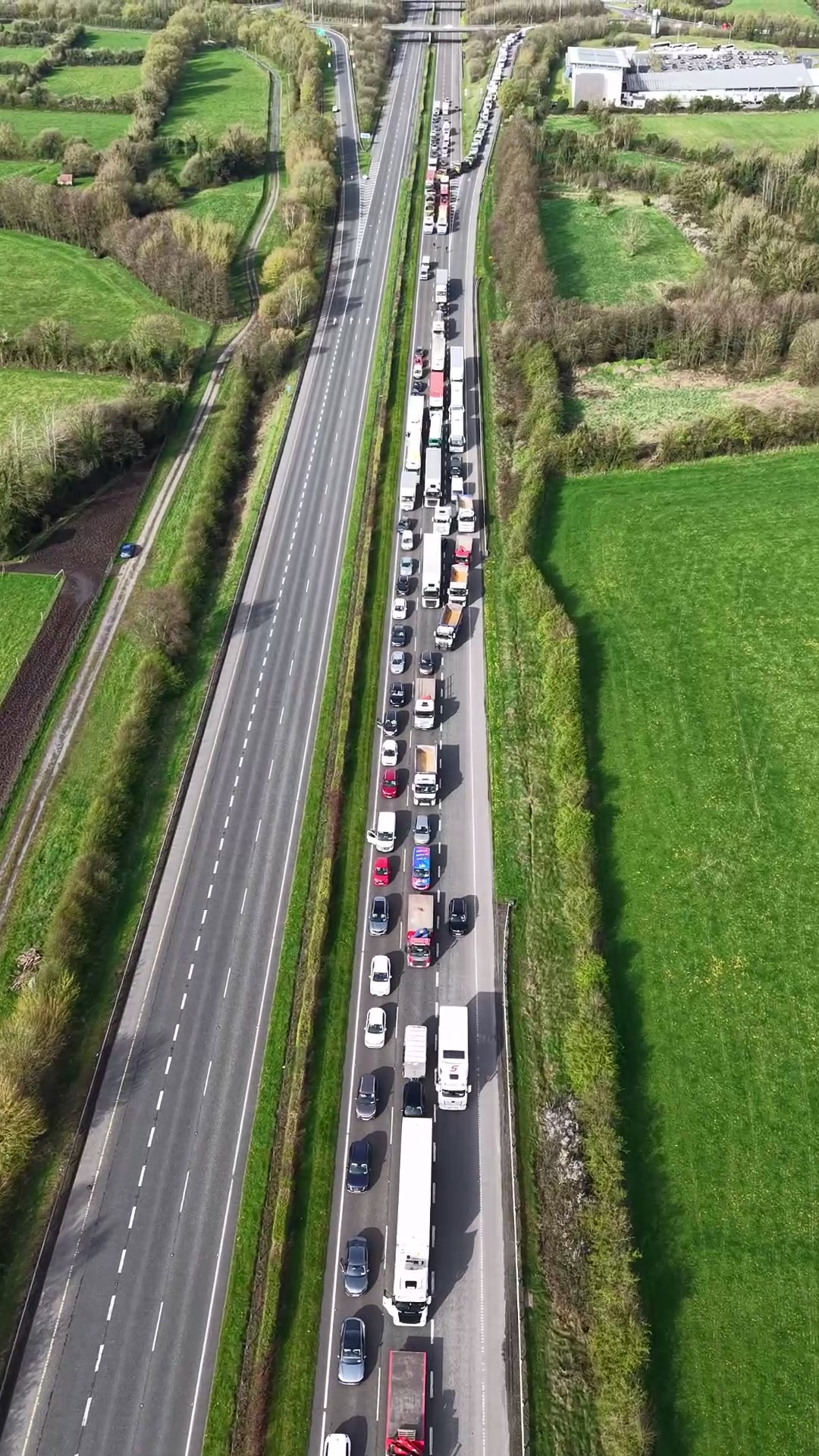
@davidcuddy on TikTok Laois crew turned out today in force . #ireland #laois #fuelprices #makingbigbank
Watch on TikTok
The blockades looked economic. Farmers, hauliers, contractors: people with real exposure to fuel costs, shutting down roads, ports, and depots. Their complaint was legible: diesel has become too expensive to sustain the work that keeps the country moving.
But the force of the protests did not come from fuel alone. It came from the narrative that arrived with it, and that narrative was already cooked.
For several years now, Ireland has been cultivating a dense, informal media system on Facebook and Telegram. What began around pandemic skepticism and local housing disputes expanded through anti-immigration mobilizations and the aftershocks of the Dublin riots. These were not isolated events. They were iterative. Each protest left behind networks, habits, and a shared language of suspicion.
Fuel provided the next anchor.
The pattern is now clear enough to name. A material grievance emerges: real, measurable, immediate. It enters a communication environment optimized not for explanation, but for escalation. Within hours, the grievance is no longer a condition to be understood. It becomes evidence of intent.
Someone is doing this.
Someone is benefiting.
Someone is being replaced.
This is how conspiracy operates in practice: not as fantasy, but as compression. Complex systems are reduced to actors and motives. The ambiguity of markets and geopolitics is replaced by the certainty of design.
In Ireland, that compression has consistently bent toward a broader anti-government and anti-migrant frame. Fuel prices are not just high; they are framed as the result of policy choices that privilege outsiders over insiders. Housing shortages are not just structural; they are narrated as allocation decisions that displace the native population. Each issue becomes a piece of the same story.
This is the product of repetition.
The same accounts, the same groups, the same channels return with each new event, ready to interpret it. They do not need to organize a movement from scratch. They inherit one. What they provide is coherence: a way to make disparate frustrations feel like a single, unified betrayal.
What makes the Irish case instructive is how effectively this coherence travels.
Legacy media is constrained by verification and pacing. Official communication arrives late and qualified. The informal networks move differently. They publish immediately. They assert rather than assess. They circulate images and claims that collapse distance and time, with footage from elsewhere, moments taken out of sequence, anecdotes presented as patterns.
By the time correction arrives, the interpretation has settled.
This is where the far right no longer needs to dominate in numbers. It only needs to dominate in framing. It positions itself as the translator of events, the voice that explains what is really happening beneath the surface. In doing so, it captures movements that begin with broader participation and redirects them toward narrower political ends.
The fuel protests followed this trajectory with precision.
A spike in diesel costs.
A mobilization of affected sectors.
A rapid narrative expansion linking cost to sovereignty, migration, and control.
A tactical escalation targeting infrastructure rather than symbols.
The last point matters. These protests were not content to demonstrate. They intervened in circulation itself, blocking roads, restricting fuel distribution, forcing the state to respond. For several days, they exposed how little disruption is required to produce national effect.
Authority held, eventually. Police and the Irish military cleared blockades. Subsidies were announced. Supply chains resumed.
But authority did not define the meaning of what happened.
That meaning had already been established in the networks that mobilized the protest. And that meaning extended well beyond fuel.
It included a hostility toward government that is no longer episodic, but ambient. It included a xenophobic undercurrent that treats migration as both cause and symbol of broader decline. It included a conspiratorial logic that interprets complexity as coordination.
The participants are not reducible to this framing. Many are responding to genuine economic strain. But movements are shaped less by the motives of individuals than by the narratives that organize them. In Ireland, those narratives have been increasingly set by actors fluent in the language of grievance and suspicion.
There is another tension running through the protests, one that receives less attention because it is less immediately politicizable.
The agricultural model being defended is structurally tied to fossil fuel.
Modern farming, as practiced at scale, depends on diesel for machinery, on synthetic fertilizers derived from natural gas, on global supply chains that assume stable energy costs. When fuel prices rise, this model becomes fragile. Not because it is mismanaged, but because it was built on conditions that no longer hold.
There are alternatives, forms of agriculture that reduce dependence on fossil inputs, that integrate ecological cycles rather than override them. These remain marginal, often unsupported, and largely absent from the discourse that surrounds the protests.
What is being demanded, instead, is the stabilization of the existing system.
This is where the protests begin to collide with the broader context they rarely acknowledge.
We are entering a period of sustained climate disruption. Not as projection, but as accumulation. Each year compounds the last, heat, drought, flood, fire, feeding back into the same systems that determine agricultural output and energy cost. The volatility in fuel markets is not separate from this process. It is entangled with it.
And yet the dominant political response within these protests is oriented toward reversal.
Lower the price.
Delay the transition.
Protect the current model.
There is a logic to this. For those operating within the system, survival depends on immediate relief. But there is also a limit. Relief does not resolve the conditions that produce the volatility. It postpones them.
The dissonance is stark.
A movement mobilized through networks saturated with conspiracy and anti-government sentiment.
A sector dependent on a form of energy increasingly subject to geopolitical and climatic instability.
A set of demands that seek to restore predictability within a system that is becoming structurally unpredictable.
Ireland offers a concentrated example of a wider shift.
Political mobilization is no longer anchored primarily in institutions or parties. It emerges from persistent communication environments that can activate around almost any issue. These environments do not need to agree on everything. They need only to agree that something is wrong, and that authority cannot be trusted to explain it.
Once that baseline is established, each new crisis becomes an opportunity for reinforcement.
Fuel today.
Housing yesterday.
Something else tomorrow.
The specific trigger changes. The underlying narrative does not.
This is what gives the protests their continuity. Not a single ideology, but a durable ecosystem of grievance, capable of absorbing new inputs and producing familiar outputs.
The near future will test this ecosystem further.
Fuel prices will remain volatile, shaped by conflict, transition, and constraint. Agricultural systems will continue to feel that volatility directly. Climate disruption will intensify, adding layers of uncertainty that resist simple explanation.
In that environment, the demand for clarity will grow.
So will the appeal of those who offer it quickly, confidently, and without qualification.
Ireland did not just experience a protest over petrol. It revealed how a particular kind of politics now moves: through networks, through narratives, through moments of disruption that are as much about meaning as they are about material conditions.
The roads reopened.
The story did not.
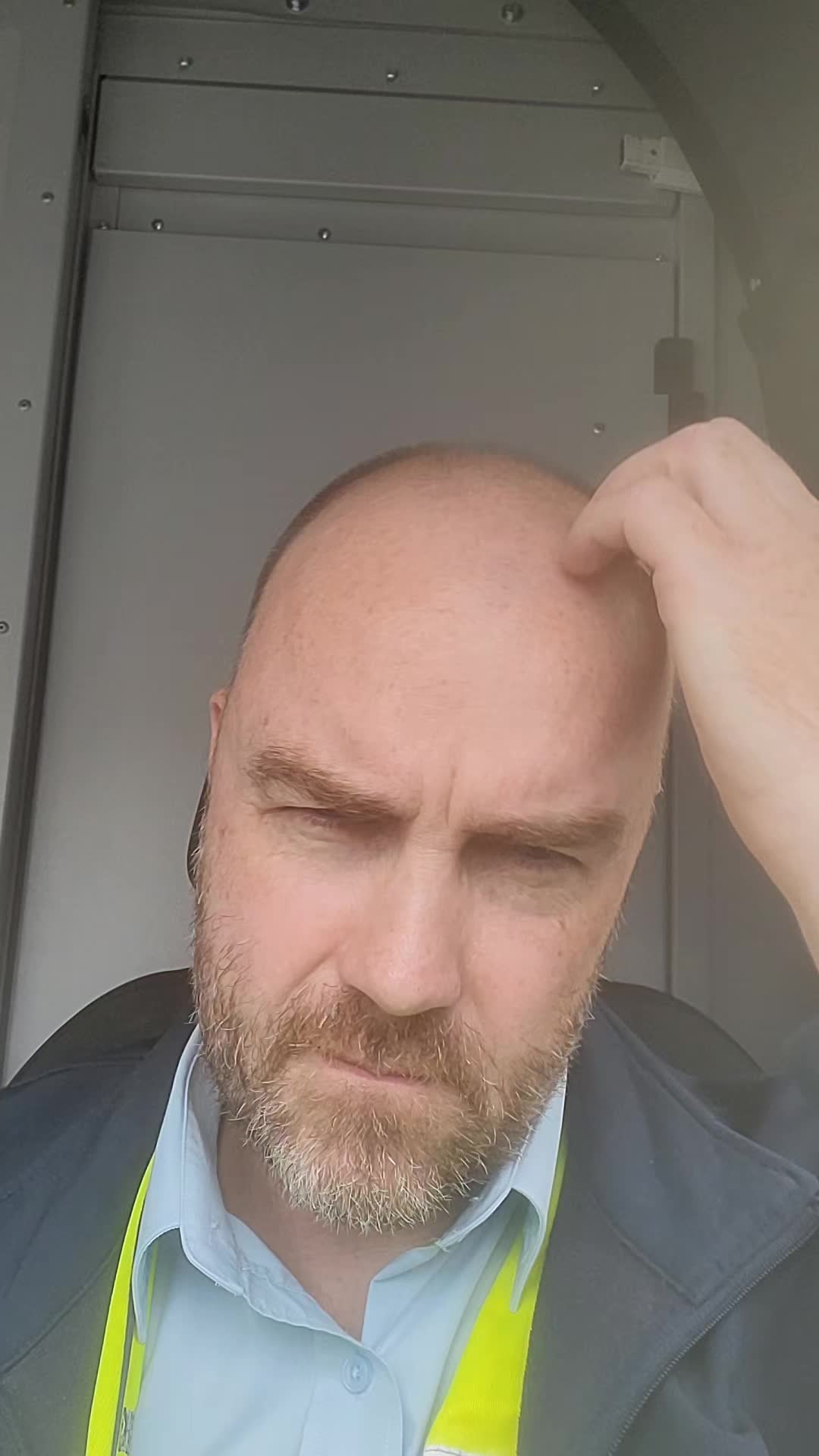
@niall.obrien49 on TikTok Is this a fuel protest, or anti government protest?
Watch on TikTok