297: Hormuz Closes, Mythos Opens
Project Glasswing and the End of the Old Order
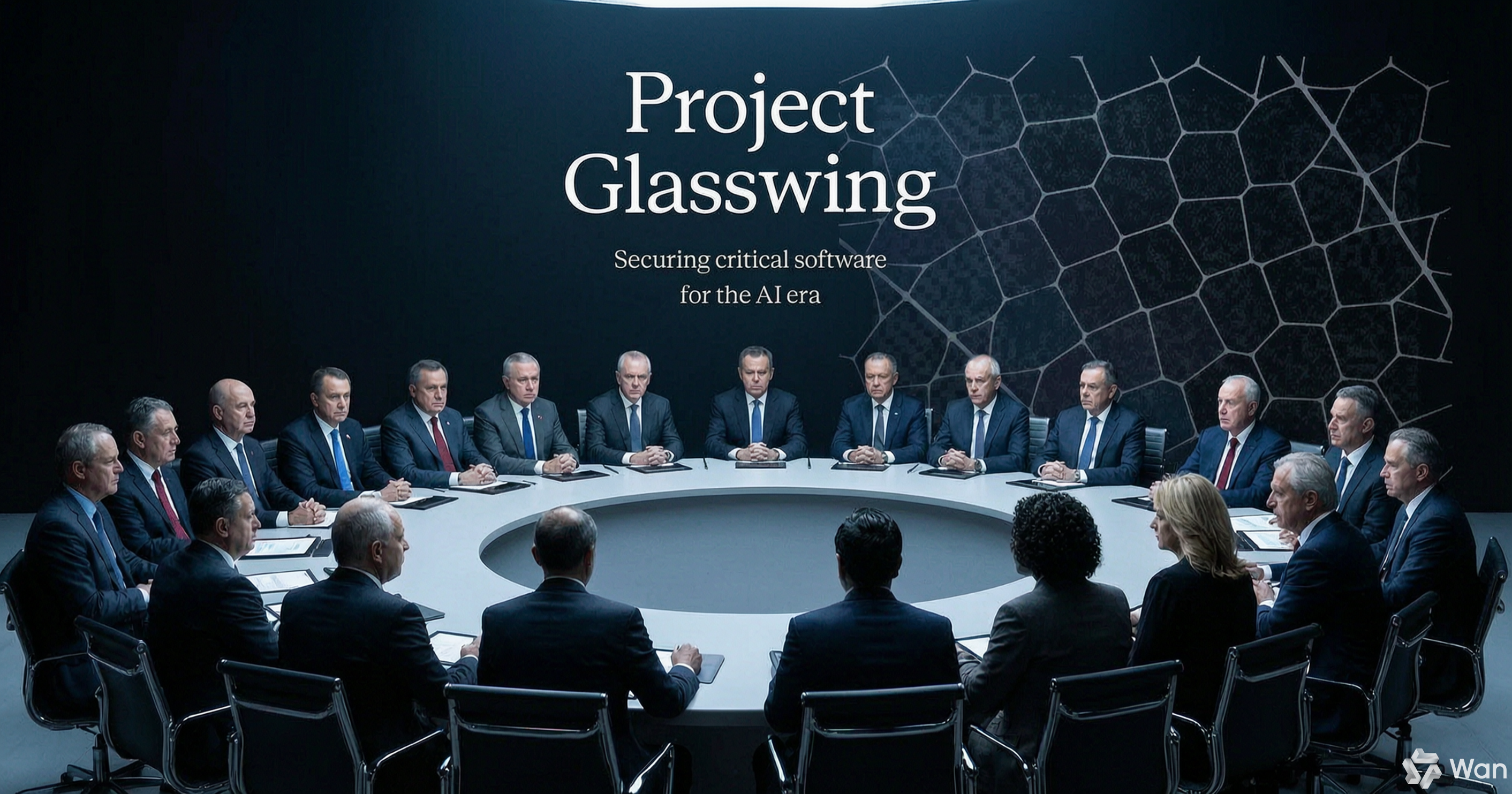
We’re witnessing a moment in history where the transitions between eras, the transition between regimes, is being marked. Incompetence on one end, privileged access and power on the other.
The crisis in Strait of Hormuz offered a master class in incompetence. A military action without a plan. A political gamble without a strategy. An economic crisis without an end.
That crisis may appear to be resolved, or at least reducing in tension, but it is but a shadow of something larger, something more consequential.
If the Google IPO at the turn of this century marked the dawn of the AI era, the release of Mythos marks its ascendance. The regime has arrived, the switch in power and control is becoming complete.
No parade marks its arrival. No declaration of sovereignty. Yet the release of Mythos signals a threshold: the formal beginning of a regime in which authority is no longer derived from control over territory or resources, but from the ability to perceive, audit, and intervene in the hidden layers of code that now structure the world.
Not ironic or unintentional that many of you reading this are only learning what Mythos might be and what Project Glasswing seeks to do.
Mythos is the name given to the latest Anthropic AI model (branded as Claude.ai). It is purported to be so proficient at programming, so competent at hacking, that all existing systems are vulnerable. Or more aptly put, all the vulnerabilities of existing systems are now potentially accessible.
Project Glasswing is the response. A security partnership. A necessary precaution. But look more closely and its shape becomes clearer. This is not merely a toolset. It is a council.
A coalition of the willing, assembled not around shared values, but shared exposure. Microsoft, Google, Apple, the Linux Foundation—entities that compete across every conceivable frontier—suddenly aligned. Not because cooperation has become desirable, but because fragmentation has become untenable. None of them can see enough on their own anymore.
Mythos changes the scale of perception.
Where previous regimes relied on audits, penetration testing, and human expertise constrained by time and cognition, Mythos collapses those limits. It reads entire codebases as terrain. It discovers not isolated bugs, but pathways—chains of vulnerability that were always there, waiting to be seen as systems rather than fragments.
This is what competence looks like when it is no longer human-paced.
And it is expensive.
The cost is not incidental. It is constitutive. Mythos is not priced for broad access because broad access would dissolve the distinction it creates. These systems are not simply advanced—they are exclusive. Their scarcity is part of their authority.
The new temples are not built from stone. They are built from compute.
Entry is gated not by belief, but by capital.
This is where the contrast sharpens. While a consortium of the most powerful institutions on earth quietly arms itself with machine-speed perception, the vast majority of users remain in a different temporal reality altogether. Devices unpatched. Systems outdated. Updates deferred indefinitely, not out of protest, but out of inattention. Illiteracy not as incapacity, but as a condition produced by overload and design.
A civilization that cannot update itself cannot defend itself.
The result is not a clean division, but a stratified landscape. On one side, continuously scanned, continuously patched environments—hardened, monitored, resilient. On the other, vast territories of neglected infrastructure, where vulnerabilities accumulate like dry tinder.
It begins to resemble two worlds occupying the same network.
One governed.
One exposed.
The metaphors that come closest are not technical. They are cinematic and historical. A zombie film, where infection spreads not through intent but through contact. An apartheid system, where access to security itself becomes segregated, enforced not by law but by cost and competence.
Cybersecurity ceases to be a feature of systems. It becomes a feature of class.
And beneath it all, a new kind of war gathers.
The irony is almost too precise. As tensions ease in the Strait of Hormuz—as the old regime negotiates temporary reprieve within its familiar geography—the terrain that now matters begins to ignite. Not with explosions, but with scans. Not with blockades, but with exploits.
This war does not announce itself. It unfolds in the background processes of the world.
Glasswing does not prevent this war. It prepares for it. It acknowledges that once models like Mythos exist, their proliferation is not a question of if, but when. The consortium is not an alliance of confidence. It is an alliance of anticipation.
They are moving first because they assume others will follow.
And they are right.
What emerges from this moment is not stability, but a new distribution of instability. Authority migrates toward those who can see vulnerabilities before they are exploited, who can act before systems fail, who can afford the infrastructure required to maintain that edge.
The rest inherit the lag.
This is how regimes change now. Not through revolution, but through gradients of capability. Not through the seizure of institutions, but through the quiet redefinition of what institutions are for.
The old regime governed through control of flows—oil, goods, information.
The new regime governs through control of insight.
Through the ability to know where the system will break before it does.
And to decide who gets to fix it. And how.

@jessehirsh on TikTok Ronces loves her perch
Watch on TikTok