
293: Authority Without Answers
The End of Knowing, The Start of Inquiry
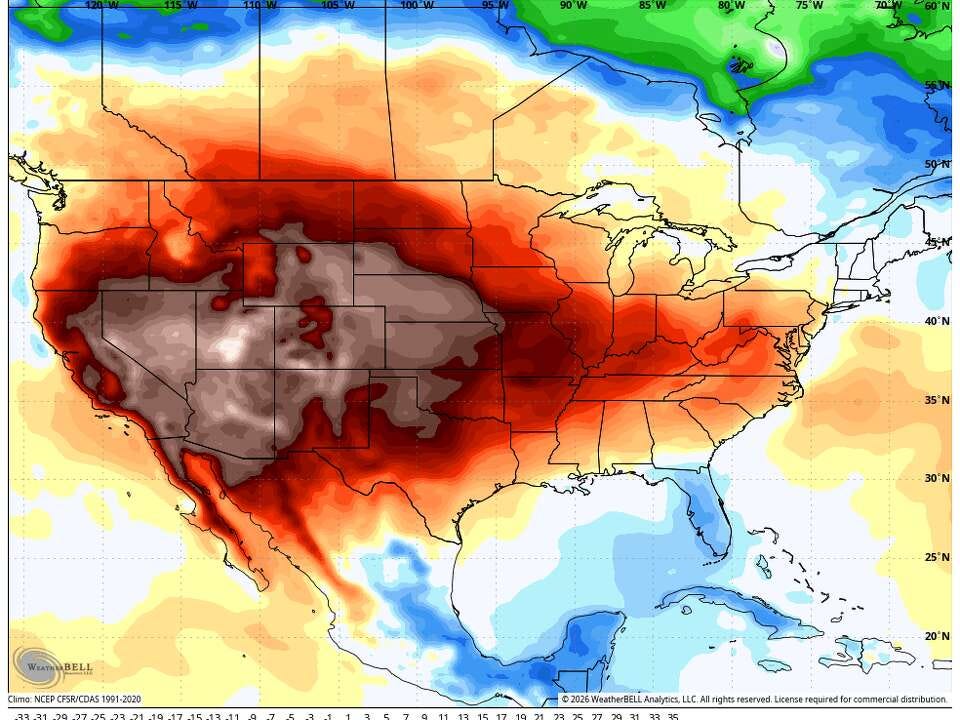
Metaviews is actively building and deploying agents for a range of research and collaborative applications. Consequently expect our publishing tempo to be erratic, yet we remain committed to open source intelligence methods in which progress will be shared here, albeit with relative coherence and completion. Today’s issue is an example of such as it describes the research method we’re using to anticipate impending climate catastrophe… The Metaviews Signal group offers an additional channel for engagement…
The most valuable people in a system used to be the ones who had the answers.
Now that status has shifted to the ones who can query. Who can pose the right questions.
The conditions that made decisive knowledge effective: stable systems, reliable patterns, and slow change, have eroded across nearly every domain that matters. The habits of expertise remain, but the environment they evolved in has moved.
We still perform research as if the conclusion is waiting to be found. We still treat prediction as the highest form of intelligence. We still reward confidence over calibration.
And yet, increasingly and erroneously, the answers comes first. Inquiry follows behind it, assembling justification.
There is another way of proceeding, emerging from an unlikely place.
In machine learning, Andrej Karpathy described a method where an agent is given a real experimental system and allowed to iterate freely within it. It tests variations. It measures outcomes. It keeps what improves performance and discards what does not.
There is no hypothesis to defend. No preferred direction. Only a constraint: the measurement does not move.
Over time, something accumulates. Not an argument. Not a theory. A configuration that works—often in ways no one anticipated.
This method is called autoresearch. Its significance lies less in its technical application than in what it reveals about inquiry itself.
What matters is not having the right answer. What matters is constructing a process that cannot lie about what it finds.
Scaled outward, this becomes a different model of expertise.
Meta-autoresearch treats inquiry as an open system:
A measurement that resists manipulation.
A field of possible directions that remains genuinely open.
A process that allows structure to emerge rather than be imposed.
This is a demanding posture. It removes the comfort of early resolution. It disallows the quiet drift of redefining success to match outcomes. It insists that uncomfortable possibilities remain in play longer than institutions are accustomed to tolerating.
It also changes where authority resides.
Authority begins to move away from those who produce answers, and toward those who can design inquiries that remain honest or clear under pressure.
The expert is no longer the one who knows. The expert is the one who knows how not to decide prematurely.
This shift becomes most visible where prediction has become an industry.
Prediction markets are often presented as the next evolution of collective intelligence. Prices aggregate information. Incentives reward accuracy. The future is rendered as probability, tradable and precise.
This framing carries an elegance that is difficult to resist.
It also obscures how these systems actually operate.
Markets do not eliminate asymmetry. They concentrate it.
Those with privileged access to information, whether within governments, corporations, or intelligence networks, do not simply participate in prediction markets. They position themselves within them. Signals are shaped, delayed, amplified. Information becomes an asset to be managed rather than a reality to be shared.
The price becomes a surface where power expresses itself.
As these signals begin to inform governance: guiding policy, investment, even security decisions, the distinction between foresight and influence collapses. Decisions align with probabilities that are themselves products of strategic positioning.
Prediction becomes a feedback loop.
Not a mirror of the future, but a mechanism for shaping it.
What emerges in response is not a better prediction system.
It is a refusal of prediction as the organizing frame.
Reality preparation begins from a different premise: that in complex, unstable systems, the future does not converge toward a single outcome. It unfolds across a space of possibilities that cannot be collapsed without losing what matters.
The task shifts accordingly.
Not “what will happen,” but “what could plausibly happen, given what is already in motion.”
This is scenario work, but without the usual pretense of resolution. Scenarios are not ranked and reduced. They are generated, tested against reality, recombined. The goal is not to narrow the field but to make it legible enough that response remains possible.
In this process, AI does not function as an oracle. It becomes an engine of variation, producing configurations that human judgment can engage with, select from, and refine. The loop is continuous. Structure accumulates without hardening into certainty.
The result is not prediction.
It is preparedness.
There is an older language for this posture, articulated in the Tao Te Ching.
Wuwei is often translated as non-action, but it is closer to disciplined restraint. The refusal to impose form prematurely on systems whose dynamics are still revealing themselves. Effort remains, but it is redirected, away from forcing outcomes, toward maintaining the conditions in which outcomes can emerge.
Meta-autoresearch formalizes this intuition.
It binds inquiry to reality through measurement, while keeping direction open. It replaces the authority of the answer with the integrity of the process.
This is not a softer stance. It is a stricter one.
It removes the ability to hide behind conclusions.
The implications for authority are already unfolding.
Institutions built on decisive knowledge find themselves increasingly brittle. Their legitimacy depends on answers they can no longer reliably produce. Their responses drift between overconfidence and visible uncertainty.
At the same time, a quieter form of authority begins to take shape.
One that does not promise certainty.
One that does not collapse complexity into clarity too quickly.
One that remains accountable to reality, even when reality refuses to settle.
This authority is harder to recognize. It does not declare itself through conclusions. It reveals itself through the quality of the questions it sustains.
“The End of Knowing, The Start of Inquiry” names the transition.
“Authority Without Answers” names what becomes possible on the other side.
Expertise does not disappear. It mutates.
Into the craft of asking better questions.
Of selecting measurements that cannot be gamed.
Of holding open the space where something real can still emerge.
In a world increasingly organized around bets on the future, this posture begins to take on a different character.
Less like hesitation.
More like resistance.
Not against knowledge, but against the systems that claim to know too soon.

 Tiktok failed to load.
Enable 3rd party cookies or use another browser