
292: Momentum Is Authority
Leadership Without Control as the World Burns
Douglas Adams helped us understand why the answer to life, the universe, and everything is as simple as 42. The answer friends is irrelevant when the real mystery is the question.
For us, here and now, answers have become abundant. Cheap, instantaneous, and increasingly reliable. The bottleneck is no longer access to knowledge, but orientation within it.
In our contemporary environment, the figure of the expert has changed shape.
For most of history, expertise was tied to possession. The expert knew something others did not. Institutions—universities, governments, media—organized themselves around this asymmetry. Authority flowed from the ability to deliver answers with confidence and consistency.
That arrangement is now unstable. Systems capable of generating answers on demand—across domains, at scale—have eroded the scarcity that sustained expertise as a social contract. The question is no longer who knows, but who knows how to ask.
A good answer can resolve a problem. A good question can define the problem, redirect attention, allocate resources, and shape the field of possible answers. Questions decide what counts as relevant, what is ignored, and what becomes urgent. In a world saturated with outputs, the query becomes the lever.
This is already visible in practice. The most effective operators are not those who assert conclusions, but those who frame situations in ways that produce movement. They ask questions that force systems—human and machine—to reorganize around them. They expose blind spots, collapse false choices, or surface contradictions that demand resolution.
Expertise, in this sense, becomes less about certainty and more about navigation.
But this shift does not occur in a vacuum. It is unfolding in a period where the conditions for deliberation are deteriorating.
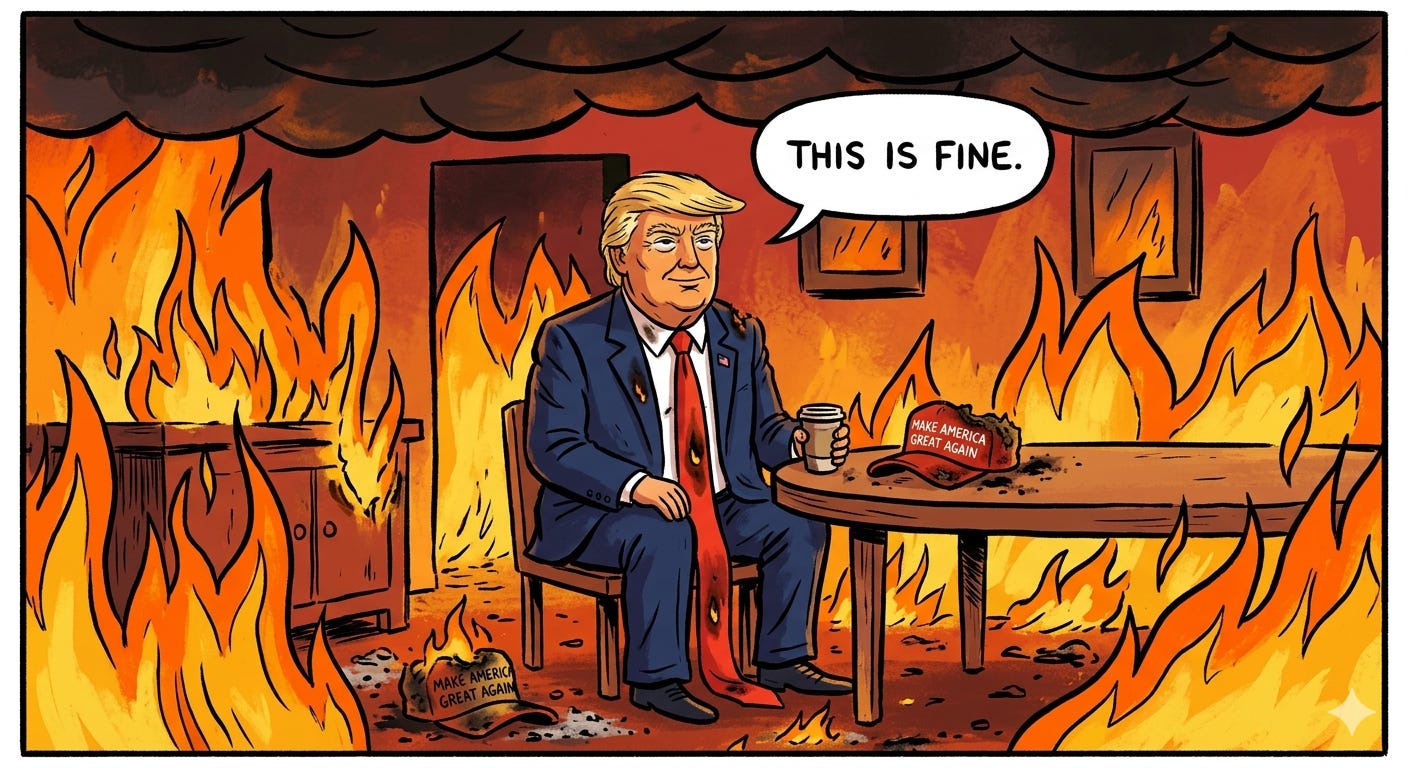
Across multiple fronts—geopolitical conflict, climate instability, economic fragmentation—the space for slow reasoning is narrowing. Events are not waiting for interpretation. They are cascading. Fires, both literal and political, do not pause for analysis.
In such conditions, ideas and policies retain importance, but their temporal relevance shrinks. A well-argued position that arrives too late is indistinguishable from irrelevance. The operational demand is responsiveness.
This is where the question-as-expertise becomes decisive.
When conditions are volatile, the ability to pose the right question quickly—to reframe a situation in real time—enables action. Not perfect action, not controlled outcomes, but movement. And movement is often the difference between adaptation and collapse.
Consider the simplest scenario: an approaching fire. The distinction between optimism and pessimism dissolves. Interpretation gives way to response. The meaningful question is no longer “What does this mean?” but “Where do we move, and how fast?”
The authority in that moment does not belong to the one who explains the fire, but to the one who directs motion.
This begins to clarify a second transformation: leadership itself.
For decades, leadership has been framed in terms of vision, strategy, and control. The leader sees further, plans better, and coordinates resources toward a defined goal. This model assumes a relatively stable environment where foresight can be converted into advantage.
Polycrisis conditions undermine that assumption. When multiple systems are in flux simultaneously, prediction degrades. Control fragments. Strategy becomes provisional.
What remains is momentum.
Leadership, under these conditions, is less about understanding the system in its entirety and more about sustaining directional movement within it. It is the capacity to keep a group adaptive, to prevent paralysis, to ensure that response continues even when clarity does not.
This is where the language of the herd, often used dismissively, deserves reconsideration.
The herd is not a mindless mass. It is a distributed sensing system. Individuals respond to local signals—movement, threat, opportunity—and those responses propagate through the group. The result is coordinated motion without centralized command.
In volatile environments, this configuration has advantages. It is fast. It is resilient to failure at any single point. It allows for simultaneous exploration and cohesion.
What changes in the present moment is that this dynamic is no longer limited to animals or informal human groups. Digital systems—networks, platforms, agents—are increasingly capable of amplifying and structuring these patterns of distributed response.
The risk, of course, is that herds can stampede as easily as they can evade danger. Poorly framed questions, misread signals, or manipulated inputs can produce collective movement toward harm.
This returns us to the stakes of the original shift.
If authority now rests in the capacity to ask questions that generate action, then the quality of those questions becomes a matter of consequence. Not in an abstract sense, but in material terms—where people move, how resources are allocated, what risks are taken or avoided.
The agentic era does not eliminate expertise. It redistributes it. It moves it upstream, from answers to queries, from outputs to orientation.
At the same time, the broader context—geopolitical instability, climate acceleration—raises the cost of poor orientation. Mistakes propagate faster. Windows for correction narrow.
The result is a more fluid, but also more unforgiving, landscape of authority.
Those who can pose questions that align perception with reality, that translate complexity into actionable direction, will exert disproportionate influence. Not because they control others, but because they enable movement when movement is required.
Those who cannot will find that having the right answers, even the best answers, is no longer sufficient.
The deeper implication is not simply that expertise is changing, but that the conditions under which authority is granted are shifting toward immediacy and consequence.
Authority is no longer secured by knowing more. It is earned, moment by moment, by asking what allows others to move.
 Tiktok failed to load.
Enable 3rd party cookies or use another browser