
288: The Ecology of Intelligence
Humans, Agents, and the Future of Authority
There comes a moment in every project when the tools stop behaving like tools and begin to reveal the system they belong to.
That moment arrived quietly.
Over the past few weeks we have been building a series of experiments across several sites and systems.
Each of these began as a website feature.
A page. A tool. A simple interface.
But over time something became obvious: these are not really websites.
They are capabilities.
Once capabilities begin to move, the website stops being the true unit of design.
What emerges instead is a network of agents.
The sites become merely the places where those agents are visible.
This is a subtle shift, but an important one. Because once we are building agents rather than pages, the question is no longer how a website functions. The question becomes how intelligence flows through a system.
And that is where things become interesting.
Most of the infrastructure emerging around agentic computing assumes a single operator: one user surrounded by tools and assistants. A constellation of digital helpers orbiting a single human.
That model does not fit Metaviews.
From the beginning, Metaviews has been more than a publication. It has been an open-source intelligence agency in the broadest sense of the phrase — a platform for events, research collaborations, salons, investigations, and the mobilization of knowledge across communities. Over the years we have attracted a network of unusually thoughtful people: farmers, technologists, journalists, researchers, policy thinkers, weirdos and wise guys who enjoy exploring ideas together.
The tools were never the point.
The collaborative intelligence was.
Agentic computing suddenly makes that collaboration tangible in a new way.
If individuals can work with agents, communities can as well.
But doing so requires a different architecture.
Instead of a single user commanding many tools, we begin to imagine a system where many humans interact with many agents across shared domains of knowledge. Some agents gather signals. Some interpret them. Some deliberate. Some generate narratives or insights. Humans move through the system as collaborators, editors, and investigators.
What emerges from this arrangement begins to resemble a swarm.
Not the chaotic swarm of science fiction, but a governed one.
Humans steward personal agents. Domain agents perform specialized tasks. Shared infrastructure coordinates information flows. Intelligence emerges from the interaction between them.
At one point in this reflection a phrase surfaced that captures the moment rather well: The Agency of Agents — Metaviews and the Birth of a Governed Intelligence Swarm.
The phrase is slightly provocative, but it describes something very real.
The agents in question are not autonomous rulers of a digital world. They are participants in a structured ecosystem of intelligence. Their agency exists within boundaries shaped by human governance, editorial judgment, and institutional responsibility.
Which leads to the second realization.
Once humans and agents coexist in a system like this, the system stops behaving like software and begins to resemble an ecology.
Ecologies are composed of many organisms occupying different niches. Some gather energy. Some transform it. Some regulate the environment. Some distribute resources. Stability emerges from the interaction of many roles rather than the dominance of one.
An intelligence ecology works in a similar way.
Some agents gather signals from the world: crawlers, feeds, monitors, sensors.
Some agents interpret those signals: summarizers, classifiers, analysts.
Some agents deliberate: multi-model panels, structured debates, salons.
Some agents produce outputs: reports, briefings, narratives, speeches.
Some agents interact with the physical world: farm sensors, robotics systems, environmental monitors.
Humans move through this ecology as well.
Some act as editors.
Some as investigators.
Some as observers.
Some as builders.
Some as participants exploring ideas.
And increasingly, some do so while standing in fields rather than offices or living rooms.
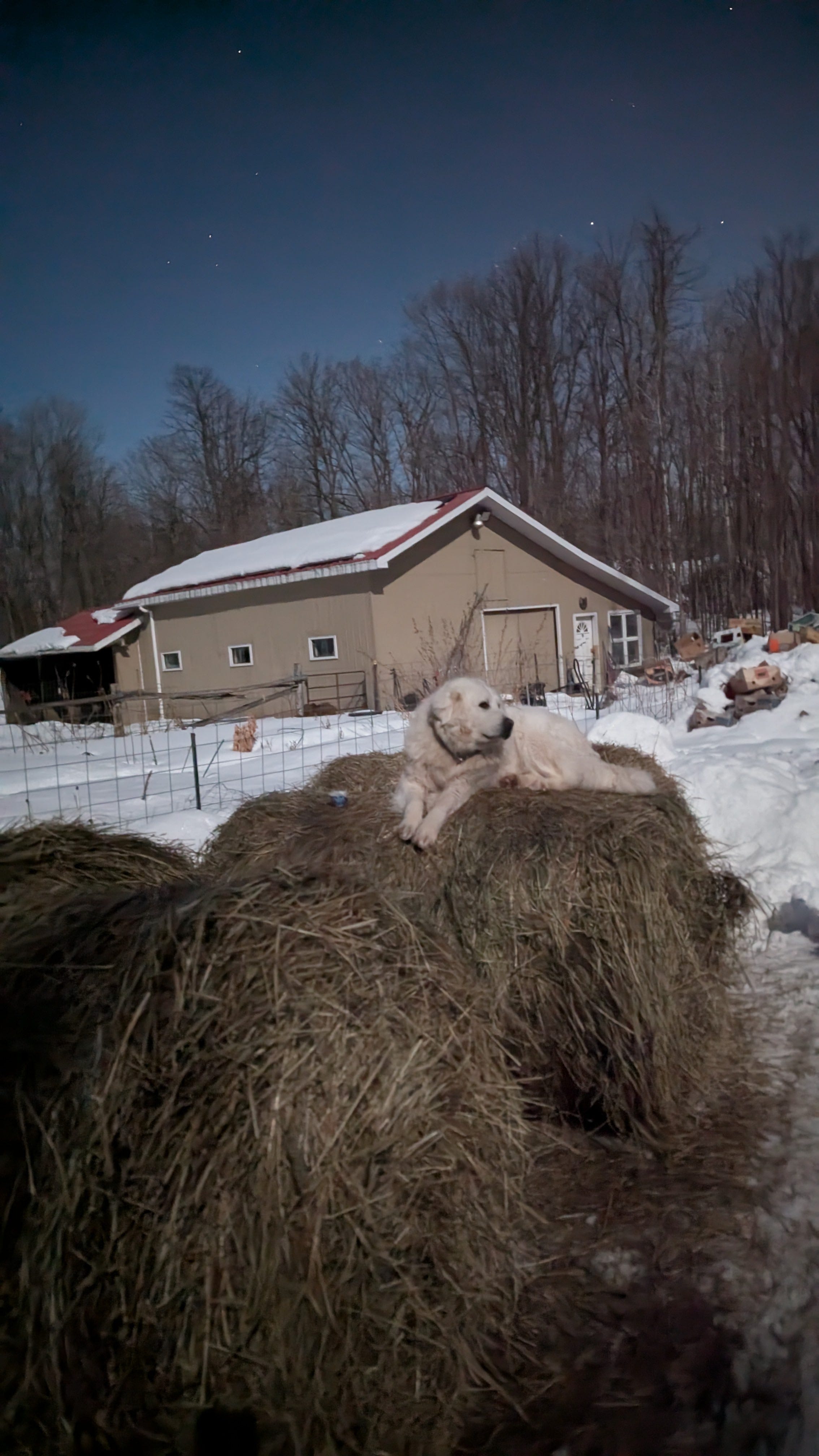
Over the past decade the evolution of Metaviews has also involved a return to the land. Farming has reminded us that intelligence is not merely computational or linguistic. It is embodied. It is ecological. It emerges from relationships with soil, animals, weather, and the biodiversity that surrounds us.
A healthy farm is an intelligence system.
Plants communicate through soil networks. Microbes transform nutrients. Animals reshape landscapes. Farmers interpret signals constantly: the smell of soil, the movement of water, the behaviour of animals, the rhythm of seasons.
None of this intelligence exists in isolation. It emerges from the relationships between organisms.
Digital intelligence systems are beginning to look remarkably similar.
Once humans and agents interact within shared domains, the system behaves less like software and more like a living ecosystem of cognition.
This is where governance becomes essential.
Without governance, a swarm collapses into noise. Signals cascade uncontrollably. Automation outruns accountability. Errors propagate faster than they can be corrected.
With governance, the system stabilizes.
Operational authority maintains the infrastructure and agent capabilities. Epistemic authority—human judgment—determines what knowledge matters. Participatory authority allows collaborators to explore and contribute without destabilizing the system.
In practice this suggests a layered model of participation.
Each human participant interacts with the network through a personal agent. That agent carries preferences, permissions, and memory. It mediates interactions with domain agents responsible for specific capabilities: intelligence gathering, deliberation, analysis, or publishing.
Human collaborators do not need to understand the entire architecture. They simply interact with their agents. Those agents interact with others.
The swarm grows organically from there.
Underneath it all remains a steward responsible for the integrity of the system. Metaviews itself occupies that role: maintaining operational responsibility while remaining accountable to the broader community that participates in its work.
Authority does not disappear in such a system.
It evolves.
For years Future of Authority has explored how authority shifts as technological infrastructures change. Platforms reshaped media. Networks reshaped politics. Algorithms reshaped markets. Artificial intelligence is now reshaping cognition itself.
The next frontier is not merely artificial intelligence.
It is collective intelligence architectures — systems where humans and machines collaborate within governed environments designed to produce knowledge.
What Metaviews is experimenting with is one small version of that possibility. A public laboratory where websites slowly become agents, agents begin to collaborate, and a community learns how to think within a shared intelligence ecosystem.
The technology remains early. The architecture is evolving. Much of what exists today is experimental. The stage we’re using presently is our Signal group chat.
And the direction is becoming clear.
We are moving from tools to agents.
From agents to networks.
From networks to ecologies.
And within that ecology the central question of the Future of Authority returns once again.
Who governs intelligence?
In the years ahead that question will be less philosophical, more architectural.

 Tiktok failed to load.
Enable 3rd party cookies or use another browser