Fools keep insisting that authority should behave like customer service, and then act surprised when they are treated like a consumer and not a citizen. The disgruntled taxpayer is not wrong to feel ignored; they are wrong about who they are speaking to. “My tax dollars,” “they work for us,” “Ottawa won’t listen”—these phrases sound democratic, even empowering, yet they describe a relationship that does not exist.
Governments do not spend taxpayer money in the way households spend income, and public servants are not employees of the public in any meaningful sense. When these fictions collide with lived experience—especially under stress—they don’t produce better civic understanding. They produce resentment, suspicion, and eventually conspiracy.
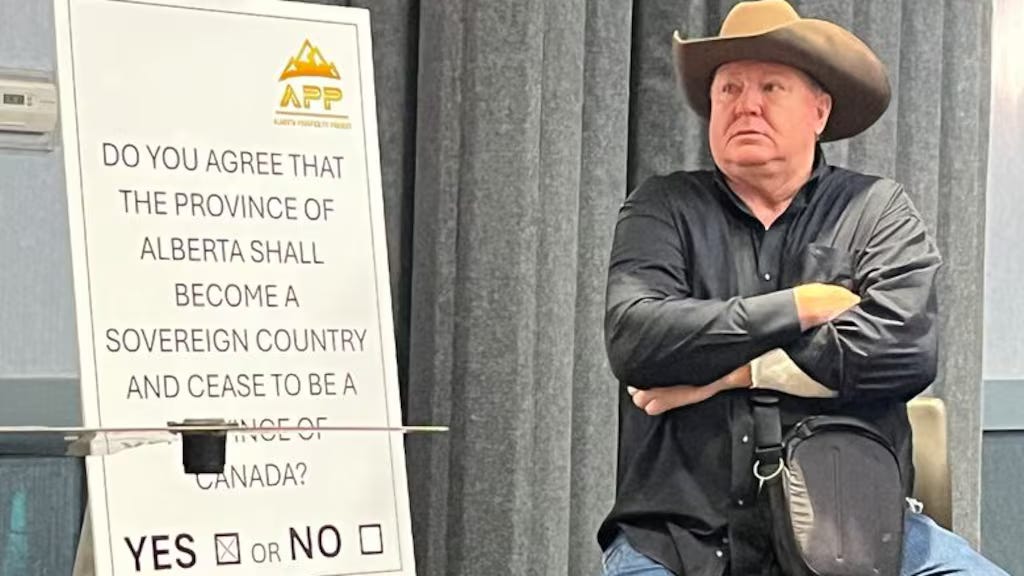
What we are watching unfold across the Canadian prairies, in what we have previously described as a hybrid civil war, is not just polarization or regional grievance, but a deeper breakdown: citizens engaging authority as customers, and turning to conspiratorial explanations when authority responds as structure instead of service.
The language of the disgruntled taxpayer rests on a comforting inversion of power. It imagines the state as dependent, conditional, and accountable in the same way a business is accountable to its clients. Taxes are framed as payment. Services are framed as entitlements. Government workers are framed as staff.
Modern states do not wait for revenue before acting, nor do they operate as collections of individually responsive service desks. Authority precedes contribution. Rules precede consent. Bureaucracies are designed to endure pressure, not absorb feedback.
Taxation, in this context, is not funding. It is a governing instrument. It shapes behaviour, constrains inflation, disciplines markets, and legitimizes extraction. When taxes are imagined as personal deposits into a collective account, every public decision becomes morally individualized. Who paid? Who didn’t? Who deserves? Who is freeloading? Social goods become conditional, and structural problems are reinterpreted as accounting failures. A drought becomes mismanagement. A supply shock becomes waste. A regulatory tradeoff becomes theft.
The second illusion: that government workers are employed by “the people” deepens the problem. Elections do not establish an employment relationship. Citizens do not issue performance reviews, set priorities, or determine procedures. Public servants answer to legislation, hierarchy, and institutional mandate. This distance is the mechanism by which authority maintains continuity and coherence. When citizens are encouraged to believe otherwise, every constraint feels like insubordination and every adverse outcome feels personal.
This is the emotional terrain on which conspiracy thinking thrives. Conspiracy does not emerge from ignorance alone. It emerges from a violated expectation. If authority is supposed to respond like customer service, then silence can only mean malice. Complexity becomes cover. Procedure becomes excuse. Delay becomes sabotage. Conspiracy narratives restore a sense of agency by replacing systems with villains and ambiguity with intent. They offer answers where authority offers none.
In the Canadian prairies, this dynamic has become politically combustible. Farmers, energy workers, and rural communities are under real and compounding pressure: climate volatility, market concentration, debt exposure, infrastructure fragility, and regulatory churn. These pressures are structural, but they are experienced personally.
When appeals to the state fail to produce immediate relief, frustration does not turn inward toward institutional design. It turns outward toward imagined enemies. Ottawa becomes an occupier. Expertise becomes betrayal. Regulation becomes punishment. Conspiracy fills the gap left by a state that was never designed to explain itself in human terms.
This is why the conflict takes the shape of a hybrid civil war rather than a conventional political dispute. There is no single demand to negotiate, no policy lever to pull that would restore legitimacy. What is being contested is not a decision, but a model of authority itself. Hybrid warfare exploits this confusion by amplifying grievance, hardening identity, and detaching citizens emotionally from shared institutions. The goal is estrangement.
Attempts to debunk conspiracies fail because they address the wrong problem. The issue is not that people lack correct information. It is that they have an incorrect theory of governance. As long as authority is framed as customer service, conspiracy will remain more emotionally satisfying than civics. It answers a call that authority was never meant to pick up.
The danger is not merely alienation, but withdrawal. When citizens stop believing authority is real, yet continue to believe it should be personal, they do not demand reform. They look for substitutes. Movements, myths, and enemies rush in to occupy the space where understanding should have been. The result is not democratic renewal, but a politics of perpetual grievance, primed for manipulation.
Authority is not customer service. It never was. Until we reckon with that, we will keep mistaking structural distance for betrayal, and confusing our frustration with proof that someone, somewhere, must be conspiring against us.