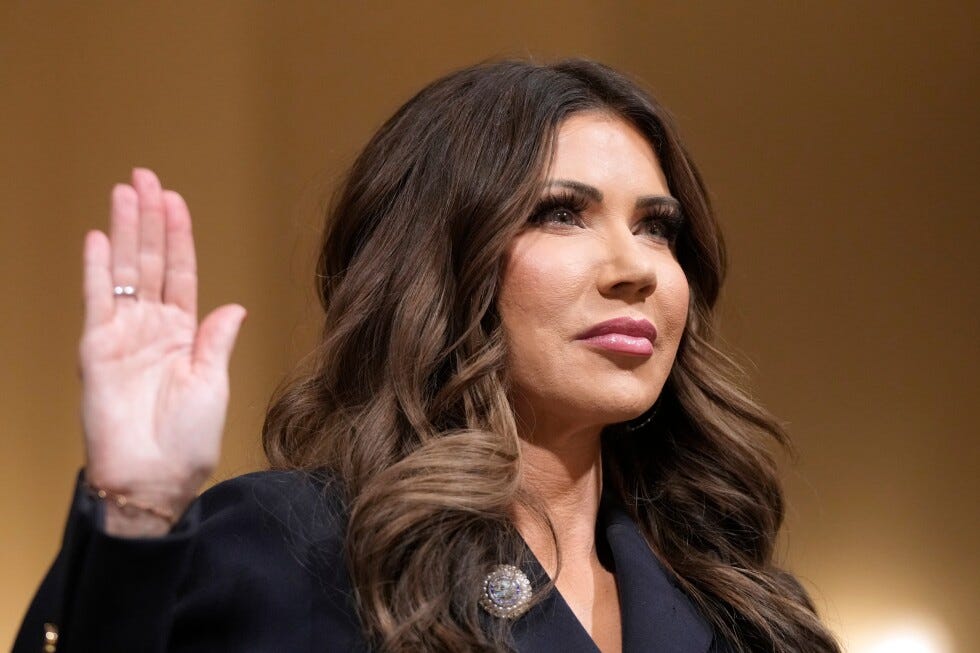
The face has always been political, but rarely has it been governed so intimately. It is our primary interface with power: where trust is inferred, competence projected, legitimacy granted or withdrawn in a fraction of a second. Faces decide who is listened to, who is believed, who is hired, who is dismissed, who is deemed credible or disposable. In an age defined by constant visibility—video calls, biometric systems, social feeds, surveillance—the face has become a managed surface. Botox enters this landscape not as vanity or excess, but as infrastructure: a technology that stabilizes appearance, suppresses evidence of strain, and renders the body legible to systems that reward smoothness, composure, and control. Poison, perfected, becomes not an aberration but a feature of how authority now settles under the skin.
Botox is often discussed in personal terms: confidence, self-care, choice. That framing is incomplete. What matters politically is not the individual decision but the environment that makes certain decisions predictable, rewarded, and difficult to refuse. When a neurotoxin is routinely injected into healthy bodies to meet social and economic expectations, the question is not why individuals comply, but why compliance has become rational. No mandate is required. No law is passed. The pressure operates through norms, markets, and visibility. This is power that works best when it never needs to announce itself.
The language surrounding cosmetic intervention performs a crucial function. Harm is reframed as maintenance. Risk becomes optimization. Intrusion becomes routine. The medicalization of conformity does not deny danger; it domesticates it. This is not unique to cosmetics. It is a broader pattern in late-modern societies where bodies are expected to absorb the costs of system stability—through pharmaceuticals, wearables, productivity aids, and wellness regimes—while institutions remain formally neutral. Authority migrates inward. Governance becomes something people do to themselves.
This shift was anticipated long ago by Michel Foucault, who described a form of power that no longer relies primarily on force, but on self-regulation. Individuals learn the rules and apply them internally, adjusting posture, tone, affect, and now muscle movement in anticipation of judgment. Botox fits cleanly into this logic. It does not command obedience; it trains stillness. It does not enforce silence; it erases visible dissent in the form of stress, fatigue, anger, or age. The frozen face is not merely aesthetic. It is disciplined.
There is also a temporal dimension. Wrinkles are records. They index time, labor, worry, joy, grief. To erase them is to erase evidence that time has passed unevenly, that life leaves marks. In cultures obsessed with youth and productivity, aging becomes a liability to be managed rather than a collective condition to be accommodated. This aligns with what Theodor Adorno described as administered life: existence shaped to meet the needs of systems rather than lived according to human rhythms. The face, in this sense, is no longer expressive; it is optimized.
Gender sharpens the analysis. The demand for facial management is not evenly distributed. Women and feminized professions bear the brunt of aesthetic discipline, particularly in sectors where emotional labor, credibility, and visibility are monetized. When refusal carries social or economic penalties—lost work, diminished authority, perceived incompetence—choice becomes conditional. This is how contemporary coercion operates: not through threat, but through consequence. The system does not punish noncompliance directly; it simply withholds rewards.
It is important to resist easy moralism here. Humans have always modified their bodies. Ritual, adornment, scarification, makeup, and surgery long predate modern capitalism. Botox is also used therapeutically, relieving migraines and muscular disorders. Not every intervention is submission, and not every user is coerced. Treating all bodily modification as authoritarian collapses the distinction between expression and compliance, play and discipline.
But patterns matter more than exceptions. When a society normalizes the ingestion of toxins to maintain employability, credibility, or social acceptability, something structural is happening. The face becomes a site where political economy, technology, and culture converge. This is not about fascism as a historical regime. It is about authoritarian function: systems that require conformity without issuing commands, obedience without ideology, sacrifice without recognition.
Fascist aesthetics historically emphasized idealized bodies, uniformity, and the suppression of weakness or decay. Contemporary systems achieve similar ends through markets and medicine rather than spectacle and force. The result is softer, more palatable, and harder to contest. There is no villain to overthrow, no law to repeal. There is only a diffuse expectation that one will manage oneself appropriately.
The danger is not the needle. It is the normalization of bodily intrusion as a moral obligation. Once harm is reframed as responsibility, resistance appears selfish. Once optimization becomes duty, refusal looks negligent. This logic does not stay confined to faces. It extends to mental health, productivity, fertility, aging, and emotion itself. The body becomes a buffer that absorbs systemic stress so institutions do not have to change.
Seen this way, Botox is less a cause than a signal. It reveals how authority now operates beneath the threshold of politics, embedding itself in routines, preferences, and self-perception. The face is not just how we are seen. It is where power learns to live comfortably, quietly, and without opposition.
That is the politics of the face. Not tyranny imposed, but compliance perfected.

Tiktok failed to load.
Enable 3rd party cookies or use another browser