
269: The Future of the Canadian Auto Industry is in the Commons
The Commons of Autonomy
This issue is adapted/inspired by a presentation I gave last week on The Commons of Autonomy, that envisions a public Canadian, open-source autonomous vehicle ecosystem.
Over the last 48 hours, Trump has doubled down on a simple message: the U.S. doesn’t “need” the USMCA, and companies should bring production back to American soil. If you’re Canada, you can read that as a threat. Or you can read it as the clearest signal you’ll ever get: the continental auto model is ending.
So let’s stop lamenting the loss and start designing the replacement.
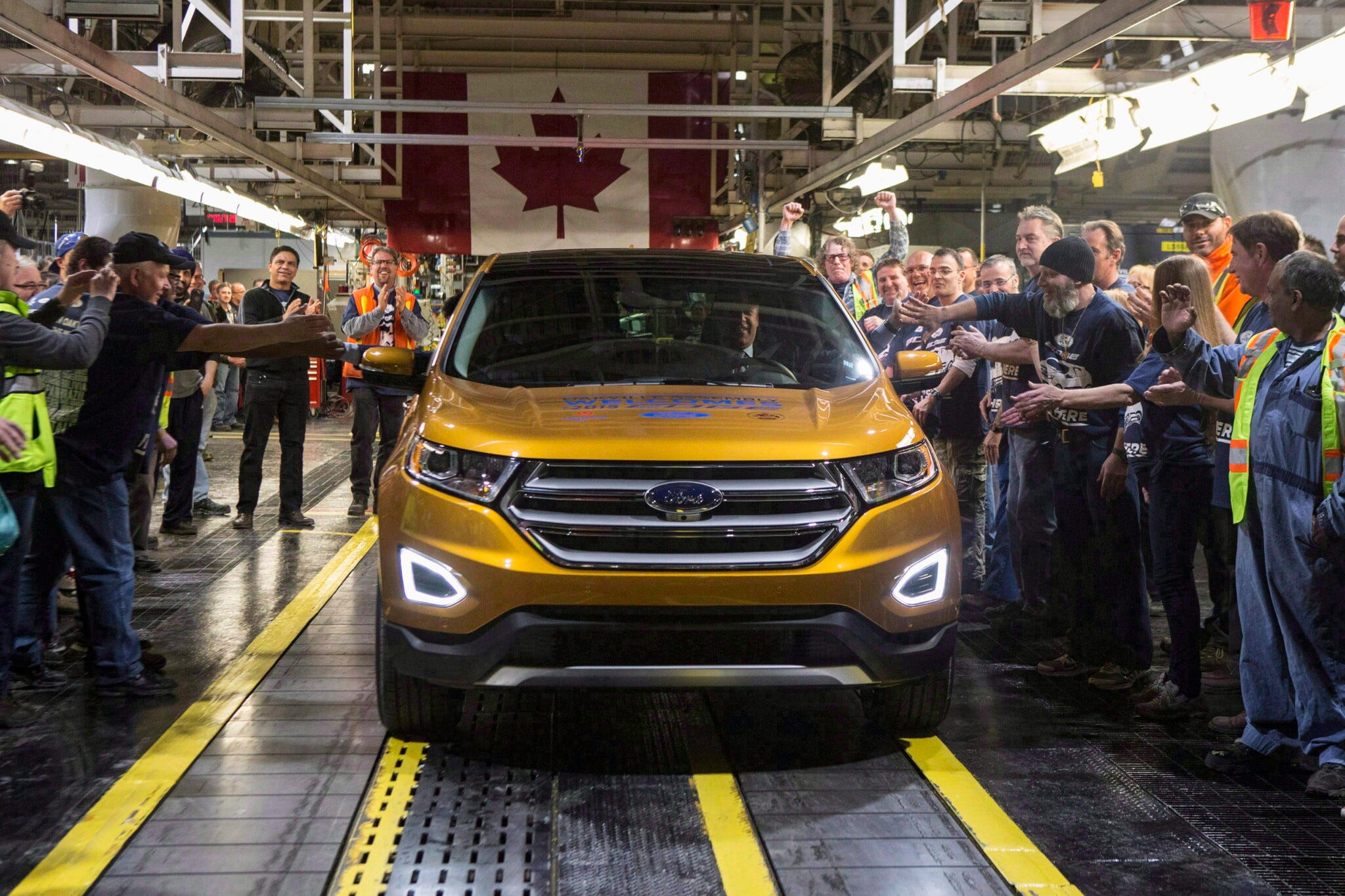
Canada still assembles a lot of vehicles, over 1.31 million light vehicles in 2024, across the familiar lineup of OEMs (Ford, GM, Honda, Stellantis, Toyota). Ontario’s pitch is that it’s already positioning itself for the EV transition, including battery supply-chain investments.
But the real asset isn’t a logo on a plant. It’s the dense ecosystem: skilled trades, tool-and-die, parts suppliers, logistics, engineers, and the culture of making. Trump’s posture puts that ecosystem at risk because it increases “policy volatility” as a permanent condition. Ford’s CEO is now publicly pleading for stability, because the North American system is deeply interdependent.
Let’s move past the rhetoric, brand names, and focus on the ecosystem.
The commons: a post-OEM industrial strategy
Here’s the pivot: treat vehicles like critical infrastructure, and treat the underlying technology stack the way we treat the internet.
The Autonomous Vehicle (AV) commons is not one company. It’s a shared, open set of building blocks:
An open vehicle architecture (chassis + powertrain interfaces), an open software stack (control, safety, autonomy, telematics), open standards for sensors and drive-by-wire components, and a licensing model that allows domestic manufacturers, big and small, to build compatible vehicles without paying rent to a single gatekeeper.
Why autonomy matters here isn’t “robot cars.” It’s software-defined vehicles: the fact that the value (and control) is moving up the stack into code, data, and update channels. If Canada doesn’t own any meaningful layer of that stack, it doesn’t own the industry, no matter how many cars it assembles.
A Canadian AV commons would let Canada do something it rarely does: keep industrial capacity even if foreign OEM strategies shift. Plants can be retooled; supplier networks can be repurposed; talent can flow into new domestic firms, if the platform is shared and the market is guaranteed.
The demand side: fleets, farms, and public procurement
A credible open-source domestic industry doesn’t begin by trying to outcompete Ford on consumer sedans. It begins where procurement is concentrated and needs are specific:
Municipal and provincial fleets (maintenance trucks, snow, service vehicles)
Transit-adjacent vehicles (shuttles, last-mile, paratransit)
Commercial and industrial fleets (delivery, utilities)
Agricultural and rural vehicles (work EVs, farm-duty platforms, off-road autonomy)
These buyers care less about brand mythology and more about uptime, repairability, parts availability, and lifecycle costs. An open platform can win here fast, because openness makes local maintenance and local upgrades possible.
That’s how you bootstrap an industry: guaranteed buyers, standardized parts, and continuous iterative improvement. The way mature manufacturing ecosystems actually grow.
The China–EV tariff knot: Canada’s bargaining chip and Canada’s trap
Canada’s 100% tariff on Chinese EVs (introduced in 2024) helped lock Canada tighter to U.S. industrial policy. China responded with trade pressure, including tariffs hitting Canadian canola and pork, which has become a live political and economic pain point, especially on the Prairies.
And as of this week, Ottawa is trying to thaw relations, because China has leverage, and Canada needs options. So what happens if Canada needs to remove or reduce EV tariffs as part of a deal to get relief on canola?
If Canada simply lifts tariffs with no plan, it’s surrender. But if Canada lifts tariffs while launching an AV commons with procurement commitments and domestic assembly requirements, then Chinese EVs become a pressure valve for affordability (and climate targets) while Canada builds industrial sovereignty at the platform layer.
The non-obvious move is this: separate “vehicle affordability” from “industrial dependence.” The commons lets Canada do that. It makes the domestic value proposition repairability, interoperability, and local adaptation, not just the retail sticker price.
Time to Build the Canadian Mobility Commons
If we were serious, we’d treat this as a national project on the scale of aerospace or telecom: because it’s about sovereignty, not just jobs.
A workable path looks like:
Launch a Canadian Mobility Commons consortium (suppliers, unions, universities, municipalities, Indigenous governments, fleet operators, and maker/manufacturing SMEs). Use public funding not for one corporate champion, but for shared standards, safety certification pathways, and reference designs.
Then use procurement to create a home market: mandate that a growing percentage of public fleets must be commons-compatible (open interfaces, repairable, domestically serviceable), and that software update channels and telemetry governance meet Canadian public-interest rules.
This is how you stop being a branch plant: you make the platform public, and you let private firms compete on implementation.
Trump can say the USMCA is “irrelevant.” China can squeeze canola. The lesson in both cases is the same: when your prosperity is routed through other people’s chokepoints, you’re living on borrowed authority.
Canada’s future auto industry won’t be saved by better lobbying. It will be saved by owning the stack, starting with an open platform and a guaranteed domestic market.
If production is going to move, let it move. What we need to keep, what we need to build, is the capacity to make vehicles without asking for permission.
Tiktok failed to load.Enable 3rd party cookies or use another browser