
261: When the AI Bubble Bursts
What Power Looks Like When the Hype Collapses
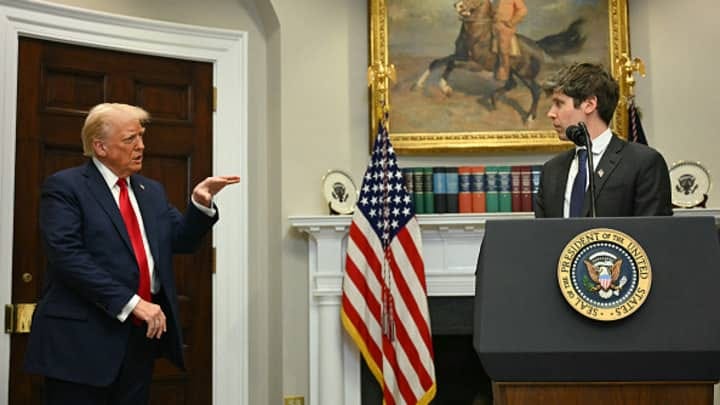
We’re all waiting for the AI bubble to pop. Yet who is asking what that pop would actually mean?
As 2026 approaches, the question of whether artificial intelligence is overhyped has become a kind of ritual. It appears in headlines, investor calls, policy panels, and dinner-table arguments. Yet the conversation rarely advances. Instead, it circles endlessly between two loud, confident camps whose certainty masks a shared confusion. The result is a public debate that feels intense but goes nowhere, even as authoritarian politics and ecological breakdown accelerate in plain sight.
The industry boosters have driven much of this paralysis. What began as legitimate excitement around machine learning has hardened into a culture of exaggeration so extreme that it undermines its own claims. Every release is framed as a breakthrough. Every deployment is described as unavoidable. Institutions repeat the language of inevitability, often without the internal capacity to evaluate what they are adopting or why. When AI systems fail to deliver promised productivity gains, when errors and hallucinations persist, and when costs quietly mount, trust erodes. The gap between rhetoric and lived experience widens. Hype does not persuade indefinitely; it exhausts attention and corrodes legitimacy.
Opposing this are the doom-oriented critics, whose arguments often travel under the banner of ethics and humanism. Some of this critique is necessary. Much of it, however, rests on unexamined assumptions about intelligence, cognition, and human exceptionalism.
AI becomes a stand-in for deeper anxieties about automation, deskilling, and the loss of cognitive privilege. In its more troubling forms, the critique reproduces ableist hierarchies about what counts as “real” thinking and whose intelligence deserves protection. Fear of the technology blends with older impulses to police difference, rank minds, and defend status.
Despite their hostility toward one another, both camps share a defining weakness: limited understanding of the tools they argue over. The loudest voices rarely grasp how contemporary AI systems are built, what they can and cannot do, or how dependent they are on energy, data, labor, and institutional context. AI is treated as an autonomous force rather than as an assemblage embedded in political economy. The debate becomes theatrical rather than analytical, driven by symbols instead of systems.
This is where the fixation on a bursting bubble obscures more than it reveals. Even if investor enthusiasm cools or valuations collapse, the underlying dynamics shaping our world remain. Authoritarian movements continue to expand their reach through surveillance, automation, and information control. Climate systems continue to destabilize, demanding unprecedented coordination, foresight, and adaptation. Against this backdrop, the obsession with AI as an isolated phenomenon feels increasingly detached from reality.
AI already operates inside these larger struggles. It is woven into border enforcement, predictive policing, and algorithmic governance. It also appears in climate modeling, energy optimization, and large-scale coordination problems that exceed human capacity alone. The technology reflects the priorities of those who deploy it. Power, not code, determines its direction.
Seen this way, 2026 matters less as a moment of collapse and more as a moment of transition. As hype thins and spectacle fades, a different set of questions comes into focus. Who controls these systems? Who benefits from their deployment? What forms of governance, ownership, and literacy shape their use? And how might these tools be redirected toward resisting authoritarian consolidation and mitigating ecological catastrophe rather than accelerating both?
The future of authority will not hinge on whether AI lives up to inflated promises or apocalyptic fears. It will hinge on whether societies can move beyond caricature, develop real technical and political understanding, and integrate these tools into projects of care, resilience, and democratic capacity. The bubble, when it bursts, simply clears the air. What follows determines whether AI deepens our crises or becomes part of how we survive them.
Tiktok failed to load.Enable 3rd party cookies or use another browser