
253: Why Food Should Be Free and Profitable
Designing Food Power — Part I
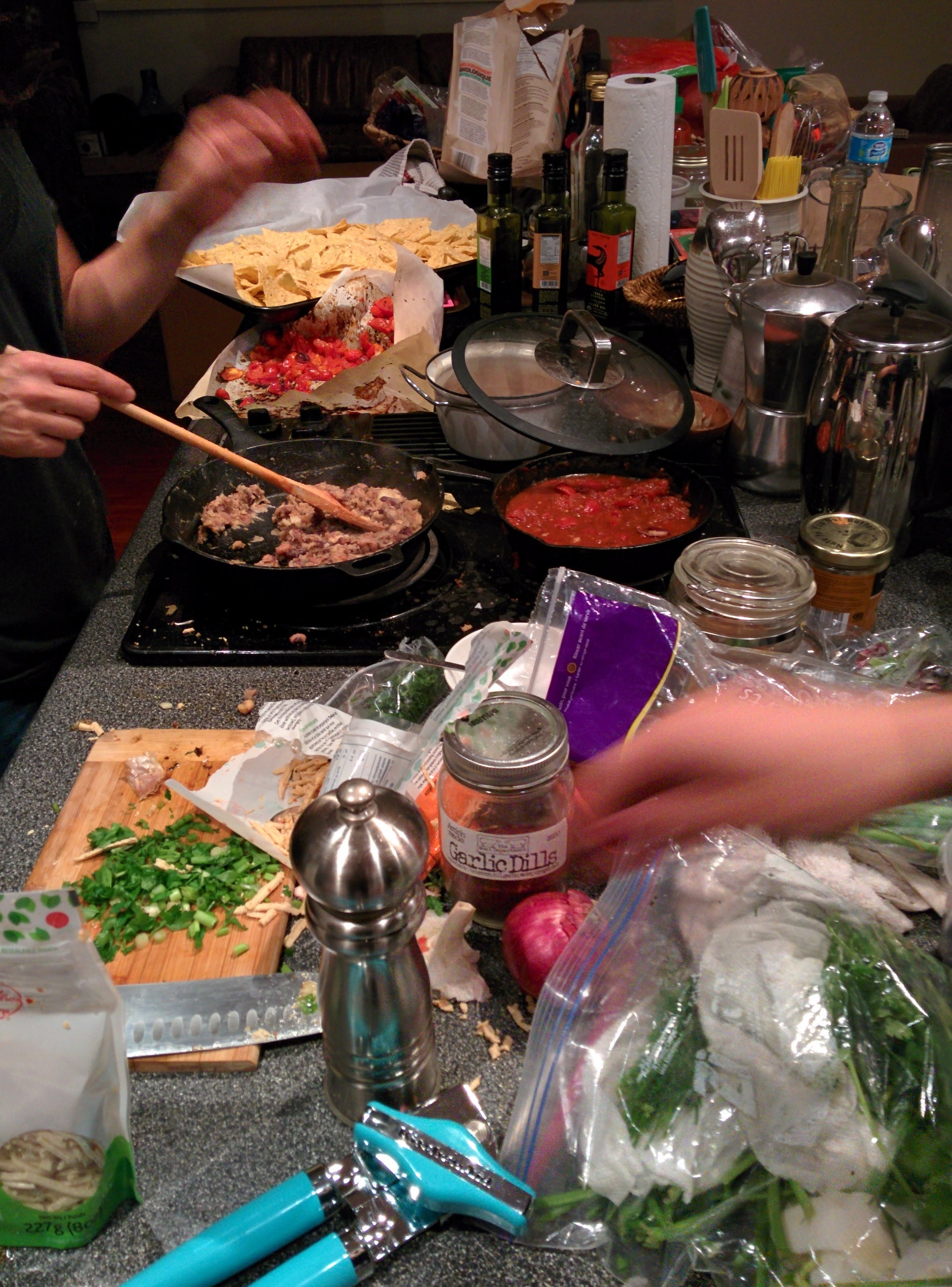
A Country That Feeds Itself Can Feed the World
We already know how to make food free and profitable. So why don’t we?
Roads are free at the point of use. Healthcare is publicly guaranteed. Education is subsidized because societies collapse without it. Food which is more essential than any of them is still treated as if it should be disciplined by scarcity. In the future we’ll regard this as both foolish and short-sighted.
For decades, we have asked a single food system to do two incompatible jobs at the same time: feed everyone affordably and compete ruthlessly in global markets. When it fails at one, we blame farmers. When it fails at the other, we blame governments. When it fails at both, we call it inevitable.
The problem is that our food system is badly designed, and entirely misunderstood.
Most food debates collapse into a familiar argument. Either food should be cheap and accessible, or it should be profitable and efficient. Either we protect consumers, or we protect producers. Either we guarantee access, or we let markets work.
This framing is wrong. Not just morally wrong but more importantly structurally wrong.
Food is being forced into a single market logic despite serving two fundamentally different social functions:
Domestic food, which keeps people alive, healthy, and socially stable
Export food, which generates revenue, trade leverage, and global influence
When these functions are collapsed into one system, both are degraded. Domestic food becomes precarious, and export food becomes brittle. Farmers are squeezed between moral obligation and market discipline. Governments oscillate between subsidies and neglect. Everyone loses legitimacy.
Imagine an agri-food system with two complementary tracks, each designed for what it actually does.
Track One: Domestic Food as Infrastructure
This system exists to guarantee that everyone eats. It prioritizes stability, redundancy, nutrition, and continuity. Prices matter less than outcomes. Labour is treated as essential capacity, not a cost to be minimized. Like roads or healthcare, this system is publicly supported because its failure is catastrophic.
Track Two: Export Food as Strategic Industry
This system exists to compete. It focuses on value-added production, branding, specialization, and trade. It benefits from risk-taking, innovation, and differentiation. It generates revenue for farmers, producers, and governments. It is unapologetically economic.
Crucially, these systems are not rivals. They are partners.
The domestic system absorbs volatility and produces knowledge. The export system monetizes insight and reputation. One provides legitimacy and resilience. The other provides growth and influence.
Free food and profitable food are not opposites. They are the result of assigning food to the right institutional logic.
At this point, an objection usually appears: Who pays for this?
The answer is obvious to those with food literacy: we already do.
Today’s food system is subsidized by hidden mechanisms that weaken it over time. Underpaid labour. Farmer debt. Ecological depletion. Public health costs shifted downstream. Emergency bailouts disguised as market corrections.
The question is not whether food is subsidized. It is whether subsidies are transparent, intentional, and productive.
When labour is subsidized implicitly, workers burn out and leave. When it is subsidized explicitly, capacity stabilizes. When infrastructure is neglected, costs reappear as crises. When it is maintained, systems endure.
A domestic food system that guarantees labour costs is not charity. It is maintenance.
And maintenance is always cheaper than collapse.
There is a persistent fear that guaranteeing food domestically will weaken competitiveness abroad. The opposite is true.
Countries that can feed themselves reliably gain freedom of action. They are less exposed to price shocks, supply disruptions, and political blackmail. They can afford to specialize, to experiment, and to take calculated risks in export markets.
More importantly, a stable domestic system becomes a living laboratory. It generates data about crops, climate, logistics, nutrition, and consumer behavior at scale. It trains workers. It supports experimentation without existential risk. It builds trust between producers and the public.
Export systems built on top of this foundation are stronger, not weaker. They draw from a deeper pool of knowledge. They carry reputational credibility. They are resilient under stress.
A country that feeds itself does not retreat from the world. It enters it with leverage.
Authority Instead of Ideology
This is not an argument for abolishing markets. It is an argument for using them on purpose.
Markets are excellent tools for competition and discovery. They are terrible tools for guaranteeing universal access to essential goods. Every serious society already knows this. We just pretend food is an exception.
Designing food power means abandoning the fiction that one system can do everything. It means building institutions that match function. It means treating food security as a baseline condition of legitimacy, not a moral afterthought.
This essay opens a longer series. Not to argue endlessly that such a system should exist, but to show how it could—and why fragments of it already do.
Designing Food Power will unfold in four parts:
Part I — Why Food Should Be Free and Profitable
The core argument: separating domestic food security from export competition upgrades both.
Part II — Labour, Logistics, and Coordination
How labour subsidies, transportation, storage, and coordination systems form the backbone of food security—and why markets alone cannot manage them.
Part III — Data, Innovation, and Export Strategy
How domestic provisioning becomes a living lab that strengthens export performance, and why agricultural intelligence must be treated as public infrastructure.
Part IV — Governance, Legitimacy, and Global Power
Who decides who eats, how legitimacy is maintained, and why food security is becoming a central axis of geopolitics.
Together, these pieces outline a food system that is neither nostalgic nor utopian. It is a system designed for a world of climate volatility, political fragmentation, and rising demand for legitimacy.
We already know how to build it. Now we must do so.
Tiktok failed to load.Enable 3rd party cookies or use another browser