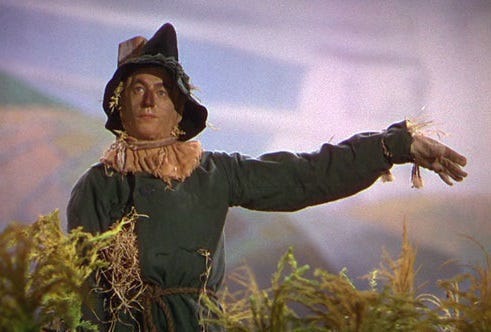
Every era invents its own monsters.
The bogeyman of the present is “wokeness”, a shape-shifting character blamed for everything from moral decay to administrative overreach. The brilliance of the invention lies in its emptiness. You can project anything onto it. You can rally people against it. You can turn it into a totalizing threat without ever needing to prove that it exists.
The spectacle works because “woke ideology” sounds like a coherent worldview, yet dissolves the moment you try to outline its principles. When you move past the accusation, there is no doctrine. No organization. No central texts. No leadership. No policy platform. The supposed ideology only functions as a rhetorical device—a vessel for outrage.
Not ideology. A performance.
The phrase “woke ideology” operates like a fog machine in partisan theater. It fills the stage with enough haze that no one notices the lack of substance behind the accusation.
Its most successful feature is abstraction. It never names particular people or ideas, because specificity would require accountability. Instead it gestures toward a moral and cultural menace supposedly infiltrating schools, media, corporations, and government. By refusing definition, it ensures elasticity: it can be inflated, stretched, or weaponized to fit any grievance.
As political technology, the bogeyman is efficient. It rallies loyalists. It unifies disparate frustrations. It erases internal contradictions. And it offers a story with a simple plot: society is under threat, and only decisive leaders can defend the nation from the encroaching “woke.”
The objection to the so-called woke rests on a partial truth. Some online spaces do encourage moral rigidity. Some activists do lapse into strident attitudes. Some conflicts do become punitive rather than generative.
Yet to treat those behaviors as an ideology mistakes the symptom for the structure.
The reactivity associated with “wokeness” is not born of political theory. It is cultivated by platforms engineered for emotional escalation. Social media rewards certainty, penalizes ambiguity, and pushes people toward performance over inquiry.
What we call “woke” is not an organized set of beliefs but a mediated state: a way of talking, reacting, and signaling within systems that amplify conflict far more effectively than they amplify dialogue.
Originally woke denoted an awareness of racism and structural injustice. Over time, it evolved into a catch-all cultural expression: aspirational, sometimes earnest, sometimes performative, inconsistent across communities, and deeply shaped by the media through which it travels.
Cultural expressions are fluid. They shift across contexts. They manifest contradictions. They generate variations rather than coherence.
Ideologies, by contrast, require structure. They demand internal logic. They build programs. They create parties or movements.
The spectacle of wokeness thrives on confusing these categories. It treats a cultural vocabulary that is highly diverse, and often contradictory as if it were a rigid political doctrine. In doing so, it transforms the shapeless into something villainous.
Every attempt to pin the “woke” label to actual policy relies on misdirection. The policies critics associate with wokeness, like diversity frameworks, gender-inclusive protections, anti-discrimination measures, school curricula reforms, all come from traditions with intellectual histories: liberalism, progressivism, anti-racism, feminism, queer theory, disability rights.
These movements can be debated on their merits. They contain disagreements. They have genealogies. They produce policy proposals that can be evaluated.
To call these policies “woke” is to avoid engaging with their substance. It turns practical initiatives into cultural proxies. It frees critics from having to articulate what they oppose and why. It replaces democratic deliberation with symbolic opposition.
The result is a shell game: the target always moves, the grievance remains fixed, and the conversation never matures.
The spectacle survives because it satisfies the demands of modern media ecosystems. Outrage is inexpensive to produce. Nuance is time-consuming. Complexity holds attention poorly. A bogeyman solves all three.
Calling something “woke” supplies instant narrative. It provides a villain. It licenses exaggeration. It generates content.
Most importantly, it allows audiences to feel morally engaged without demanding that they understand the underlying issues. The spectacle wins because it is easy to stage.
The danger is not that “wokeness” will capture institutions or impose a radical agenda. The danger is that the very idea of ideological debate is being hollowed out. When political life is reduced to caricatures, when movements are defined by their opponents, and when cultural moods are mistaken for doctrines, authority fragments into spectacle.
We lose the capacity to argue about real ideas. We lose the ability to craft shared frameworks. We lose the public where disagreement can be constructive rather than theatrical.
The bogeyman crowds out the world.
If we refuse the spectacle, what remains?
A politics grounded in specificity: critique the policy, not the phantom.
A politics grounded in inquiry: ask what someone believes before assuming the caricature.
A politics grounded in plurality: recognize cultural expressions as diverse rather than monolithic.
A politics grounded in deliberation: treat disagreement as generative rather than existential.
Most importantly, a politics grounded in the recognition that our opponents are not characters written by someone else’s script.
The task is not to defeat “woke ideology.” The task is to dismantle the stage upon which the bogeyman performs.
Only then does the possibility of democratic authority reappear.