
243: The Eye of the Storm
The other shoe is bound to drop sooner rather than later
An anarchist who describes themselves as an anarchist is probably not an anarchist.
A conservative who denies they’re a fascist, is probably a liberal.
A conservative who is sincerely a conservative is increasingly rare.
A fascist who describes themselves as a proponent of freedom is increasingly common.
A liberal who denies the rise of fascism is definitely delusional.
A liberal who seeks to be a centrist in the face of fascism is a convenient idiot.
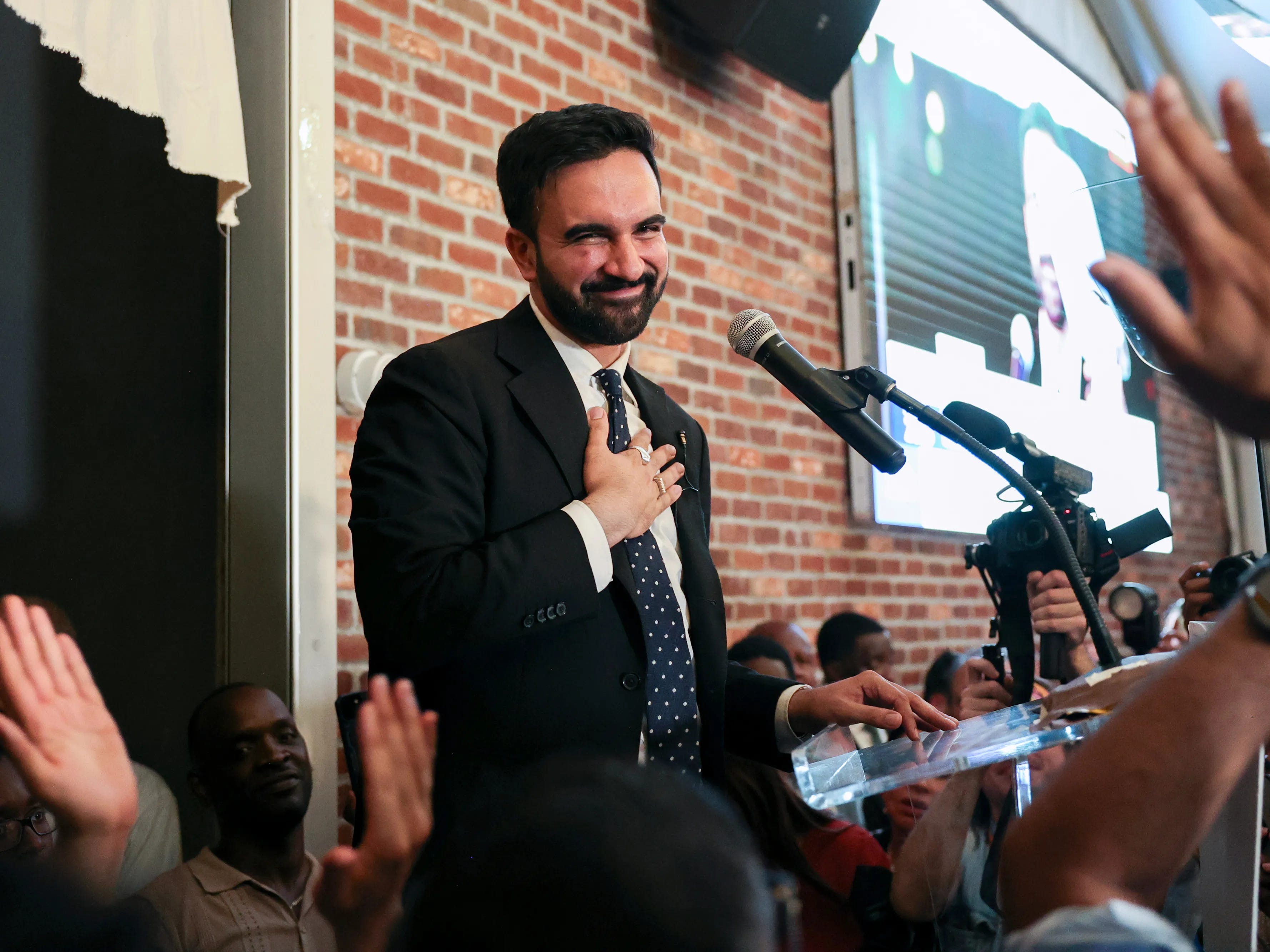
A democratic socialist who runs for Mayor of NYC is a potent threat to fascism.
A communist is usually a phrase used by people who know nothing of communism.
A fascist who describes themselves as a fascist is a dangerous and increasing trend.
A human who describes AI as being alive is a dangerous and increasing trend.
A human who describes AI as capable of thought is not to be trusted.
A bot is a phrase used to describe and dehumanize political opponents.
Trust requires thought, yet more importantly trust requires vulnerability.
Vulnerability is pervasive yet also mistaken and misunderstood.
To be vulnerable is to be powerful.
To be social, is to mitigate the risks that come with vulnerability.
This week we find ourselves in the eye of a massive political economic storm. A moment of relative calm before the winds of change roar once more.
NYC faces an election of seismic significance. The Canadian government will table a federal budget that is expected to lead to another federal election. The US government faces ongoing shutdown and significant rulings from the Supreme Court.
Meanwhile rumours flourish regarding the construction of a secure bunker under the East Wing of the White House to resist and outlast electoral defeat. Senior ranking government officials take up residence on military bases to increase personal security. Food insecurity increases as the food system reacts to general uncertainty, the coming of winter, and turbulences in international trade. Energy prices fluctuate with data centre construction and ongoing threats against energy producers like Venezuela and Nigeria.
Making sense of all this often requires a kind of AI cadence that helps frame the narrative and news in metaphors and pairings that the algo trained mind can comprehend. Yet a greater opportunity is to embrace a kind of cyber surrealism that focuses on the Internet as the ultimate authority.
For decades we dismissed the Internet as a distraction or a representation that was “not the real world”. Not only was that a fatal mistake for liberal democracy, but it turns out that the real world was just a mediocre MTV show. Everything we were told as kids were lies, and only now is the network of networks enabling us to weave a narrative together that makes sense to most if not all of us.
The model is never the actual thing, but the Internet is also not a model, even if it enables a kind of modelling that is unprecedented. A larger problem is why as a society we have not spent time trying to understand the Internet, and how to align ourselves with the affordances and abilities it can offer.
There are many ways we can prepare for the storm we find ourselves in, and here in the eye, we have a good opportunity to retool and reconfigure. Ask yourself what you’re doing to make sense, to respond, to act with agency.
Act now, as you may not be able to act later. With each act, you gain the ability to take other actions. Use it or lose it. Take it, or it will be taken from you. Vote early, vote often.
The internet user who describes themselves as a user is probably being used.
The internet user who describes themselves as a learner is probably being fused with a new emergent form of intelligence that has nothing to do with AI or anything artificial.
The hacker who describes themselves as a friend is exactly the friend you want to know.
The friend who does not describe but instead offers care is more than a friend and someone worthy of your love.
Tiktok failed to load.Enable 3rd party cookies or use another browser