Part one of a serialized narrative… Dispatches from witnesses to what may be a turning point towards transformation. Today’s issue comes from a young student…
I was supposed to be in line for the student ID office.
Instead, I was standing in the parking lot behind graduate housing, watching six armed men in mismatched tactical gear move toward the south entrance.
They didn’t look like cops. Not the kind I’d ever seen, anyway. No crisp uniforms, no readable badges. Just a patchwork of camo pants, black plate carriers, knee pads, and slung rifles. A couple had “POLICE” Velcro patches, but most had U.S. flags or nothing at all. Scarves pulled high over their faces, sunglasses catching the late-summer glare. They moved like they knew each other but not in formation — more like a hunting party than law enforcement.
The whispers started: “That’s ICE.” “They’re here for someone in grad housing.” The words felt like cold water down my back.
Then she appeared.
Not rushing, not grandstanding. Just walking along the sidewalk with a canvas tote, scanning the lot like she was reading a map only she could see. She stopped next to a delivery van idling in the loading zone, tapped the driver’s window. A quick exchange, a nod, and she moved on.
Two cyclists glided past. She leaned in, said something short, and they split in opposite directions toward the parking exits. Within minutes, cars began shifting — pulling across lanes, blocking turns, “breaking down” in all the right places. The cyclists reappeared, wedging themselves sideways in the exit lanes.
By the time the armed men reached the building, the air had changed.
The first chalk lines appeared — giant block letters spelling “LET THEM STAY” across the asphalt, surrounded by quick sketches: open hands, books, hearts. Someone set up a portable speaker on a folding chair, blasting a bassline that turned footsteps into dance steps. A kid in a bucket hat pulled a snare drum out of their backpack and fell into rhythm.
The chants started raw, almost hesitant, but the beat gave them shape:
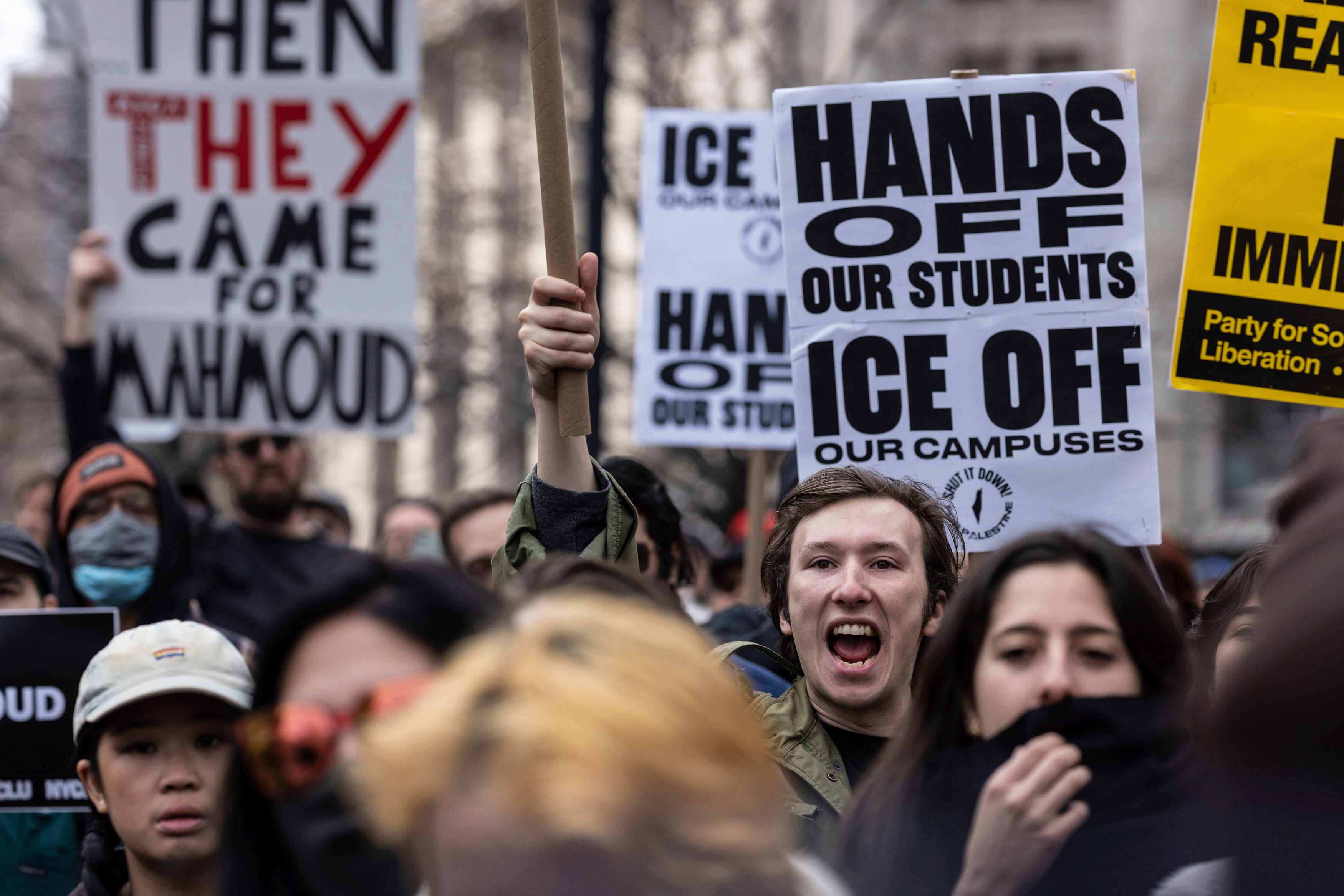
“ICE OUT! ICE OUT!”
“Let them stay! Let them stay!”
It wasn’t just noise. It was coordination.
A group unfurled a bedsheet painted with a sunrise over barbed wire and held it high at the edge of the crowd. Two more started a mural on the side of the delivery van — bold colors, swirling around a stencil of clasped hands. Someone handed me chalk and I found myself on my knees, tracing the word “FREEDOM” in block capitals across the lane.
The armed men tried to move their target — a grad student I recognized from the dining hall — toward an SUV. The crowd compressed. People swayed and sang; others locked arms and moved in time with the drum. I caught sight of her again, right on the edge of the knot, speaking briefly to a woman in a campus security jacket. A nod, and the woman disappeared.
A grey sedan I hadn’t noticed before eased out from behind the delivery van, sliding into the side street. The grad student was in the passenger seat. It took ICE a full thirty seconds to realize their target was gone.
They turned toward their vehicles, only to find them hemmed in on all sides.
A brass section had appeared from nowhere — two trumpets, a trombone — riffing on a protest standard until it became something else entirely, something joyful. People danced between the blocked SUVs, phones in the air, livestreaming the whole thing. Faculty in academic robes stood shoulder to shoulder in front of the main lane, smiling like they were posing for a yearbook photo.
One agent barked into a radio; another gripped his rifle a little too tight. But the music kept going, and the crowd kept moving. The energy wasn’t aggressive — it was unstoppable.
And just like that, she was gone.
The delivery van driver leaned against his hood, grinning. On the windshield, taped under the wiper, was a folded scrap of paper. Someone read it aloud:
“If you must block them, block the road, not the view. Let the whole world see.”