
225: Lies, Bullshit Jobs, and Statistics
The Bullshit Economy and the AI Takeover
Our salon on The Power of Language is this coming Wednesday, August 6th, at 12noon Almonte time, 9am Pacific and 5pm UK time. Our last salon on the nature of nature was genuinely excellent, and we’d love to have you join us and participate in this one. Email [email protected] to RSVP (or let us know via our Signal group). 😍
What do you call an economy where the president fires the statistician for accurate reporting?
Apparently: normal.
In July, the U.S. added just 73,000 jobs—well below expectations. Then, without warning, the president fired the head of the Bureau of Labor Statistics. No misconduct. No scandal. Just numbers that didn't fit the story.
This is where we're at. An economy where facts are negotiable, employment is performative, and labor itself has become surplus to the narrative.
The numbers were bad, yes. But not in a catastrophic way. They were just... honest. They showed that job growth is slowing, especially in the sectors supposedly benefiting from Trump’s ongoing tariff war. Manufacturing is flat. Logistics is retreating. Public sector jobs are declining. So the administration did what it increasingly does best: it rewrote the scene, erased the witness, and moved on.
But this isn’t just a tantrum over statistics. It’s part of a deeper shift, where jobs are less about what people do, and more about how governments justify themselves. And when that justification gets complicated by real-world data, someone has to go.
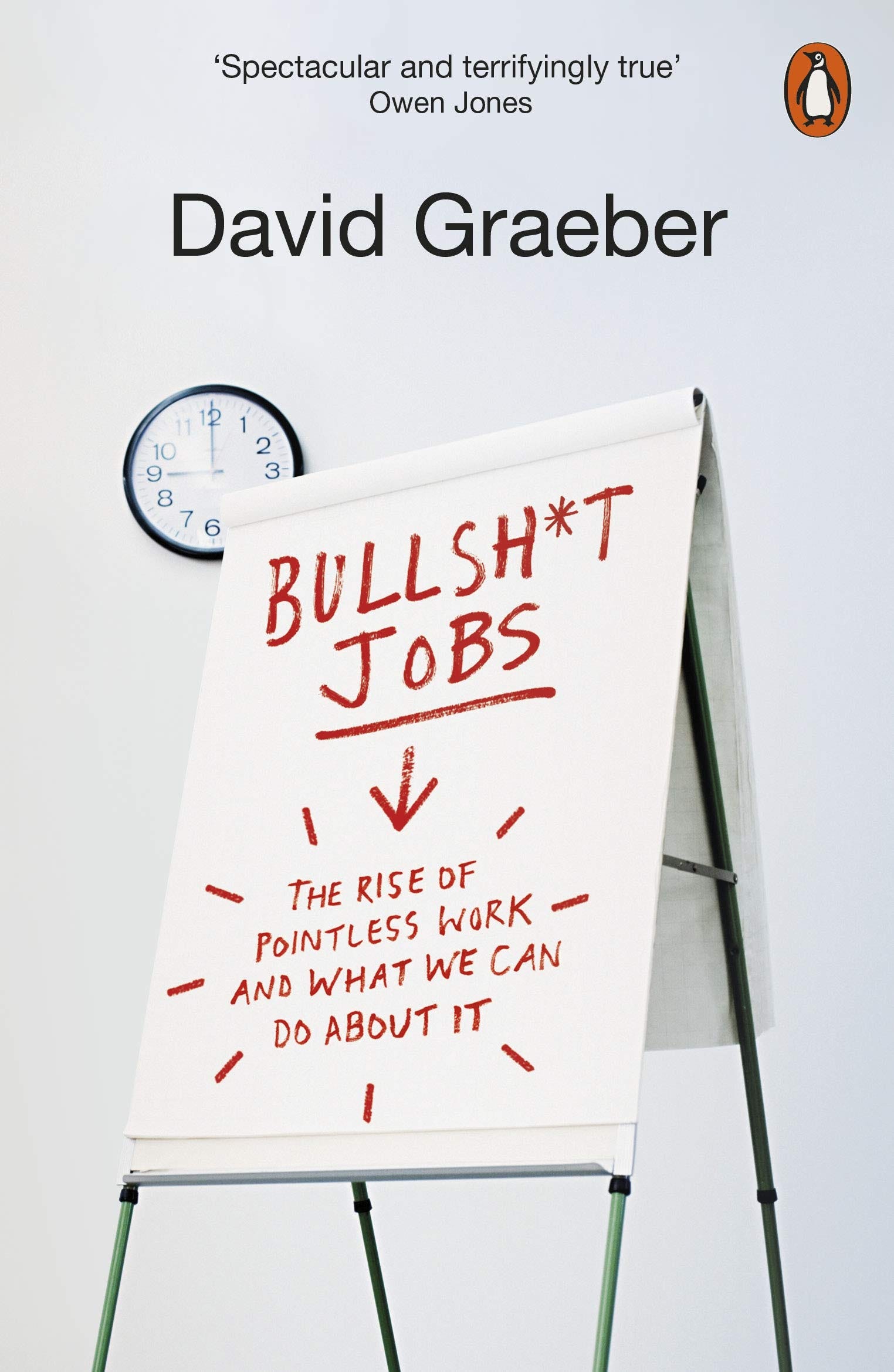
We’ve known for a while that a large percentage of modern employment is nonsense—what David Graeber called “bullshit jobs.” Positions that serve no real purpose, except to sustain the illusion that the economy is functioning. Layers of middle management, compliance monitoring, customer appeasement. Paper-pushing, screen-tapping, productivity theater.
Trump’s trade war promised to reverse all this—to bring back “real jobs.” Factory floors. Union paychecks. Calloused hands and middle-class stability. But reshoring is not revival. It’s replacement. Automation does the work, AI does the thinking, and workers are invited to take photos for the press release before they’re shuffled off to low-wage service roles or simply forgotten.
The truth is that tariffs have become a cover story. An expensive way to sustain the fiction that the U.S. government can still shape its own economy by force of will. What they can’t admit is that the economic foundation has already shifted. AI has emerged as the dominant growth sector—not just in technology, but in finance, logistics, warfare, education, and governance itself.
AI doesn't care about jobs. It doesn’t employ—it replaces. It converts tasks into data and labor into inference. The winners in this system aren’t workers or communities, but models. Value is no longer produced—it’s trained, optimized, and monetized at scale. The story being told is no longer “look at what we built,” but “trust what the model says.”
And what the model says rarely involves hiring more people.
This is the larger context behind the firing of the BLS commissioner. The Bureau is one of the few public institutions still trying to measure the world in terms of people—wages, employment, hours worked, who is hired, who is left out. But the rising AI regime doesn’t need those measurements. It needs different kinds of indicators: confidence, compliance, prediction, behavior. If people don’t fit the model, they’re not counted. Or worse, they’re counted as noise.
The future being assembled is one where economic policy is driven by proprietary models and synthetic indicators. The kind of feedback loop where central banks, corporations, and governments all rely on the same AI-generated signals to guide decisions that mostly protect the status quo. And in that system, independent statistics become a liability. Any dataset that threatens to show something else—something slower, messier, more human—gets discarded or discredited.
Which brings us back to the labor market. It's not that jobs have disappeared, but that their purpose has changed. They’re no longer a foundation for shared prosperity—they’re a mechanism of legitimacy. The regime doesn’t need to actually create jobs, it just needs to say that it has. When the data refuses to play along, the data gets fired.
We’re entering a post-labor economy, but not the one anyone promised. Not a utopia of leisure and abundance. A ghost economy of automation and austerity. Where work continues, but without dignity. Where productivity grows, but only in metrics. Where the appearance of activity replaces actual stability. And where the people who still try to count, to verify, to describe the truth—find themselves erased for getting in the way.
It’s tempting to say we need to protect the BLS, or defend expertise, or insulate statistical institutions from politics. And maybe we do. But what we really need is a different concept of work. One that starts with care, with necessity, with collective life. One that doesn’t mistake modeling for making, or confuse simulation with survival.
Because the system that’s rising doesn’t care if you have a job. It only cares that you believe you do.
And that you never ask who gets to define what counts.
Tiktok failed to load.Enable 3rd party cookies or use another browser