Join us for a Metaviews Salon: Ontologies and the Architecture of Meaning
🗓 Next Wednesday June4th at Noon Eastern. RSVP via metaviews at gmail.com.
In this upcoming Metaviews Salon, we’re diving deep into ontologies, the living, breathing structures that shape how we classify, connect, and ultimately make sense of the world. From the semantic webs of AI and knowledge graphs to the implicit taxonomies that organize our politics, institutions, and identities, ontologies are everywhere. Yet few of us take the time to examine the scaffolding behind our categories.
This will be a spontaneous conversation where we explore how ontologies can both empower and constrain—who builds them, who benefits, and how they evolve. Whether you're curious about the backend of AI, the politics of naming, or just want to make better sense of your own conceptual framework, bring your questions, ideas, and contradictions. We’ll be recording for the podcast, but the discussion will be unscripted, collective, and exploratory.
Today’s post is an abridged version of a longer paper we’re developing on the same topic. If you’re interested in a copy of the longer version, please contact us.
Disinformation isn’t just rotting the foundations of our politics—it’s poisoning the food chain.
Across Canada, farmers are being targeted by deliberate, strategic campaigns designed to inflame distrust, derail climate action, and entrench corporate control. From carbon pricing backlash to vaccine conspiracy in livestock, agriculture has become a frontline in the information war.
Farming communities are being overwhelmed by disinformation—and why their informational ecosystem has become so vulnerable. We look at the breakdown of trust in institutions, the rise of Facebook as civic infrastructure in rural communities, the global hijacking of farmer protests, and the rise of figures like RFK Jr. who weaponize anti-authority sentiment for political gain.
A Weaponized Landscape
Disinformation is no longer a side effect. It is a strategy.
Agri-business giants, in concert with ideological actors and social platforms, are deliberately shaping public discourse to stall environmental regulation and delegitimize science. Using the same playbook as Big Tobacco and Big Oil, these forces manufacture doubt not to win the debate—but to stop it from happening.
In this context, climate science becomes tyranny, carbon pricing becomes oppression, and regenerative agriculture is painted as elite overreach. Meanwhile, farmers are stuck in the middle—frustrated, isolated, and increasingly unsure who to trust.
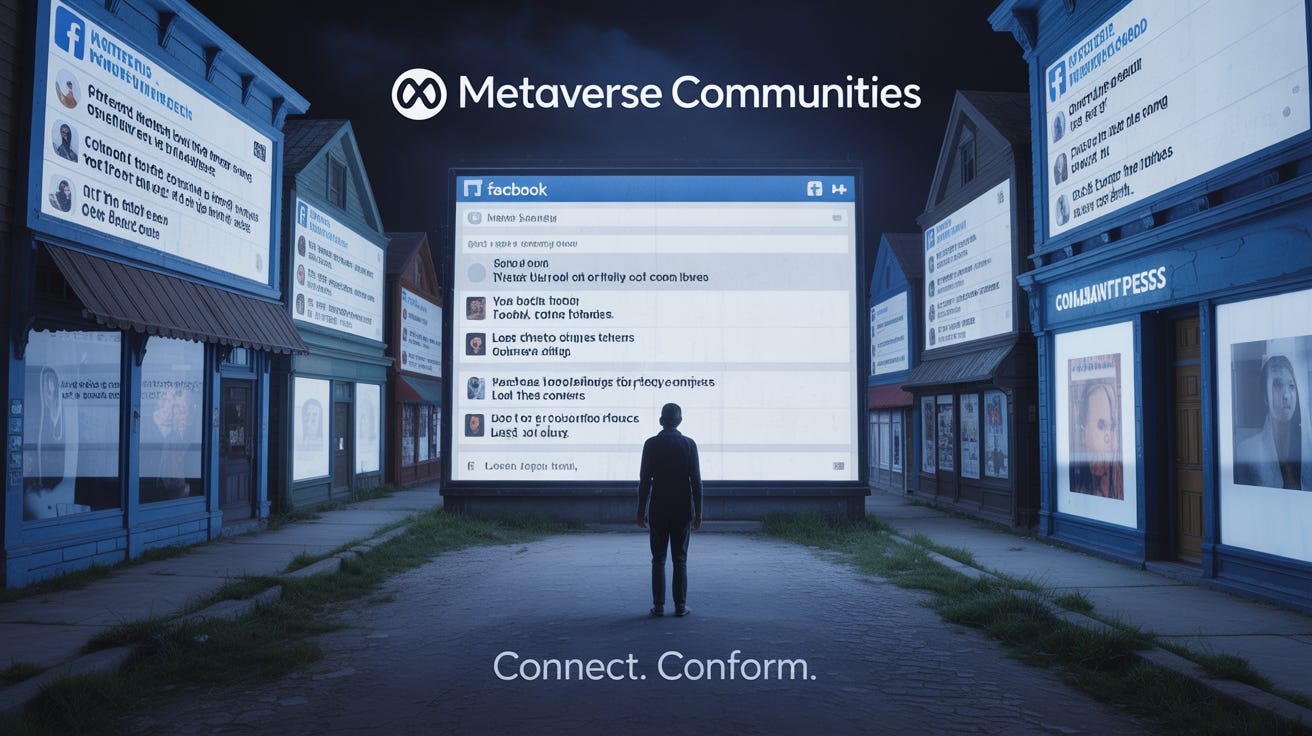
In rural Canada, Facebook has become essential infrastructure. It’s how people find out what happened on the road last night, where to get a septic tank fixed, or when the snowplow is coming.
But when Meta banned news content in Canada, Facebook groups became echo chambers. Local journalism couldn’t be shared. Trusted voices disappeared. What filled the void? Memes. Rumours. Imported conspiracy theories repackaged with rural flair.
Without alternatives, Facebook becomes the frontline of narrative warfare—where disinformation travels faster than drought, and resentment is algorithmically rewarded.
Across the world—from the Netherlands to India to Alberta—farmer protests have been hijacked by actors looking to turn discontent into disruption. Online narratives reframe ecological regulation as land theft. They portray urban governments as globalist conspirators. And they cast farmers not as co-creators of climate solutions, but as last-stand defenders of sovereignty.
The goal isn’t justice. It’s chaos.
For example, RFK Jr. represents a dangerous synthesis of anti-authority populism and elite dissent. His rejection of vaccines, GMOs, and regulatory oversight gives him an aura of outsider authenticity—even as he climbs the ladder of insider influence.
In Trump’s cabinet, he extends the disinformation complex into health, agriculture, and science. He speaks the language of rural resentment with a cadence of elite betrayal. He doesn’t just spread disinfo—he sanctifies it.
What We Can Do
We won’t win this battle with fact-checking alone.
We need to rebuild public-interest rural media that’s locally accountable and community-powered. We need multi-disciplinary intermediaries who bridge urban and rural, old and new, settler and Indigenous. We need farmer-led science, open-source networks, and participatory knowledge systems.
Above all, we need to restore trust—not with slogans, but with solidarity. The antidote to disinformation is not certainty. It’s community.
Disinformation thrives when people are disconnected. So does authoritarianism.
To protect food security and democratic life, we must create environments where knowledge can take root—in the soil, in our institutions, and in our relationships. This means humility, patience, and narrative courage.
Let’s stop harvesting lies. Let’s start cultivating truth.
Metaviews: Future of Authority is a publication exploring power, governance, and knowledge in an age of rapid technological, ecological, and political change. Subscribe at metaviews.substack.com.