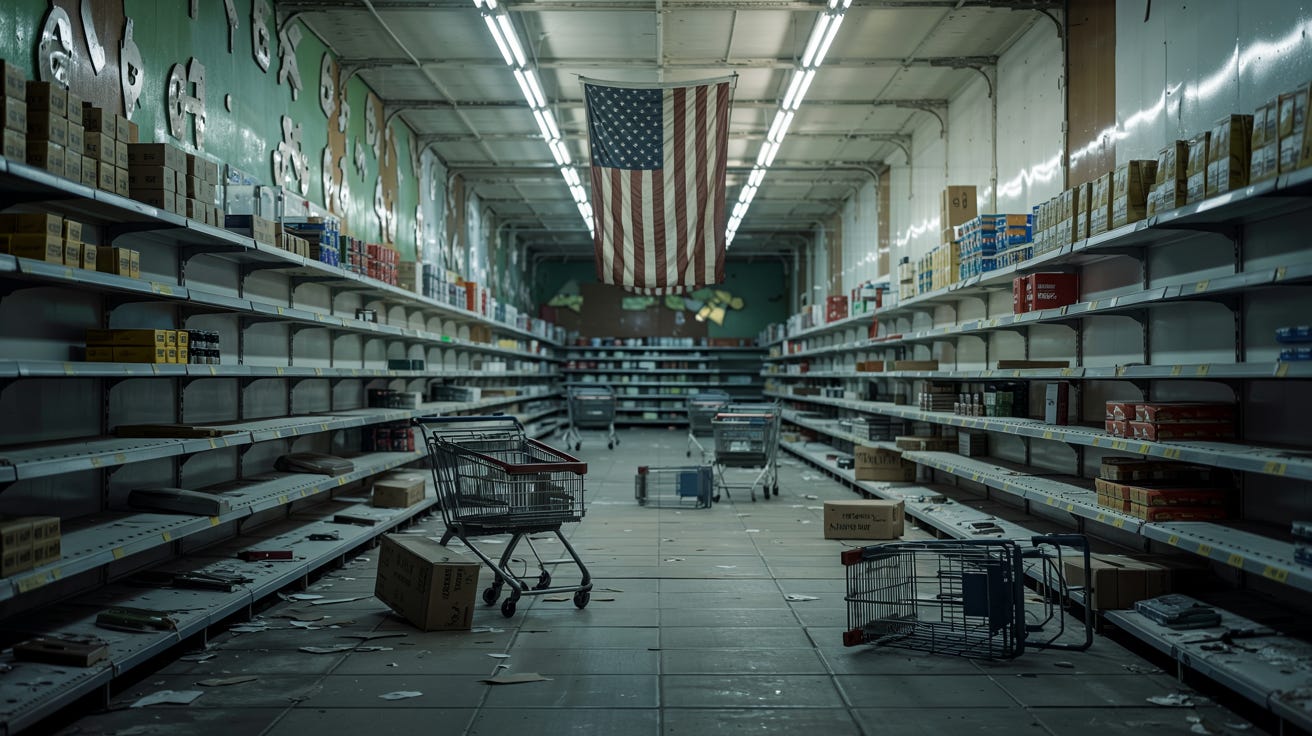
If you want to break a superpower, you don't need bombs.
You just need empty shelves.
Today, the Trump regime sharpened its war on logistics. A new executive order now requires all U.S. truck drivers to be English-proficient, a move clearly aimed at immigrant labor. In an industry already starved for workers, this is a spark in a field of dry grass.
At the same time, the latest trade data shows U.S.-China goods trade is collapsing. According to the U.S. Census Bureau, bilateral trade in goods with China fell by 17.5% year-over-year in the first quarter of 2025 — the sharpest decline in nearly two decades. U.S. imports from China alone fell by 22% in March compared to the previous year.
And it’s not just tariffs. Chinese logistics media and freight tracking firms are reporting an even more dangerous move: Beijing is quietly delaying the export of certain goods to the United States. Recent reports from Caixin Global and Lloyd's List note extended hold times at major Chinese ports and increased customs inspections — particularly targeting electronics, pharmaceuticals, and automotive parts bound for American markets.
There’s no official announcement, no embargo decree. Just the slow, grinding weaponization of bureaucracy: customs inspections, delayed container loadings, “random” port audits. A death by a thousand cuts.
U.S. import volume at major West Coast ports is down 21% year-over-year.
Warehouse inventories for electronics, automotive parts, and machinery have fallen between 8–12% since January.
Spot trucking rates have surged 14%, while driver availability is down 9.7%.
Retailers like Walmart and Home Depot issued warnings about supply chain “headwinds” during recent earnings calls.
Today's executive order only worsens an already critical labor shortage. Roughly 18% of U.S. truck drivers are immigrants, and the American Trucking Associations estimates that the English language requirement could push the current driver shortage past 100,000 by late summer.
The result? Higher prices. Scarce goods. Rising inflation. Lower GDP. Social unrest.
And it’s coming fast.
How Bad Could It Get?
Based on trade models from the Peterson Institute for International Economics and logistics risk assessments by McKinsey Global Institute, we can project:
Retail prices for consumer electronics, tools, and home goods could rise 15–25% by fall.
Food prices could spike by 10–15%, especially for imported essentials like coffee, spices, packaged foods, and produce.
Car prices could jump another 10–20%, especially as shortages of imported parts cripple production.
Layoffs could ripple across logistics, manufacturing, and retail sectors — potentially shedding 500,000–750,000 jobs by early 2026 if the crisis deepens.
Inflation will not be the transitory political slogan economists once invoked — it will be the ambient air Americans breathe.
Why This Is a Feature, Not a Bug
Trump’s economic team knows this is happening. They are not naïve. They are gambling that supply shortages will trigger nationalist sentiment: blame China, blame immigrants, blame Biden-era trade agreements. In their view, economic pain is a tool for political gain.
But supply chains are not partisan. They are material systems: fragile, intricate, and ruthlessly indifferent to ideology. Break them — and you break the economy itself.
Worse yet, while ordinary Americans face higher prices, longer wait times, and fewer jobs, the billionaire class is positioned to profit from the chaos.
Here's how:
Market Consolidation: Small and mid-sized retailers and logistics companies — the ones least able to absorb cost shocks — will collapse or be acquired. Amazon, Walmart, FedEx, and other giants will buy them for pennies on the dollar.
Higher Margins: Fewer competitors mean higher prices are easier to sustain. Conglomerates will pass along inflated prices to consumers while maintaining or even expanding profit margins.
Asset Grabs: As small businesses fail, distressed real estate, warehouse facilities, and trucking fleets will be bought up cheaply by private equity firms and multinational monopolies.
Speculative Profits: Volatile markets are a playground for hedge funds and investment banks. Every swing in commodity prices, shipping costs, and retail inventories becomes an opportunity to harvest profits from the instability they helped create.
In the name of “making America great again,” the Trump regime is overseeing the largest potential transfer of wealth in American history — from working families to multinational corporations and financial predators.
A country that can’t move goods can’t feed itself.
A country where a loaf of bread costs half a day's wages is not a democracy.
It’s a powder keg.
And the matches have already been lit.