
156: TikTok and Big Tech Are Undermining Trump's Trade War
Fragments of a Hidden Empire
Big Thanks to Jeremiah Patterson for upgrading to a paid subscription! Jeremiah is a really talented and smart independent journalist who also deserves your attention and support.
While this publication will always remain free, our work benefits greatly from your financial support. Yet if like us you’re strapped for cash, your digital support really makes a difference. The like button, comments, and shares help the substack algorithm promote us to other people and bots on the platform. 😍
The Trump regime hoped tariffs would humble China. Instead, Beijing cleverly turned to TikTok to subvert the economic battleground. Chinese manufacturers have taken to the platform to show American consumers how easily they can bypass U.S. brands—and the steep tariffs that inflate prices—by buying directly from the source.
Tiktok failed to load.Enable 3rd party cookies or use another browser
Imagine paying just $6 for Lululemon leggings instead of $100. These viral TikTok videos are more than shopping hacks; they're acts of rebellion against America's traditional control over intellectual property and global commerce.
Tiktok failed to load.Enable 3rd party cookies or use another browser
Yet it is crucial to note that TikTok is not available in China. ByteDance the owner of TikTok has to have a different app that complies with Chinese regulations, while TikTok is the international version. This means that the campaign we’re currently seeing is not just an organic, hey we’re on TikTok sort of thing, but a concerted attempt to address an international and especially US audience.
Tiktok failed to load.Enable 3rd party cookies or use another browser
Many of the Chinese manufacturers on the site either represent specific product lines or are brokers who manage connections between buyers and suppliers. This isn’t just an effective propaganda campaign, it’s a substantive opportunity for China to both evade trade barriers as well as incentivize others to help them do so.
Although let’s not downplay the power and role of propaganda. TikTok is a powerhouse, and not only has the Chinese government communicated that the sale of TikTok is no longer gonna happen, but the platform is awash in seductive pro Chinese content.
Tiktok failed to load.Enable 3rd party cookies or use another browser
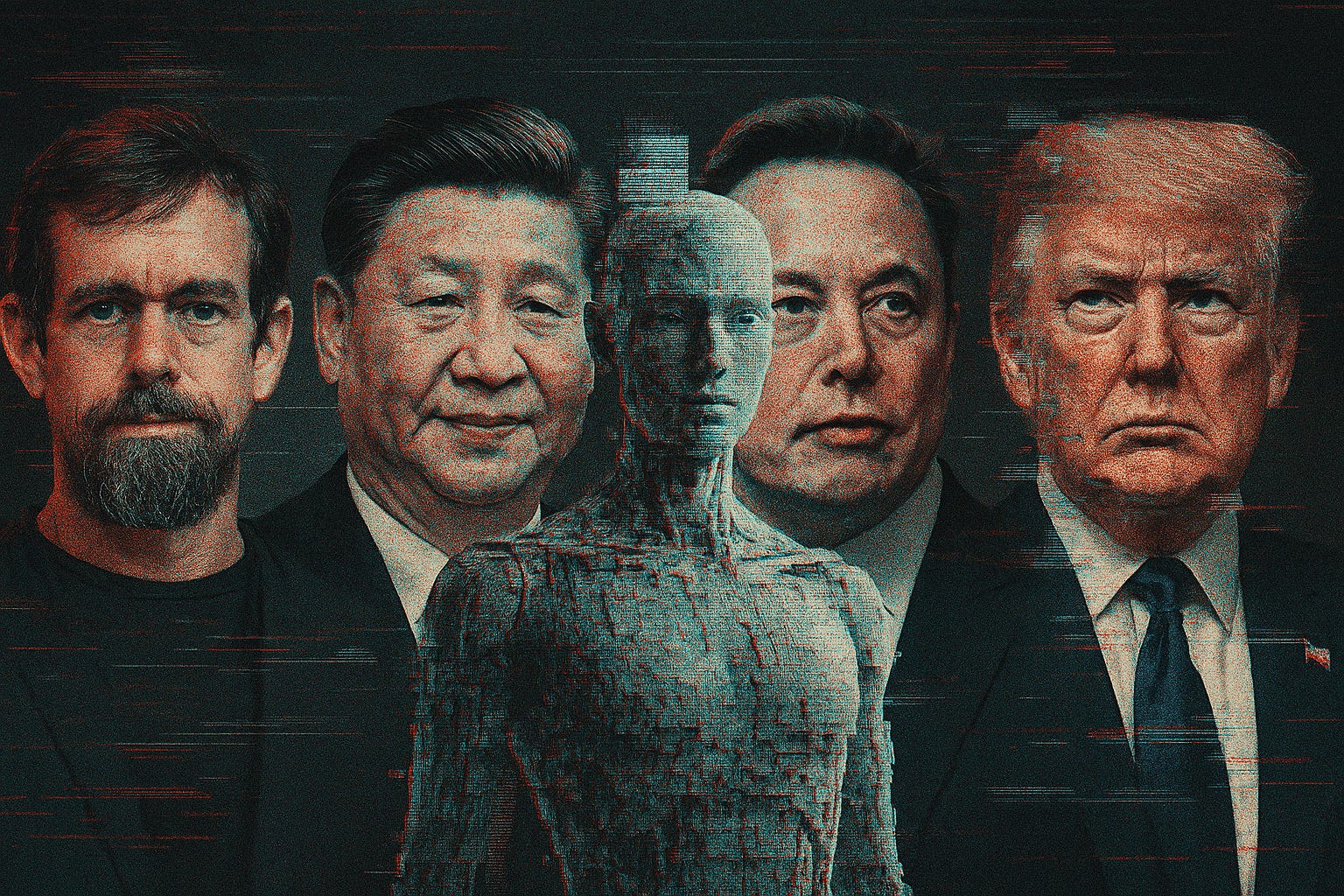
Meanwhile, in the Bürgerbräukeller known as X, Jack Dorsey recently called for the abolition of intellectual property (IP) laws altogether, posting bluntly: "delete all IP law." Dorsey argues that these outdated frameworks suppress innovation and benefit entrenched corporate giants, not ordinary creators. Elon Musk and other prominent valley figures quickly backed him, amplifying a provocative dialogue that questions whether our current IP laws are suitable in an age rapidly dominated by artificial intelligence.
Why does this matter now? As AI-generated content and products flood the market, distinguishing human creativity from algorithmic output becomes increasingly complex. Dorsey and Musk suggest that removing IP barriers would unleash innovation—but critics fear this stance conveniently serves Silicon Valley interests, allowing tech giants even greater control over creative outputs without accountability.
Beneath this ideological debate, a more strategic game unfolds. Silicon Valley, with its libertarian bent, sees Trump not just as a political wildcard but as a useful disruptor of governmental norms and oversight. By fueling chaos through trade wars and indirectly diminishing IP protections, Trump advances the tech industry's agenda of fewer restrictions, greater corporate power, and less government interference.
Tiktok failed to load.Enable 3rd party cookies or use another browser
Meanwhile, the European Union is considering new taxes specifically targeting digital advertising revenues from U.S. tech giants such as Meta, Alphabet, and Amazon. This potential taxation reflects Europe's growing unease with Silicon Valley's unchecked power and their attempt to reclaim economic authority over digital markets dominated by American firms. It further underscores the global pushback against tech dominance, complicating Silicon Valley's ambitions amid ongoing geopolitical tensions.
Yet another layer deepens the intrigue. As TikTok engages openly with American consumers, Chinese hackers quietly embed themselves in U.S. telecommunications and critical infrastructure. While the American public enjoys cheaper goods, China steadily expands its surveillance reach. Through covert cyber operations, Chinese intelligence agencies have infiltrated American digital infrastructure, effectively integrating aspects of the U.S. digital landscape into China's vast surveillance network.
When viewed through this lens, the surface-level spectacle of tariffs and trade disputes masks a more profound and troubling shift. Traditional power structures rooted in physical territory and protected by IP laws are rapidly eroding, replaced by a digital world where cybersecurity, narrative influence, and technological infrastructure are the new currencies of authority.
Understanding these deeper dynamics is essential—not just to grasp what's happening today, but to navigate the uncertain future of global power and personal freedom.
P.S. Folks on TikTok are also making a scary yet sound argument that the situation in El Salvador is not looking good with regard to the deportation and extermination of citizens and non-citizens. ☠👀⚖🤦♂️
Tiktok failed to load.Enable 3rd party cookies or use another browser
Tiktok failed to load.Enable 3rd party cookies or use another browser