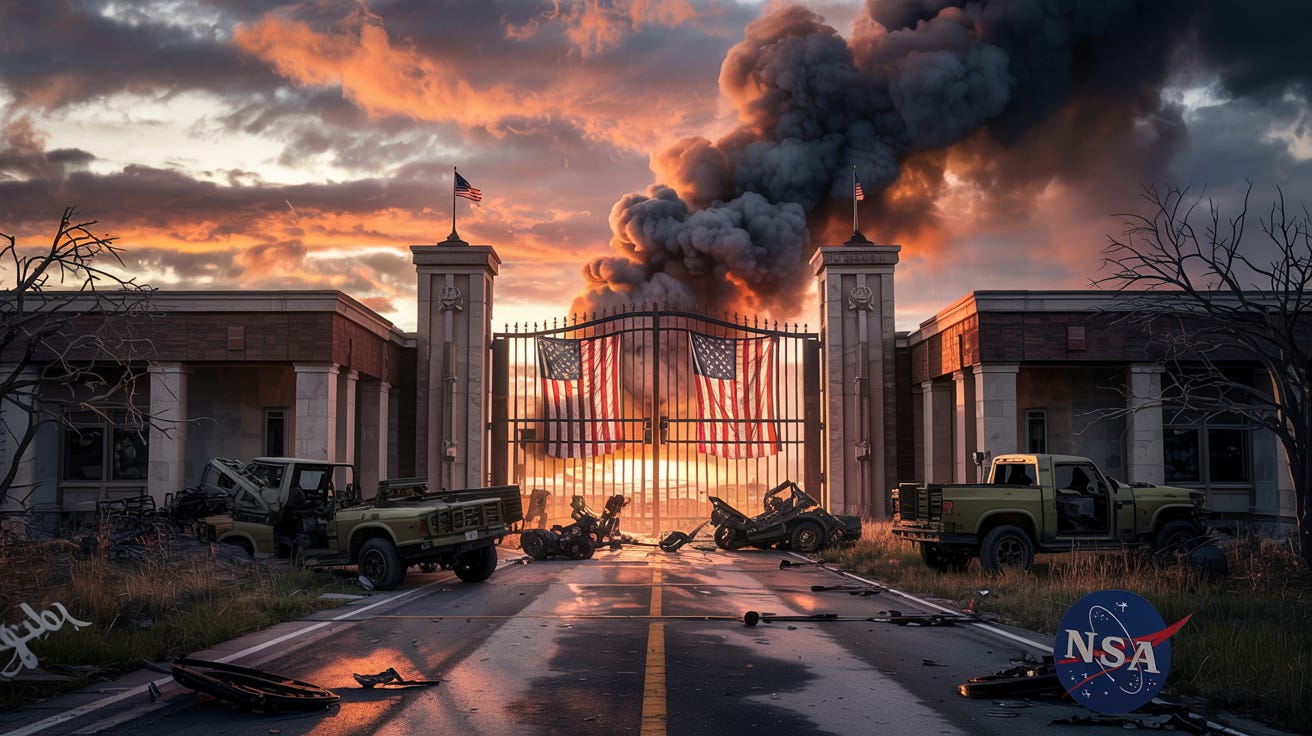
On Wednesday night, the U.S. government quietly removed General Timothy Haugh as Director of the National Security Agency and Commander of U.S. Cyber Command. No explanation was offered. No warning given. Haugh, one of the country’s most experienced and respected cyber leaders, was dismissed alongside his civilian deputy Wendy Noble. The message was unmistakable: loyalty to the intelligence profession is no longer enough. Loyalty to the regime is now the only credential that matters.
This was a purge.
The timing couldn’t be worse. In the midst of a global financial nosedive triggered by chaotic tariff announcements, the United States has destabilized its own cyber defense command. Markets have been spiraling since Monday’s tariff bombshell, with tech and defense stocks particularly hard-hit. Cybersecurity leaders in both the public and private sectors now fear a chilling period of vulnerability just as geopolitical tensions flare and domestic unrest surges.
And at the heart of it all, the Intelligence Community finds itself compromised—by its own leadership.
Tulsi Gabbard, the Director of National Intelligence, and Kash Patel, Director of the FBI, are both facing bipartisan scrutiny. Reports that senior intelligence officials used Signal on personal devices to coordinate military actions abroad have raised alarms in Congress. More troubling are allegations that Gabbard and Patel have opened the door to foreign influence and weakened internal safeguards. The ousting of Haugh—a Mark Milley appointee and career cyber officer—follows a week of behind-the-scenes agitation by far-right operative Laura Loomer, who publicly claimed credit for his dismissal.
These are not isolated developments. They’re signs of a fundamental reorientation of the U.S. Intelligence Community—from a professional bureaucracy tasked with security and analysis, to a politicized tool of regime loyalty.
The consequences are profound. Without experienced, independent leadership, the agencies responsible for safeguarding communications, defending against cyber threats, and tracking foreign adversaries become both less effective and more dangerous. The Intelligence Community’s ability to function depends on institutional trust, discretion, and internal accountability—qualities now eroding under pressure from above.
The cybersecurity implications are immediate. U.S. Cyber Command must now operate under intimidated leadership, just as adversaries seek to exploit the chaos. The protests planned for Saturday—expected to be some of the largest since the inauguration—are likely to face intensified digital surveillance and social media manipulation, not to ensure public safety, but foster political division.
In normal times, intelligence agencies would provide the executive with sober risk assessments, long-term planning, and honest warnings about overreach. In this climate, they’re being tasked instead with policing domestic dissent, shielding allies from investigation, and protecting a volatile political agenda.
And all of this comes amid a crisis of economic confidence. The administration’s tariff war is not just backfiring—it’s imploding. Investors are panicking. Inflation expectations are surging. And the White House, rather than recalibrate, appears to be consolidating its grip on the institutions most capable of independent analysis.
So what happens now?
Inside the Intelligence Community, a quiet resistance is brewing. Whistleblowers are talking. Internal communications are leaking. Retired officials are sounding the alarm. These professionals—career analysts, cyber defenders, field operatives—are watching the collapse of the norms that held their community together. Will they embrace the new regime or resist it?
As the country braces for another wave of protest, we must ask: who is watching the watchers? What becomes of intelligence in a post-truth, loyalty-first regime?