
145: Civilization VII and the Struggle Against Authoritarianism
A Sandbox for the Future of Authority
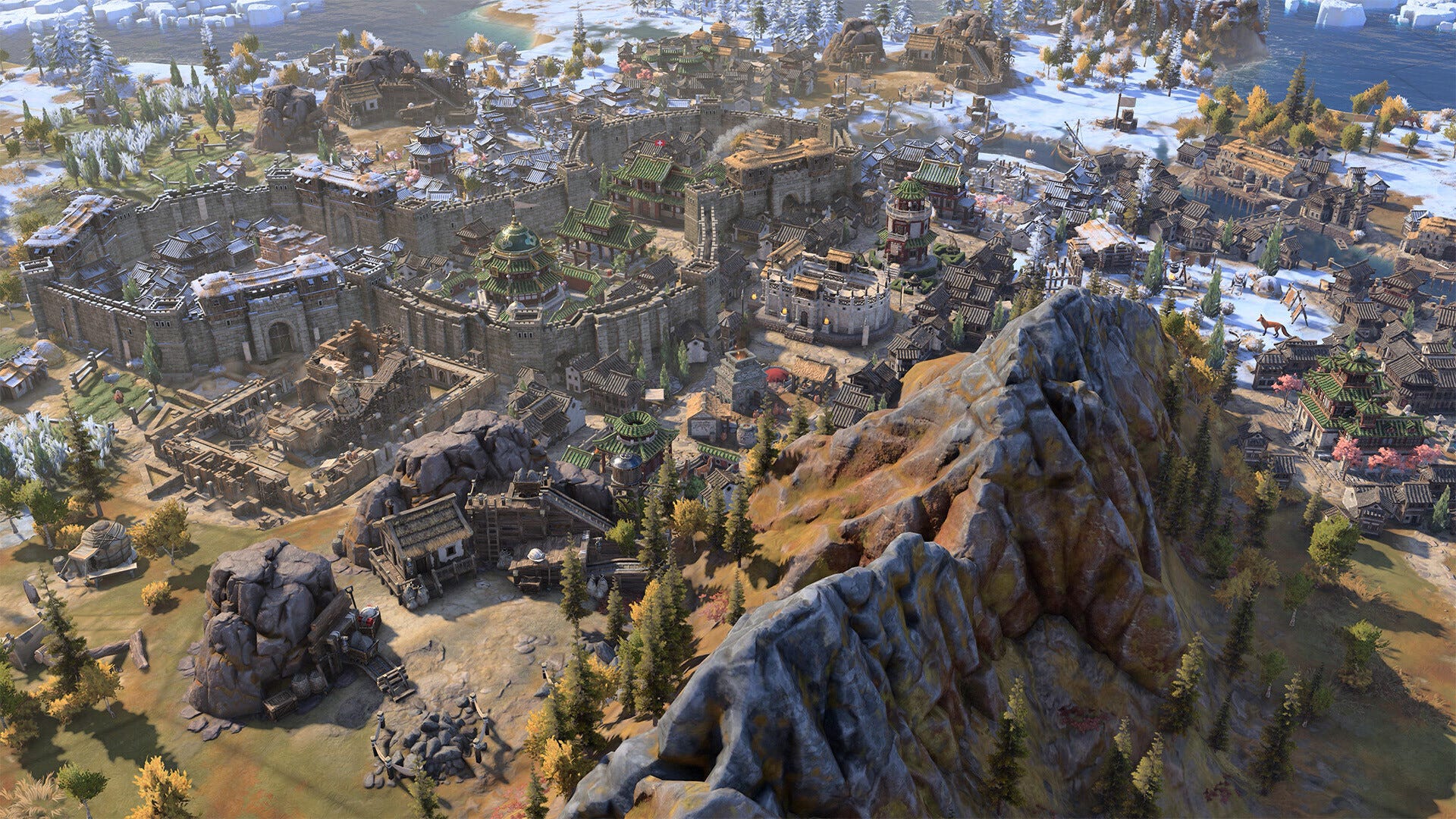
This was written before the big storm(s) hitting the farm… Another cultural piece to tide us over until we’re back…
In an era where traditional ideologies are being questioned and new paradigms are sought, Sid Meier's Civilization VII emerges not merely as a game, but as a profound tool for reimagining the structures that govern our societies. By granting players the agency to experiment with diverse policies, governments, and civilizations, Civ VII serves as both a reflection on history and a sandbox for innovative political thought.
For example, one of the most empowering aspects of Civilization VII is its expansive framework that allows players to design and implement various governmental structures and social policies. As players progress through the ages—Antiquity, Exploration, and Modern—they encounter opportunities to adopt different forms of government, each offering unique bonuses and strategic advantages. For instance, in the Exploration Age, options like Feudal Monarchy and Plutocracy become available, each influencing the civilization's development in distinct ways.
This dynamic system encourages players to critically assess the implications of various governance models, fostering a deeper understanding of how policies shape societal outcomes. By experimenting with different combinations, players can observe firsthand the potential benefits and drawbacks of various political ideologies.
Rewriting the Rules of History
Perhaps the most radical shift in Civ VII is the decoupling of historical leaders from their original civilizations. Players can now assign figures like Ada Lovelace or Tokugawa Ieyasu to lead any culture, encouraging a rethinking of historical determinism and cultural essentialism. This feature allows for the creation of wholly new historical narratives, challenging assumptions about identity, leadership, and destiny.
In doing so, the game enables players to imagine entirely different world orders, ones where progressive thinkers might lead ancient empires, or revolutionary figures shape modern democracies. This opens the door to ideological experimentation and even resistance, providing a platform to explore alternatives to the authoritarian playbook currently being rewritten by regimes like Trump’s.
A Mirror to Rising Authoritarianism
As liberalism falters and the far-right surges—with Trumpism as its most iconic and dangerous incarnation—Civilization VII becomes increasingly relevant. While many games glorify conquest and domination, Civ offers a broader range of paths to success: diplomacy, culture, science, economic development, and religious influence. These paths are not only strategic choices, but philosophical ones. Military conquest is merely one option—and often the least desirable, given the long-term consequences and opportunity costs it incurs.
These alternative victory conditions offer visions of power that reject brute force in favor of cooperation, creativity, and long-term planning. In the context of today’s political climate, the game can act as a kind of counter-programming. It gives players tools to experiment with forms of governance that are inclusive, sustainable, and imaginative. It can inspire dissent not through propaganda, but through play—by showing that another world is not only possible, it can be simulated, iterated upon, and eventually realized.
In a period where traditional forms of literacy are perceived to be in decline, Civilization VII introduces a new form of literacy—strategic and systems thinking. Engaging with the game requires players to analyze complex systems, anticipate consequences, and make decisions that will affect their civilization's trajectory. This form of interactive learning cultivates skills that are invaluable for navigating the multifaceted crises—environmental, political, economic—that define our current era.
Moreover, the game's emphasis on cultural development and the pursuit of a Cultural Victory underscores the importance of cultural capital in global influence. Players learn that military might is not the sole path to dominance; cultural achievements and influence can be equally, if not more, powerful.
Sid Meier's Civilization VII stands as a cultural milestone, offering more than entertainment—it provides a platform for critical engagement with the concepts of governance, policy-making, and societal development. By allowing players to experiment with and reflect upon various political structures and cultural strategies, it fosters an environment where new ideologies and policies can be imagined and tested. In a world grappling with the shortcomings of traditional systems and the rise of divisive ideologies, Civ VII offers a space to explore, innovate, and perhaps discover the frameworks that could guide us toward a more equitable and sustainable future.
Although Civ VII has faced some criticism, for bugs in the user interface, which hilariously involves a connection to our pal Luigi Mangione:
Tiktok failed to load.Enable 3rd party cookies or use another browser