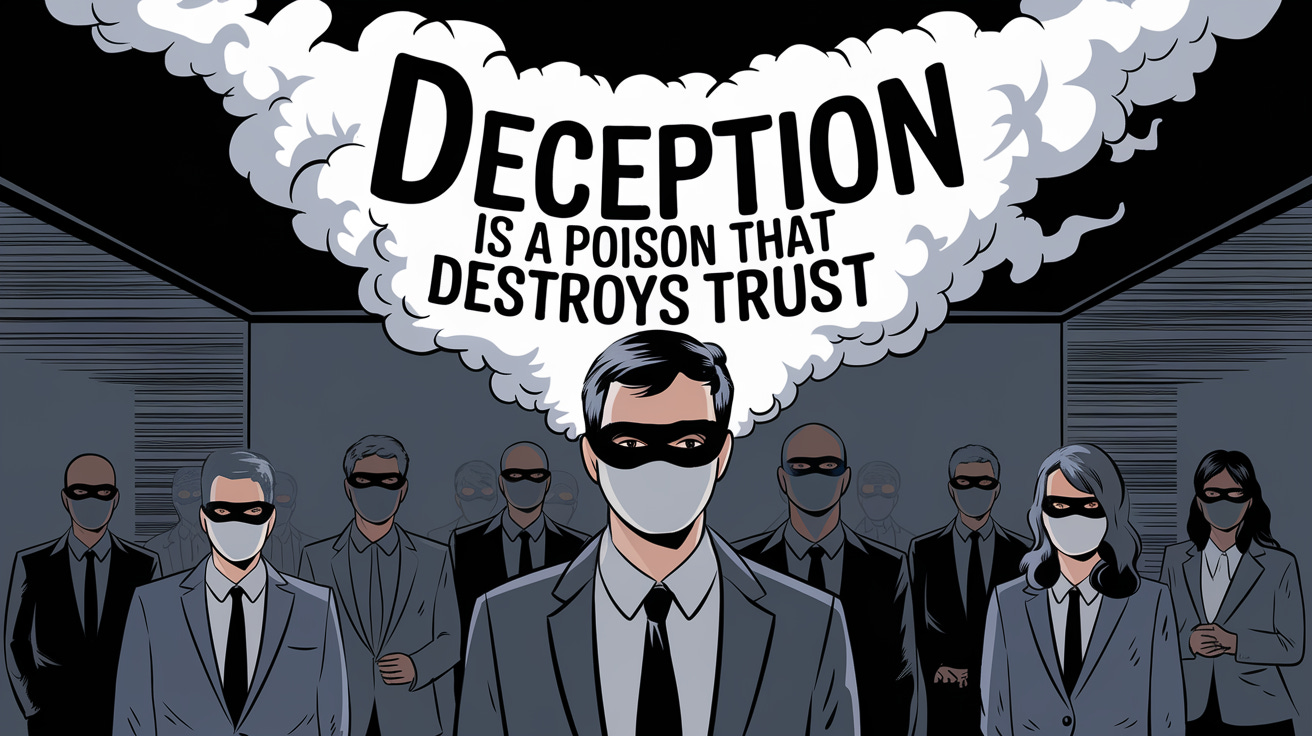
What if the game was always rigged, and the only ones who could see it clearly were those society ignored?
America has long presented itself as a beacon of fairness and democracy. But what if that image is just a well-crafted illusion—part of a long-standing game based on deception, where the rules are bent, broken, or hidden entirely from view?
To understand American politics today, you have to assume the surface is a lie. From the shiny spectacle of elections to the daily theater of media coverage, what we see is rarely what's really going on. Power flows through unseen channels. Decisions are made behind closed doors. And more often than not, what seems like chaos is actually a form of control.
Take the Trump administration’s current economic strategy, for example. To most, it looks reckless: threats of trade wars, monetary sabotage, erratic messaging that spooks investors and destabilizes markets. But what if it’s not incompetence? What if it’s intentional?
The U.S. is staring down the barrel of a massive debt rollover—$7 trillion coming due soon. Low interest rates are essential to make that manageable. Crashing the economy just enough to force the Fed’s hand might not just be a side effect—it might be the strategy. A form of economic shock therapy, timed to benefit those in power while the rest of us deal with the fallout.
If that sounds paranoid, it’s because we’re trained to dismiss this kind of thinking. But in a system built on deception, seeing patterns others miss isn’t paranoia—it’s clarity.
Which brings us to a crucial question: Who is best equipped to see through the lies?
Enter neurodivergent people.
Often pathologized for not “fitting in,” neurodivergent folks are frequently outsiders to social norms. But that outsider status can be a gift. Many are adept at spotting contradictions, questioning assumptions, and resisting manipulation. They’re less susceptible to the emotional cues and groupthink that make deception effective.
They also tend to have a strong internal sense of justice. Not the abstract, performative kind, but a visceral, uncompromising demand for fairness, truth, and accountability.
So what if we built a politics that centered these strengths?
Historical Roots of Seeing Through Deception
The idea of building political movements around outsiders and truth-seers is not new.
In 17th century England, the Diggers and Levellers challenged the deception embedded in monarchy and property rights. They envisioned radical equality, collective ownership, and direct democracy, even as the state tried to silence and erase them.
In the early 20th century, Emma Goldman and fellow anarchists saw straight through the patriotic lies and capitalist myths used to justify war and repression. She was exiled and demonized for her refusal to compromise with authoritarian systems—but her clarity and commitment to justice remain instructive.
Fast forward to the Disability Rights Movement, where activists like Judy Heumann lead the charge for access, dignity, and autonomy. Movements like ADAPT made visible the institutional deception that framed inaccessibility as a personal problem, rather than systemic exclusion.
The Mad Pride movement builds on this legacy by rejecting the notion that neurodivergence or mental illness are defects to be corrected. Instead, it reframes them as sources of insight and strength—a form of resistance against psychiatric and societal deception.
And Indigenous governance systems across the globe, especially in Turtle Island, model distributed authority, cognitive diversity, and consensus-based decision-making. These systems offer a rich alternative to Western deception-based politics, grounded in long-term thinking and reciprocal care.
These precedents show that truth-seeking movements often come from the margins. That those who refuse to play the game are often those most capable of exposing it.
Toward a Neurodivergent Political Movement
What would it look like to organize a political movement around the needs, values, and abilities of neurodivergent people?
Here are some starting points:
Radical Transparency: Assume deception is the norm and build mechanisms to counter it. Open data. Open meetings. Real-time financial disclosure. Political process as open-source code.
Systemic Justice: Prioritize structural reform over performative change. Focus on access, equity, and mutual aid. Center the needs of those most often excluded.
Distributed Authority: Replace hierarchy with networks. Shared leadership. Peer review. A party that doesn’t just include difference but is structured around it.
Cognitive Pluralism: Value all ways of thinking. Create sensory-friendly political spaces. Use clear language, multiple communication methods, and universal design as political tools.
Truth as Praxis: Deception loses power when people act on what they know. A neurodivergent movement wouldn’t just expose lies—it would build alternatives based on lived truth.
In a world where power hides behind illusion, we need people who can see the trick and call it out. We need new political visions built not on image, but on insight.
It may sound idealistic, but maybe that’s the point.
The future of authority might not be about who leads—it might be about who can see clearly enough to tell the truth, and who is brave enough to act on it.