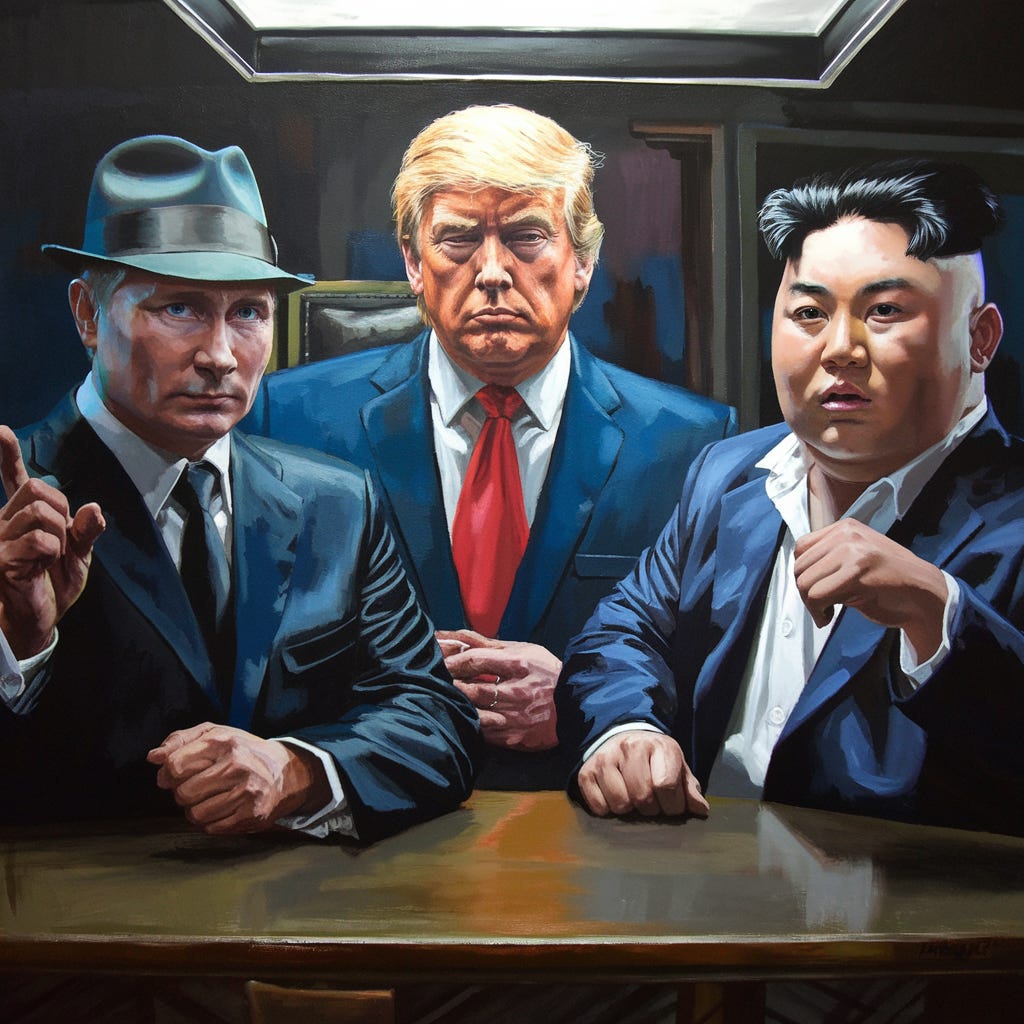
It began with whispers of legal intimidation, escalated into overt retaliation, and now stands as an outright assault on the foundational institutions of American democracy. The Trump administration’s campaign against major law firms, the media, and academia is not a scattershot effort—it is a coordinated strategy to weaken the mechanisms that keep authoritarianism in check. By systematically targeting legal advocates, suppressing journalistic scrutiny, and dismantling academic independence, the administration is working to consolidate power and remove critical barriers to its control.
Let’s look at how this campaign is unfolding, the explicit executive orders being used as weapons, and the broader implications for the rule of law in the United States.
The Attack on Big Law
Law firms have long been instrumental in upholding constitutional rights, representing marginalized groups, and challenging government overreach. But under Trump’s latest directives, engaging in pro bono work against his administration has become an act of peril.
Executive Orders as Political Retribution
The administration has issued multiple executive orders targeting prominent law firms that have been involved in legal challenges against its policies. The language in these orders is strikingly punitive, explicitly barring federal agencies from contracting with these firms and revoking security clearances for their attorneys. The justification? Allegations of "undermining national security"—a vague and broad accusation meant to punish legal opposition.
Executive Order 14089 (March 6, 2025): Directly named Perkins Coie LLP, forbidding any federal agency from contracting with the firm or any entity affiliated with it. The order also barred its attorneys from holding security clearances, effectively preventing them from participating in government-related litigation. The administration justified this move by accusing the firm of "compromising national security" through its past investigations, particularly its involvement in the Steele dossier.
Executive Order 14092 (March 10, 2025): Targeted Covington & Burling LLP, citing its legal defense of Special Counsel Jack Smith. The order revoked security clearances for any Covington attorney who had worked on cases involving Trump, arguing that their access to classified information presented a "threat to government integrity."
Executive Order 14095 (March 14, 2025): Expanded these measures to include Paul, Weiss, Rifkind, Wharton & Garrison LLP, which had provided pro bono representation to individuals prosecuted for their roles in investigating Trump. The order sought to strip the firm of all active federal contracts and barred its lawyers from serving as legal representatives in cases involving the executive branch.
Legal scholars have condemned these actions as blatant attacks on due process, warning that they establish a dangerous precedent where the government can blacklist attorneys based on political affiliation. However the real purpose is to target the legal industry and let them know a new era of retributive justice is upon us.
Federal courts have issued preliminary injunctions against these orders, but the administration has signaled its intent to ignore these rulings and push the matter to the Supreme Court.
Suppressing the Press
The law is not the only pillar of democracy under siege. The Trump administration has simultaneously escalated its assault on the media, attempting to curb its ability to investigate and expose governmental misconduct.
Weaponizing Lawsuits and Revoking Access
Defamation Lawsuits: The administration has launched a series of lawsuits against major news organizations, accusing them of "false reporting" on Trump’s policies. The targets include The Washington Post, The New York Times, and CNN, with legal actions demanding hundreds of millions in damages. While previous administrations have occasionally clashed with the media, this level of legal aggression is unprecedented.
Revocation of Press Credentials: The White House has revoked the press credentials of journalists known for aggressive questioning, effectively barring them from presidential briefings. The administration claims this measure is necessary to "ensure a constructive media environment," but critics argue it is a blatant attempt to silence dissent.
FCC Investigations: The Federal Communications Commission (FCC), under newly appointed pro-Trump leadership, has opened investigations into networks that have aired reports critical of the administration. These investigations, framed as concerns over "national security," have already led to financial penalties for broadcasters airing segments on Trump’s defiance of court orders.
Media watchdog organizations have sounded the alarm, warning that these actions mirror those taken by authoritarian regimes seeking to silence opposition through bureaucratic pressure and financial exhaustion.
Dismantling Academia
Academic institutions have long been spaces for critical analysis and open debate—an intellectual counterweight to political power. But under the Trump administration’s new directives, universities are being reshaped into extensions of executive ideology.
Funding Cuts and Political Retaliation
Federal Defunding of "Subversive" Institutions: A recent executive order slashed federal funding for universities deemed to be "engaging in anti-American rhetoric." Targets include Columbia University, which hosted speakers critical of Trump’s foreign policy, and Georgetown Law, which organized panels on threats to democracy.
Eliminating Diversity and Inclusion Programs: Executive Order 14101 (March 2025) mandates that all federally funded institutions dismantle diversity, equity, and inclusion (DEI) programs, claiming they promote "division rather than unity." This move has led to the closure of dozens of scholarship programs for underrepresented students and the cancellation of faculty hiring initiatives aimed at increasing diversity.
Surveillance of Academic Speech: The Department of Education has introduced new oversight mechanisms requiring faculty to report classroom discussions on political topics. Professors at public universities have faced administrative reprimands for making comments perceived as critical of Trump’s policies.
The result is a chilling effect across academia, where professors and students alike now hesitate to engage in discussions that could put them at odds with the administration.
A Supreme Court Showdown
The battle over these executive actions is heading toward the Supreme Court, which, with its current conservative majority, is likely to uphold many of Trump’s policies. Lower courts have issued rulings against the administration, but many of these decisions are being ignored. In a recent case, the administration proceeded with the deportation of individuals despite a judge’s injunction, arguing that executive authority supersedes judicial review.
The question now is whether the institutions under attack—law firms, media organizations, and universities—can mount an effective resistance. The world is watching as Americans grapple with the reality of an administration determined to reshape democracy into an authoritarian model.
What remains to be seen is whether the public will rise to meet this challenge—or if the institutions that once upheld democracy will collapse under the weight of executive power.