
130: The Alien Enemies Act and Authoritarianism
From Policy to Persecution: How the U.S. is Criminalizing Non-Citizens
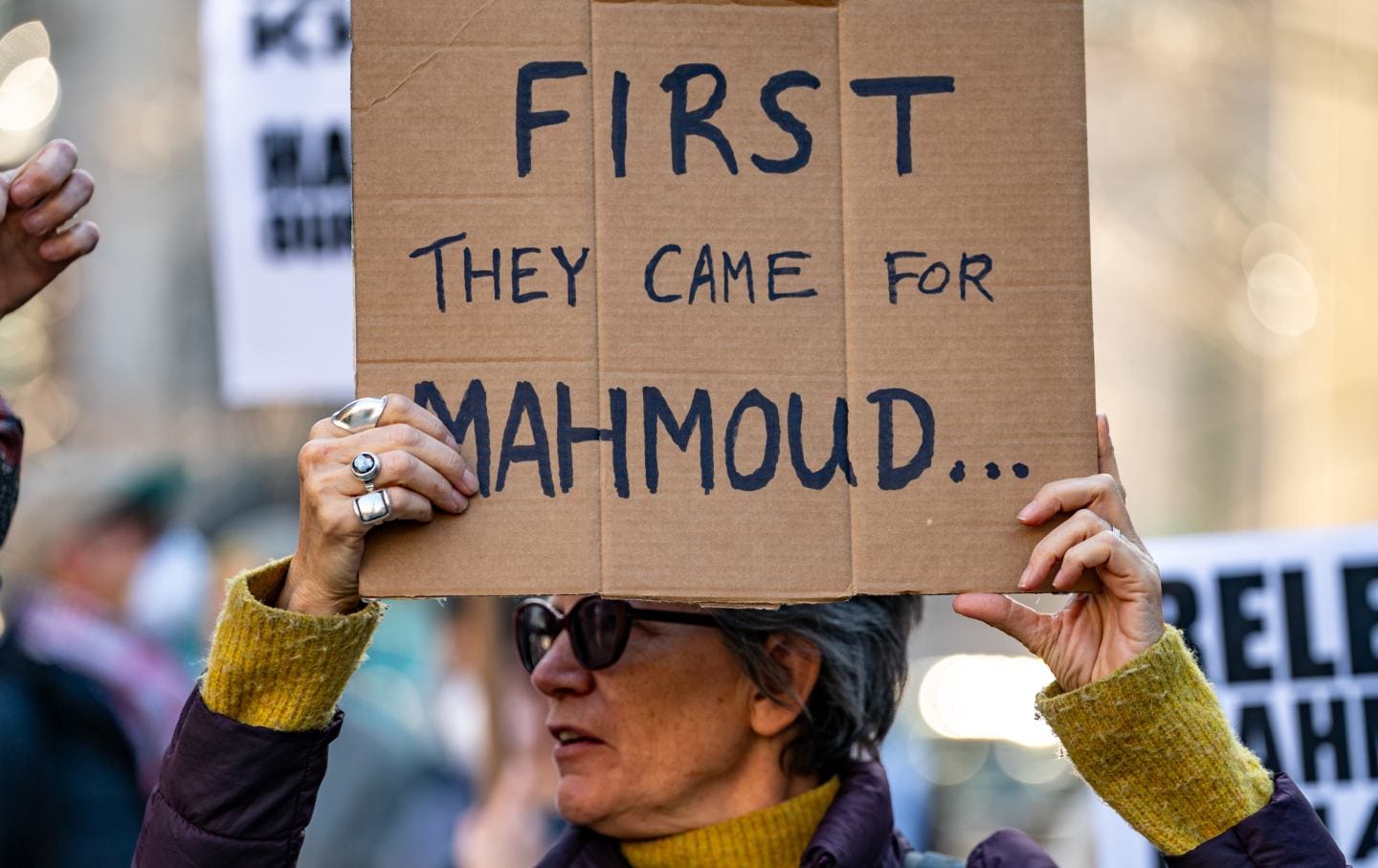
The U.S. government is reviving one of its oldest and most draconian laws—the Alien Enemies Act of 1798—not (yet) as a wartime measure, but as a tool to consolidate executive power and suppress dissent. This escalation in immigration enforcement is not about national security; it is about creating fear, scapegoating marginalized communities, and distracting the public from a larger shift toward authoritarianism. By using immigration as a political weapon, the administration is setting a precedent for unchecked executive authority that could extend far beyond non-citizens.
The Alien Enemies Act was originally designed to allow the U.S. president to detain or deport foreign nationals from hostile nations during times of war. Today, the administration is attempting to reinterpret it for domestic political gain. By labeling certain immigrant groups as national security threats, they can bypass legal protections, expedite deportations, and justify mass detentions.
Legal experts are already challenging this application of the law. The American Civil Liberties Union (ACLU) and the National Immigration Law Center (NILC) have filed lawsuits arguing that using the act outside of a formal war declaration is unconstitutional. The cases cite Youngstown Sheet & Tube Co. v. Sawyer (1952), in which the Supreme Court ruled that executive power has limits, even in times of crisis. The lawsuits also invoke Zadvydas v. Davis (2001), which established that indefinite detention of non-citizens without due process violates the Fifth Amendment. These challenges could eventually reach the Supreme Court, where the administration is betting on a favorable ruling from a conservative majority.
The Case of Mahmoud Khalil
Mahmoud Khalil, a Palestinian activist and legal U.S. resident, was arrested by Immigration and Customs Enforcement (ICE) on March 8th. Authorities falsely claim he has ties to Hamas, but no formal charges have been filed, and no evidence has been presented to support these allegations. His detention is widely seen as politically motivated, given his leadership in organizing pro-Palestinian protests.
Khalil’s legal team has filed a habeas corpus petition in the U.S. District Court for the Southern District of New York, arguing that his detention violates the First Amendment and due process rights. The Center for Constitutional Rights (CCR) has taken on his case, warning that his detention sets a dangerous precedent for suppressing political activism under the guise of national security.
The Detention of Jasmine Mooney
Canadian entrepreneur Jasmine Mooney’s experience at the U.S. border further exposes the arbitrary and punitive nature of current immigration enforcement. Mooney, a businesswoman renewing her work visa, was detained at the San Ysidro border crossing and subjected to inhumane conditions, including being shackled and held in an overcrowded facility with no basic comforts.
The Canadian Civil Liberties Association (CCLA) and Global Affairs Canada have both issued statements condemning her treatment. Meanwhile, legal scholars argue that her case could violate the Vienna Convention on Consular Relations, which guarantees foreign nationals access to consular assistance when detained abroad. Diplomatic pressure from Canada is mounting, but the U.S. administration appears unmoved. Maybe the invocation of the Alien Enemies Act is about a larger war?
Economic Consequences of Immigration Crackdowns
Beyond the legal and humanitarian concerns, these policies will have severe economic repercussions. The U.S. relies heavily on immigrant labor in agriculture, construction, healthcare, and technology. Mass deportations and visa restrictions will shrink the workforce, drive up labor costs, and disrupt key industries.
The American Farm Bureau Federation warns that deporting undocumented workers could lead to a 5–7% drop in agricultural output, driving food prices higher.
The National Association of Home Builders reports that labor shortages in construction are already delaying projects and increasing housing costs, a problem that will worsen with further immigration crackdowns.
The U.S. Chamber of Commerce has cautioned that restrictions on high-skilled visas (such as H-1Bs) could deter international talent from working in the U.S., reducing innovation and competitiveness.
Legal Challenges and the Broader Implications
As noted, the ACLU, NILC, and CCR have launched legal battles against these policies. However, given the current judicial landscape, these cases may take years to resolve. The Supreme Court's recent track record suggests a willingness to defer to executive authority on immigration matters, as seen in Trump v. Hawaii (2018), which upheld the so-called “Muslim Ban.” If the courts side with the administration, future presidents—regardless of political affiliation—will have a dangerous new precedent to wield unchecked power over non-citizens.
This shift isn’t just about immigration. It’s a test case for broader authoritarian tactics: increasing executive power, using legal loopholes to bypass democratic institutions, and eroding civil rights under the guise of national security.
Advice for Non-Citizens: Avoid the U.S.
In light of these developments, non-citizens should carefully reconsider any travel plans to the United States. The risk of arbitrary detention is higher than ever, and legal recourse may be limited.
For those who must travel, consult with legal experts, ensure all documentation is in perfect order, only bring electronic devices that have been scrubbed/cleaned, and be prepared for heightened scrutiny. However, the safest course of action is to avoid the U.S. altogether until the legal and political landscape changes.
What happens to immigrants today will shape the future of authority tomorrow. If we fail to push back, these policies will only expand, impacting citizens and non-citizens alike. The time to resist is now.
Tiktok failed to load.Enable 3rd party cookies or use another browser