
129: Agroecology at the Academy of the Impossible
Agroecology and the Blueprint for a New World
An expression of genuine gratitude goes to Bill F. and Antonia Z. who recently upgraded from a free subscription to paid! While this publication will always be free, it makes a massive difference when someone shows some love by redistributing wealth! Of course we also love it when you like, comment, and share our posts, so thank you to all of you who do! It’s how we can make a difference and increase the intelligence in our public discourse.
Today’s issue may appear as a digression from our usual subject matter, but instead it is central to our work and vision. Specifically our broader methodology. We’re sharing this partly so you understand where we’re coming from, but also so you understand where your funds would go if you do decide to upgrade to a paid subscription. Similarly over the next couple of months, if we miss a day or two, it is because the start of the season is now upon us, and the work is plentiful. 🤠🐐
Agroecology as a Model for a Just Future
The world is changing, and so too must our approach to food, land, and knowledge. The industrial model of agriculture, built on extraction, monoculture, and corporate control, has left us with depleted soils, vulnerable food systems, and a fragile ecological balance. As we confront the crises of climate change, economic instability, and authoritarian power structures, we must also ask: what kind of world do we want to build? What systems will sustain us—not just in food, but in politics, technology, and knowledge itself?
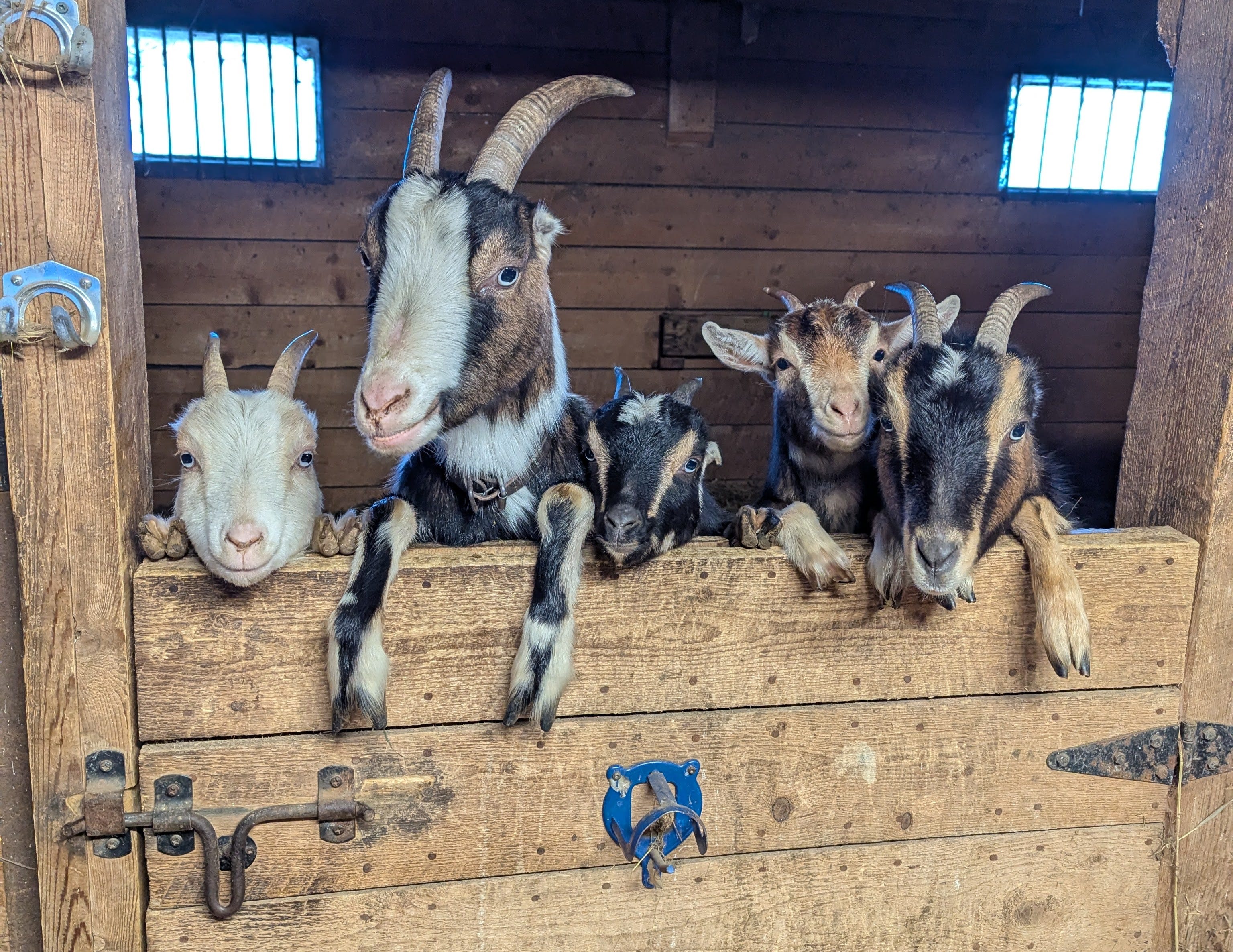
At the Metaviews farm The Academy of the Impossible, we have embraced agroecology as the foundation of our approach to farming, education, and research. Agroecology is a framework for autonomy, resilience, and collective intelligence. It aligns with our larger commitment to public education and knowledge mobilization while offering a practical, hands-on approach to systems change. It is agriculture, technology, and media working in concert to create a sustainable, decentralized future.
Agroecology promotes regenerative practices, biodiversity, and farmer autonomy. But more than that, it serves as a political and economic framework, emphasizing decentralized knowledge, local resilience, and collective ownership.
Our farm operates as a living lab, a place where regenerative farming meets technological experimentation and media engagement. This is not just about growing food—it is about developing an open-source model for how knowledge, technology, and ecological wisdom can converge.
We integrate soil regeneration techniques to enhance biodiversity and carbon sequestration. But we also explore how sensors, AI, and automation can be leveraged to support—not replace—small-scale farmers. The key distinction here is control: we believe in technology that serves people, rather than making people serve technology.
We also see the farm as an educational platform. Agroecology is about democratizing knowledge—just as we reject monopolies in agriculture, we reject the monopoly on expertise. Through research, and open dialogue, we engage in public education, knowledge-sharing, and collaborative learning with farmers, technologists, and people who eat food. 😎
The Political Implications of Agroecology
Adopting agroecology is a political act. It challenges the hegemony of industrial agriculture, the corporate capture of food systems, and the erosion of local farming knowledge. It pushes back against a world where a handful of agribusiness giants control seeds, soil, and distribution.
We need food systems that are adaptive, resilient, and democratic—not ones that are dictated by supply chains and profit margins. Agroecology serves as a decentralized alternative to top-down models of food production, much like how open-source software serves as an alternative to corporate-controlled technology.
It also challenges the false dichotomy of nature vs. technology. Many assume that embracing nature means rejecting technology, but in reality, the right technologies—those designed for human and ecological well-being—can help us align our efforts with nature rather than against it.
As the political and economic crises we find ourselves in grow deeper, it will be interesting for us all to focus on where our food comes from, how policy impacts that process, and who ultimately has authority to weigh in on how our food is produced and by whom.
While this publication will continue to focus on the future of authority, from a philosophical, technological, and political economic perspective, we can and will touch upon food and farming as well, if there is interest. You can like or comment on this issue to express your preferences.
The future is unwritten, but it is ours to cultivate. Agroecology is more than just farming—it is a radical vision for the world we want to build.
Latest episode of Red-Tory is out, and we’re joined by our friend and Metaviews member Jim Hoggan: