
125: Is Trump Poised to Invoke the Insurrection Act?
And the case of Jessica Brösche
The Insurrection Act of 1807 empowers the U.S. President to deploy military forces domestically under specific circumstances, such as suppressing civil disorder, insurrection, or rebellion. Recent developments suggest that President Donald Trump may be considering invoking this act. On January 20, 2025, he signed an executive order declaring a national emergency at the southern border and directing the Secretaries of Defense and Homeland Security to submit a report within 90 days, including recommendations on achieving complete operational control and consideration of invoking the Insurrection Act. This move signals a broader strategy to consolidate executive power, using emergency justifications to reshape immigration enforcement, border security, and even domestic policing.
Militarizing Immigration and Expanding Private Detention
If the administration does invoke the Insurrection Act, it will likely be under the guise of addressing immigration and border security. This aligns with the broader trend of escalating enforcement, which has included the reopening of private detention centers and the expansion of family detention policies.
Private detention facilities have long been a controversial element of U.S. immigration enforcement, profiting from the incarceration of migrants, asylum seekers, and those accused of violating visa terms. Under Trump’s latest immigration policies, these facilities are experiencing renewed expansion. The reactivation of the notorious South Texas detention center and increased contracts for private prison operators indicate a renewed effort to use incarceration as a deterrent. The financial incentives for these private entities create a troubling dynamic—one where prolonged detentions and stricter border enforcement serve corporate interests as much as political ones.
The case of Jessica Brösche, a German tattoo artist detained in a private immigration facility, exemplifies the human cost of this system. In late January 2025, Brösche attempted to enter the United States from Tijuana, Mexico, accompanied by her friend, Nikita Lofving, a U.S. citizen. Despite possessing a valid travel visa and a return ticket to Germany, U.S. Customs and Border Protection (CBP) officials detained her, alleging she might work illegally. What followed was a harrowing experience: nine days in solitary confinement, followed by over a month in Otay Mesa Detention Center, a privately run facility notorious for its poor conditions.
Brösche’s ordeal is not an isolated incident. Several foreign nationals have reported increased scrutiny and detention at ports of entry, often without clear justification. The expansion of immigration detention, combined with aggressive enforcement policies, is making the United States an increasingly hostile destination for visitors, even those with legitimate documentation. The reliance on private detention facilities ensures that there are vested financial interests in maintaining and expanding these policies.
Tiktok failed to load.Enable 3rd party cookies or use another browser
Why the Insurrection Act Matters
The push to invoke the Insurrection Act fits into this broader pattern of militarizing domestic policy. If Trump moves forward with using military forces for immigration enforcement, it would set a dangerous precedent.
Expanded Military Presence in Civilian Affairs: Using military forces for domestic law enforcement bypasses traditional legal processes and raises concerns about civil liberties.
Increased Arbitrary Detentions: As seen with cases like Brösche’s, the expansion of enforcement efforts disproportionately impacts protesters, travelers, migrants, and asylum seekers.
Strengthening the Private Detention Industry: The longer individuals are detained, the more profit these corporations make, ensuring that any policy shift toward military enforcement benefits their bottom line.
These developments also raise questions about the long-term trajectory of U.S. governance. If an administration can justify deploying the military to enforce immigration policy, what stops future leaders from using it to quell protests or suppress political opposition?
Tiktok failed to load.Enable 3rd party cookies or use another browser
If the Trump administration follows through on these plans, we can expect a surge in legal challenges, public resistance, and international condemnation. However, the machinery of private detention and militarized border enforcement is already in motion. Travelers to the U.S., especially those from targeted demographics, should exercise heightened caution.
The question isn’t just whether Trump will invoke the Insurrection Act—it’s whether the infrastructure for authoritarian enforcement is already being built, piece by piece, through executive orders, private contracts, and a manufactured state of emergency. The time to challenge these policies isn’t when the military is deployed—it’s now, as the framework for mass detention and domestic militarization is being assembled in plain sight.
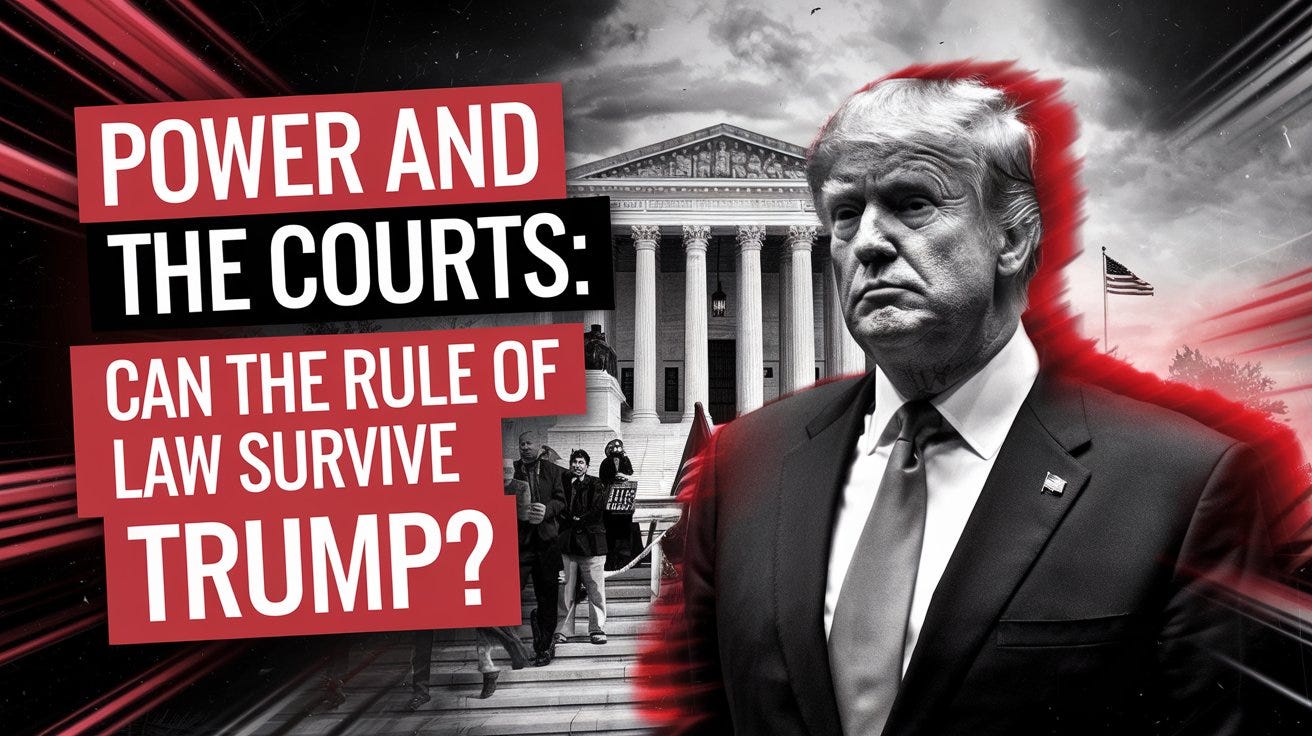
Latest Red-Tory episode gets into whether the judiciary can curb or stop Trump: