
124: Why Fascism Rejects Abstract Thought
They Fear Flexible Identities
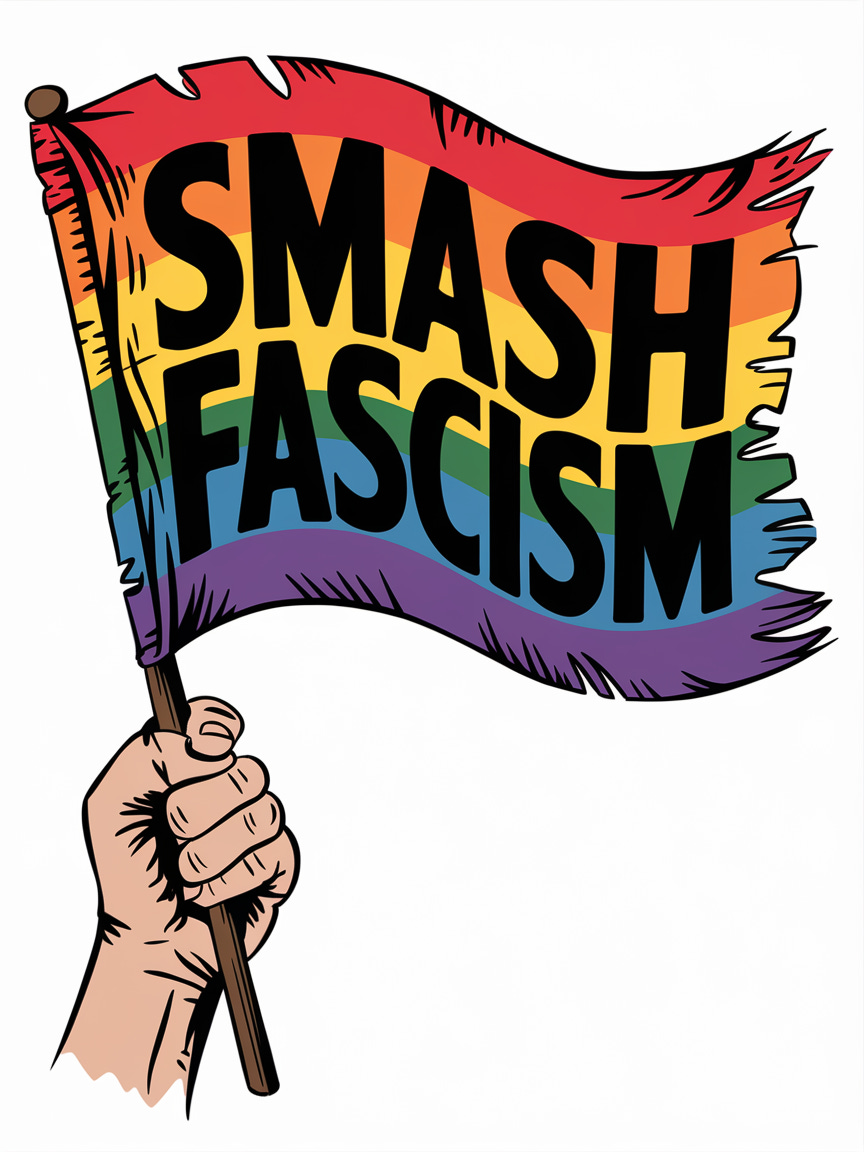
There is a reason fascism recoils at complexity. At its core, fascism is a rejection of abstract thought, a refusal to engage with ambiguity, nuance, or the ever-shifting nature of human identity. In its place, fascists impose rigid categories, fixed hierarchies, and unyielding doctrines, weaponizing simplicity as a means of control. This is why fascism is inherently opposed to ideas that challenge static identities—trans identities, racial fluidity, gender nonconformity—because they expose the reality that identity is constructed, dynamic, and, above all, political.
The Fascist Fear of Flexibility
A society that embraces abstraction is one that acknowledges change. It understands that identity is not a prison but a negotiation, a space of personal and collective meaning-making. This terrifies fascists, who demand that people be reduced to rigid roles: man or woman, superior or inferior, us or them. Trans people, in particular, embody a direct challenge to this worldview. Their existence proves that identity is not dictated by biological determinism but is instead shaped by social, cultural, and personal factors. This is an unbearable contradiction to a fascist mindset, which depends on the idea that people are born into fixed positions with no possibility of transformation.
This rigidity is also evident in fascist racial ideology. Rather than accepting the historical and genetic reality that race is a social construct shaped by migration, intermixing, and political power, fascists insist on a fantasy of racial purity. They seek to impose categories that do not reflect reality, not because they misunderstand the science, but because reality itself is a threat to their ideology.
Trump, Tariffs, and the Consequences of Ignoring Abstraction
A real-world example of the failure to think abstractly can be seen in Donald Trump’s approach to tariffs. Trump has long championed tariffs as a tool to punish, particularly Canada, under the simplistic assumption that trade is a zero-sum game. However, abstract thinkers—economists, trade experts, and policy analysts—have long warned of the unintended consequences of such policies: supply chain disruptions, increased costs for domestic manufacturers, and retaliatory tariffs that harm American businesses and consumers alike.
Now those warnings have come true, and even Trump himself has started to acknowledge the pain his tariffs have caused. Yet this recognition hasn’t stopped his approach or the suffering being felt as a consequence of these policies. This is a textbook example of how a rigid, authoritarian mindset that refuses to engage with complexity results in predictable failure. Instead of anticipating and mitigating consequences, such leaders only react once the damage is undeniable.
The Difference Between Cults and Culture: MAGA as a Cult
Another way to understand the necessity of abstract thought is by looking at the difference between cults and culture. A cult thrives on certainty. It demands absolute belief, rigid adherence to doctrine, and an aversion to questioning authority. Cults require members to submit to a singular interpretation of reality, and those who introduce complexity or doubt are cast out as threats.
Trump’s MAGA movement functions as a cult. It thrives on unwavering loyalty, a black-and-white worldview, and an intolerance for dissent. The movement’s strength lies in its ability to shield itself from contradiction—when reality does not conform to its beliefs, it simply denies reality. This is why Trump can make bold claims that contradict past statements, yet his followers remain unshaken. The movement’s identity is built on faith, not reason.
Culture, on the other hand, embraces uncertainty. It is an evolving, decentralized conversation that allows for multiple perspectives, conflicting interpretations, and ongoing transformation. Unlike cults, cultures survive and thrive through adaptation and dialogue, not dogma and coercion. The ability to hold multiple, sometimes contradictory ideas at once is what makes culture resilient and dynamic, whereas the inflexible certainty of cults leads them toward inevitable collapse.
To defeat MAGA, we need a culture—not just an opposition movement, but an alternative social fabric that embraces complexity, fosters dialogue, and encourages people to think beyond slogans and simplistic narratives. Democracy cannot survive within a cultish mindset; it requires an active, questioning public that values uncertainty as a path to deeper understanding.
Why Abstract Thought Is in Decline
Abstract thought is a prerequisite for democracy. A democratic society requires people to consider multiple perspectives, to question assumptions, and to recognize that truth is often complex and evolving. Without it, politics devolves into authoritarianism, where simple narratives reign supreme and questioning is punished.
Yet abstract thinking is not as widespread as it should be. Education systems, particularly in neoliberal economies, have deprioritized philosophy, art, and critical theory—disciplines that cultivate abstraction—in favor of STEM and market-driven skills. Social media, with its demand for immediate, emotion-driven reactions, has further atrophied our collective ability to think abstractly. The result is a society where people are less equipped to grapple with complexity, making them more susceptible to authoritarian narratives that promise certainty in a world that is anything but certain.
Defending Abstraction as a Democratic Act
To fight fascism, we must defend abstract thought. This means embracing the discomfort of ambiguity, challenging our own biases, and fostering intellectual curiosity. It means protecting spaces where people can explore identity, question established norms, and engage in open-ended discussions. It means resisting the pressure to oversimplify in the face of complexity.
Fascism thrives on fear—fear of change, fear of uncertainty, fear of the unknown. But democracy requires courage. The courage to think, to imagine, and to embrace the fluidity of identity and society itself. If we are to defend democracy, we must defend abstraction. It is not an intellectual luxury; it is a necessity for freedom itself.
Part of today’s issue was inspired by this fantastic conversation with Tamika Abaka-Wood: