
121: Crypto Corruption, FBI Purges, and Economic Warfare
A Storm of Power Plays in 48 Hours
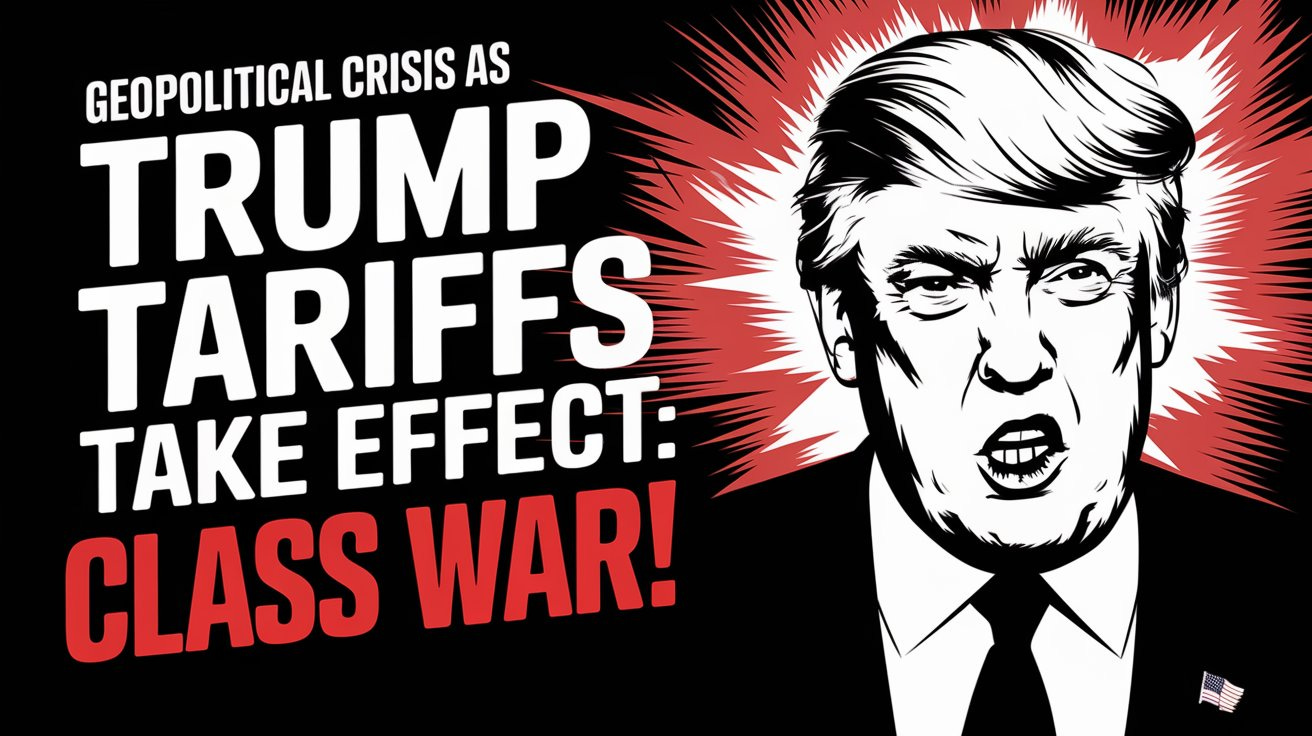
The last 48 hours have provided a stark illustration of the future of authority under the Trump regime. The forced retirement of FBI New York field office head James Dennehy, the announcement of a U.S. cryptocurrency sovereign fund, the signals of lifting Russian sanctions, and the imposition of tariffs on Canada and Mexico all fit into a broader picture of how power is being wielded. These events are not isolated; they are interconnected expressions of a state consolidating power, testing the boundaries of its authority, and reshaping global alignments.
The FBI Purge: A Warning to the Bureaucracy
James Dennehy’s forced retirement is more than just a routine leadership change—it is a warning shot to federal law enforcement. The move comes amid a broader effort to reshape the FBI leadership, particularly targeting those who played a role in investigating January 6 and other matters of political sensitivity to the Trump administration. The forced departure of Dennehy, who had resisted directives to politicize investigations, is a clear message to the rest of the bureaucracy: loyalty to the regime is paramount.
This type of purge is a well-worn tactic in authoritarian playbooks. It ensures that those in key positions serve not the institutions they were appointed to lead, but the personal and political interests of those in power. This consolidation of control over federal law enforcement is a crucial step in reshaping the state to serve political ends rather than the rule of law.
Crypto as a Corruption Machine and Market Manipulation Tool
The sudden announcement of a U.S. "Crypto Strategic Reserve" raises more questions than it answers. Ostensibly designed to give the United States a foothold in the digital currency space, the fund’s structure and leadership—spearheaded by former tech investor David Sacks—reveal a clear opportunity for corruption.
The timing of the announcement was no coincidence. Just before the reserve was announced, crypto prices were in decline, with investors reacting to broader economic uncertainty. The news reversed that trend entirely—crypto markets surged, while traditional capital markets entered freefall after the confirmation of sweeping tariffs on Canada and Mexico. The strategic sequencing of these events suggests that the administration is using crypto not just as a speculative asset but as a tool to manipulate financial markets and foster alternative economic power bases.
Tiktok failed to load.Enable 3rd party cookies or use another browser
The selection of certain cryptocurrencies over others has already led to massive market shifts, benefiting those who were positioned ahead of time. The opaque nature of crypto transactions provides an avenue for financial flows that escape traditional oversight, making it a powerful tool for graft. If this fund is not merely a speculative play, it may well be a war chest—one designed to fund operations beyond the reach of traditional state finances, whether for patronage, bribery, or illicit international dealings.
Lifting Sanctions on Russia
The administration’s signals that it may remove sanctions against Russia reinforce its broader geopolitical realignment. While framed as a pragmatic step towards peace, this is in reality a concession that strengthens Moscow’s position while undermining NATO and Ukraine.
Tiktok failed to load.Enable 3rd party cookies or use another browser
Trump’s recent frustration with Ukrainian President Volodymyr Zelenskyy’s insistence that the war is far from over suggests a transactional approach to global conflict: if you do not comply with the White House’s diplomatic narrative, the support disappears. This pattern of conditional alliances extends beyond Ukraine—Trump’s treatment of Mexico and Canada follows a similar logic.
Tariffs as Class War
The newly announced tariffs on Canada and Mexico are not about economics—they are about control. The stated justifications, ranging from protecting American jobs to preventing "unfair" trade practices, do not hold up under scrutiny. The reality is that these tariffs are a form of economic intimidation, a means of exerting pressure on sovereign neighbors and testing their willingness to submit to U.S. demands.
For working and middle-class Americans, these tariffs mean higher prices on essential goods. Unlike the wealthy, who can absorb the increased costs or shift their supply chains, the majority of consumers will bear the burden of these economic disruptions. This is class war disguised as nationalism—an economic policy that punishes the many to serve the political ambitions of the few.
Furthermore, these tariffs serve as a warning to Canada and Mexico: comply with U.S. foreign policy and economic demands, or suffer the consequences. This is not a negotiation; it is coercion. By imposing these tariffs, the Trump regime is signaling that sovereignty is conditional—subservience to American economic and political directives is the price of stable relations.
The Road Ahead
Taken together, these developments reflect a government increasingly unconstrained by institutional checks, engaged in a multi-front campaign to reshape domestic and international power structures. The FBI purge demonstrates the willingness to remake federal agencies in its own image. The crypto fund creates a financial apparatus that operates outside traditional oversight while also serving as a market manipulation tool. The potential lifting of sanctions on Russia signals a realignment in global power. And the tariffs on Canada and Mexico weaponize economic policy as a tool of subjugation.
These are not the actions of a state committed to stability or rule-based governance. They are the maneuvers of an administration consolidating authority through intimidation, economic coercion, and selective enforcement of laws. Understanding these developments in relation to one another is crucial—this is not just a shift in policy, but a transformation in the very nature of authority itself.
We talk about this in greater detail on the latest episode of Red-Tory: