
114: Trump’s Military Purge
Consolidating Command for Domestic Deployment
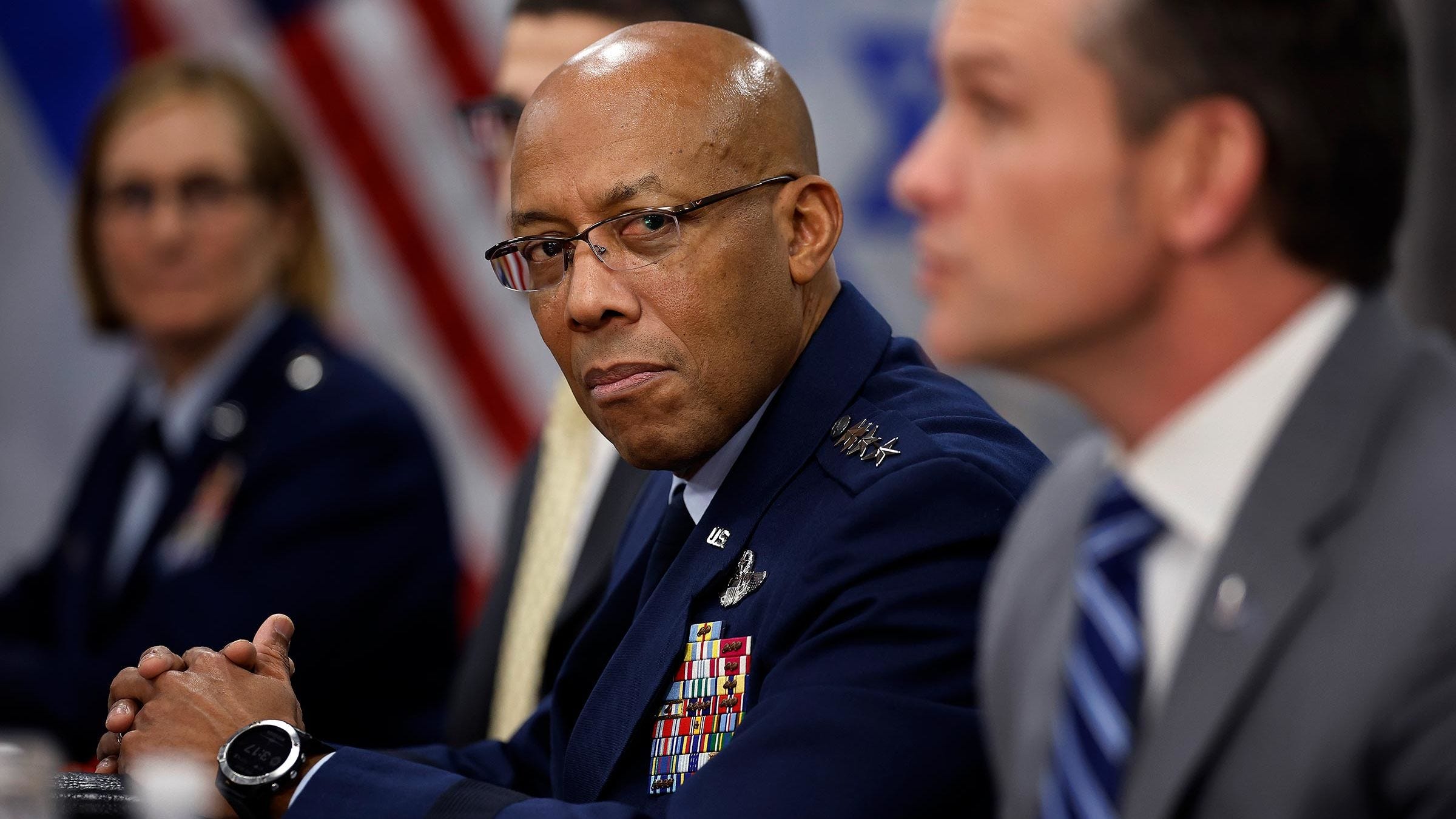
The Trump administration has moved aggressively to reshape the U.S. military, ensuring loyalty at the highest levels while reorienting its focus toward domestic operations. The recent dismissal of top Judge Advocate General (JAG) officers, coupled with the sweeping firings of military leadership, signals a dramatic shift—not just in personnel, but in doctrine. The message is clear: the priority is not adherence to law but to power.
Secretary of Defense Pete Hegseth, a longtime advocate of a ‘warrior ethos’ free from what he sees as the bureaucratic shackles of military lawyers, has overseen the removal of the top JAGs in the Army, Navy, and Air Force. This unprecedented action aligns with broader efforts to sideline those who might question legally dubious orders, especially as the administration leans into militarized domestic policy.
Without legal officers advising on the Geneva Conventions, rules of engagement, or constitutional protections, the military is being positioned as a force of raw power, untethered from traditional legal constraints. This is particularly concerning as Trump has already expanded the role of the military in immigration enforcement, using troops to fortify the border and even oversee the mass detention of migrants at Guantánamo Bay.
Adding to the sweeping consolidation of military power, Trump has dismissed two senior members of the Joint Chiefs of Staff, replacing them with a figure who lacks the requisite experience for the role. This appointment further signals that loyalty, rather than competence, is now the chief qualification for high-ranking military positions. Critics argue that such moves compromise the effectiveness of the U.S. military, placing political considerations over strategic and operational expertise.
From Global Force to Hemispheric Enforcer
The refocusing of military priorities is also evident in a shifting grand strategy. Rather than maintaining global hegemony, the U.S. appears to be consolidating control over the Western Hemisphere at the expense of its traditional commitments in Europe and the Indo-Pacific. This strategic contraction coincides with increasing alignment—or at least tacit understandings—between the U.S., China, and Russia over spheres of influence.
Rather than confronting China over Taiwan or Russia over Ukraine, Washington may instead seek an accommodation. Could there be an implicit agreement in which the U.S. turns a blind eye to China’s ambitions in Taiwan in exchange for Chinese acquiescence to American dominance in Canada and Latin America? The logic of empire suggests that such backroom deals are far from impossible. A divided world order—where great powers carve out exclusive zones of control—may be emerging, a return to spheres-of-influence politics reminiscent of the 19th century.
Domestically, the dismissal of military legal officers raises alarms not just about external warfare but about the potential deployment of military force against domestic opposition. Should political unrest escalate—whether in response to mass deportations, economic instability, or electoral disputes—the administration is laying the groundwork for a military that is unquestioning and aggressive.
The idea of ‘might makes right’ replacing legal order within the U.S. armed forces is not just a concern for legal scholars—it’s a red flag for anyone who values democracy. When force is unbound by legal or ethical constraints, the potential for human rights abuses and authoritarian overreach becomes the rule, not the exception.
The U.S. military has long functioned as an institution bound by law and oversight. The dismissal of JAG leadership is an indication that this may no longer be the case. With Trump consolidating control, refocusing military priorities domestically, and reshaping strategic alliances, we are witnessing a transformation of American military power from a global enforcer of order to a hemispheric strongman, prioritizing domestic suppression and regional dominance.