
95: The Power of Vulnerability and the Fight for Justice
Trans Rights, Community, and Solidarity
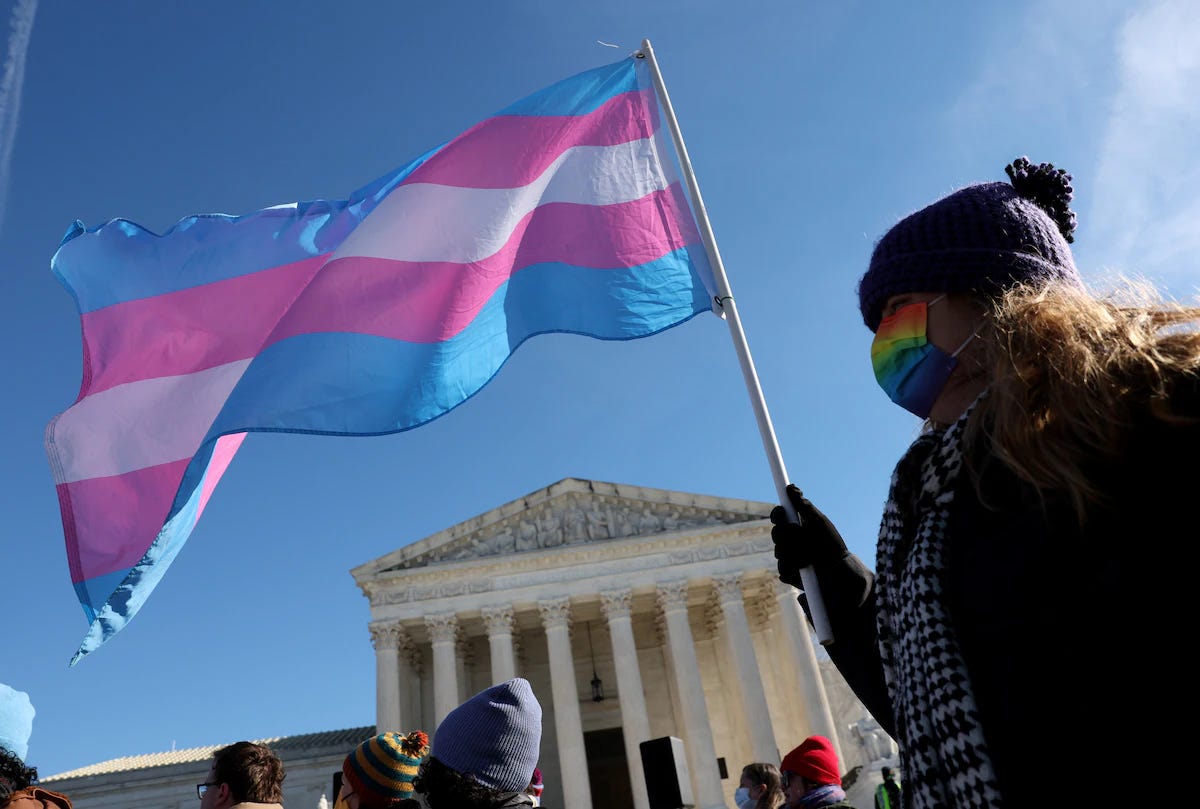
The Trump regime has escalated its war on trans rights with executive orders and rhetoric that seek to erase, criminalize, and dehumanize trans people. This is not just policy; it is an assertion of power—an attempt to redraw the boundaries of who is allowed to exist in public, who has access to dignity, and who is pushed to the margins. It is part of a broader campaign to consolidate authority through division, fear, and violence. But it also reveals a deeper truth: power does not come from the ability to persecute and punish. It comes from what people are willing to accept—and more importantly from what they are willing to resist.
The fight for trans rights is not a niche issue; it is the frontline in the battle for a world where we take care of each other. It is a fight that is about more than just laws and policies—it is about how we understand community itself. The cliché view of community is one of shared identity, a sense of belonging through similarity. But what if the real foundation of community is not what we have in common, but how we hold each other up in times of need? What if strength is not found in individual agency but in collective care?
This is where the power of vulnerability comes in. To be vulnerable is to be human. It is to acknowledge that we all need support, that we all experience pain, that we are all interdependent. And it is precisely because of this interdependence that solidarity becomes not just an ethical stance but a necessity. A movement that fights for trans rights must also be a movement that fights for everyone who is threatened by the forces of reactionary power—immigrants, workers, disabled people, queer people, racialized communities, and all those who do not fit within the rigid structures of authoritarianism.
This is why the response to the fascism of the Trump regime must be a mass movement—one that is broad, diverse, and uncompromising in its commitment to justice. Fascism thrives on isolation. It seeks to break people down, to make them feel alone, to convince them that no one will come for them when they are targeted. A mass movement disrupts this strategy by showing up for one another. It makes visible the interconnectedness of struggles that the ruling class tries so hard to keep separate.
The stakes are high, but so is the potential for transformation. History has shown that movements built on care, solidarity, and a refusal to leave anyone behind can reshape the world. The question is not whether such a movement is necessary—it is whether we will have the courage to build it, to commit to each other, to understand that the power of the many is greater than the cruelty of the few.
Now is the time to act. Not just for trans rights, but for the right to a future where no one is disposable. Vulnerability is not a weakness; it is the foundation of solidarity. And solidarity is the only force strong enough to challenge the rise of fascism.