
91: Kash Patel and COINTELPRO 2.0
The Consequences of a Culture of Distrust
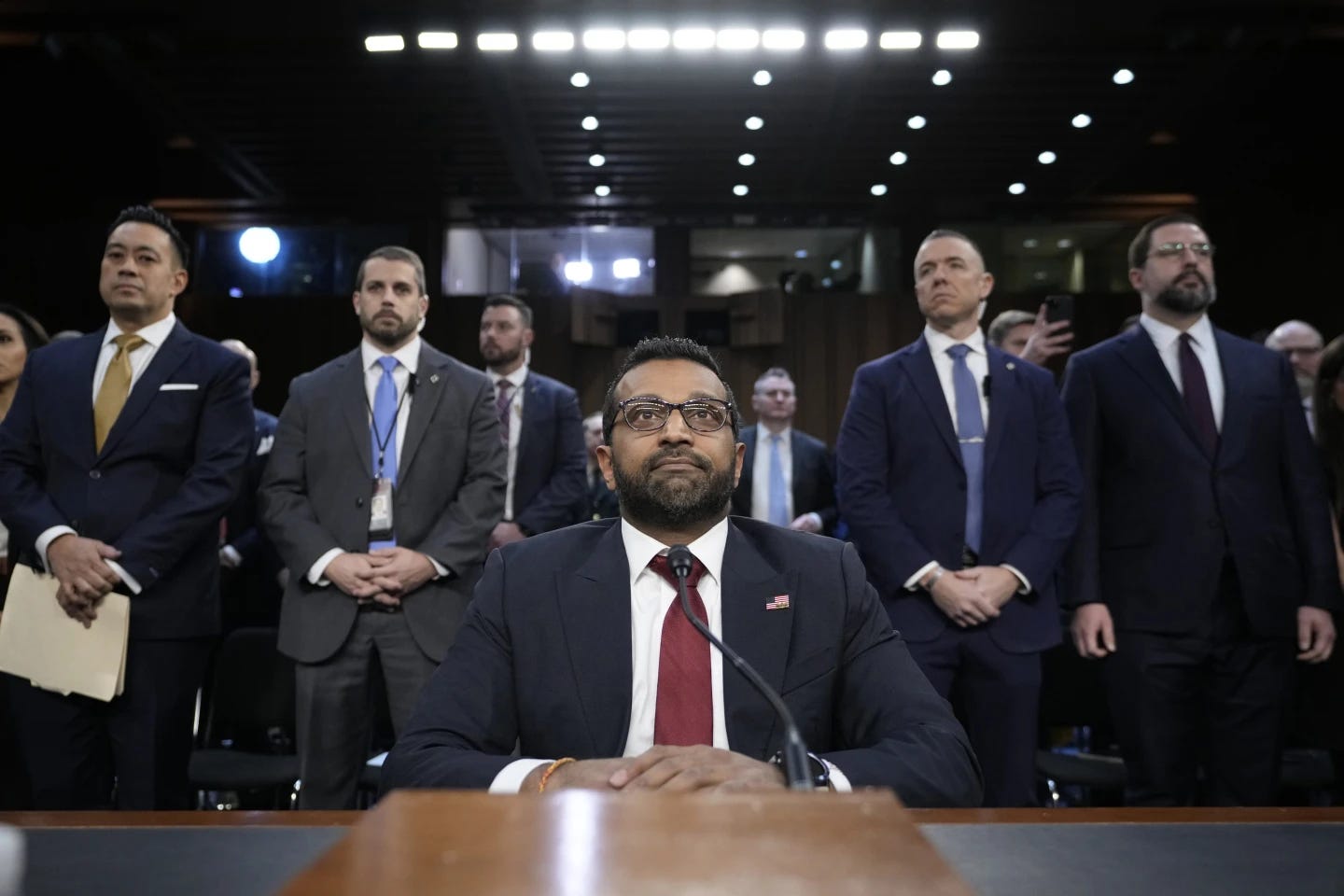
The nomination of Kash Patel to lead the FBI is not just another appointment; it is a signal that the U.S. is entering a dangerous new era of distrust that enables authoritarian policing. Patel’s nomination—rooted in loyalty and ideological extremism rather than law enforcement experience—demonstrates a deliberate effort to erode public confidence in federal law enforcement and repurpose it as a weapon for political retribution. This marks a dark turn in American history, echoing the worst excesses of the COINTELPRO era, when the FBI functioned as a political police force rather than an enforcer of the law.
The Shadow of COINTELPRO
The FBI has long struggled with its dual identity: a crime-fighting institution and a political enforcement tool. From 1956 to 1971, COINTELPRO (Counter Intelligence Program) represented the most egregious abuse of this latter role, targeting civil rights leaders, Black liberation groups, anti-war activists, and socialist organizations under the pretense of national security. The FBI, under J. Edgar Hoover, engaged in surveillance, infiltration, harassment, and even violence to neutralize perceived threats to the status quo.
Figures like Martin Luther King Jr., Malcolm X, and the Black Panthers were all surveilled, smeared, and undermined through covert operations. The justification was always framed around preserving order, but in reality, it was about crushing dissent and maintaining control. The legacy of COINTELPRO still lingers in the distrust many communities—especially Black and leftist movements—have toward federal law enforcement.
Patel’s Nomination: COINTELPRO 2.0?
Patel’s nomination raises alarms precisely because his track record suggests he would revive and modernize COINTELPRO tactics. His stated agenda includes dismantling FBI headquarters, reassigning thousands of agents, and aggressively pursuing journalists and perceived enemies. This is not the language of law enforcement reform—it is the language of authoritarian consolidation.
Patel is not just a hardliner; he is a conspiracist. His career has been built on promoting baseless narratives, from election fraud myths to deep-state paranoia. Conspiracy culture is no longer just a fringe phenomenon—it has become a central weapon of the regime. By stoking fear, Patel and his allies create an environment where repression is justified as necessary security. This method has historical precedence, from the Red Scare to the War on Terror, but today’s iteration is more insidious because it is designed to undermine any opposition to authoritarian control.
Rather than investigating extremist threats—including those that fueled the January 6 insurrection—Patel’s FBI would likely pivot toward criminalizing political dissent, much like Hoover’s bureau did. With the right legal framing, activists, journalists, and even government officials opposing this new order could find themselves surveilled, harassed, or prosecuted.
The FBI’s independence has always been fragile, but appointing a director with an explicit conspiratorial agenda would further erode public trust in federal law enforcement. This is not just about one man or one agency—it is about the broader consequences of fostering a culture of paranoia and suspicion. When trust collapses, institutions lose their ability to function effectively, and law enforcement becomes either an unchecked force of repression or a powerless entity unable to protect the public.
However, it is also crucial to recognize that not everyone within the FBI supports this shift. There are still those within the bureau who believe in the rule of law and will hopefully resist efforts to turn it into a tool of repression. Whether they can prevent this transformation remains to be seen, but their presence is a reminder that institutions are not monolithic. Resistance from within may be one of the last barriers against unchecked power.
The Future of Law Enforcement
If Patel is confirmed, we may be witnessing the full transformation of federal law enforcement. A future where the FBI is weaponized against journalists, activists, and opposition figures is a future where democracy is, in effect, over. Even if Patel is ultimately rejected, his nomination sets a precedent: conspiracy theorists and ideological extremists are now being positioned to take over institutions meant to uphold justice.
The original COINTELPRO was exposed and dismantled, but its spirit never fully died. With Patel’s nomination, it may return in a more sophisticated and legally codified form. The fight for civil liberties, journalistic freedom, and the integrity of law enforcement is no longer about history—it is about the immediate present.
What happens next will define the future of authority in America.
And a big welcome to new Metaviews subscriber Anne Riley. We had a great chat with her as part of episode 37 of the Metaviews podcast: