
90: The Trump Regime Begins: Not Populist, But Fascist
Resistance is Not Futile
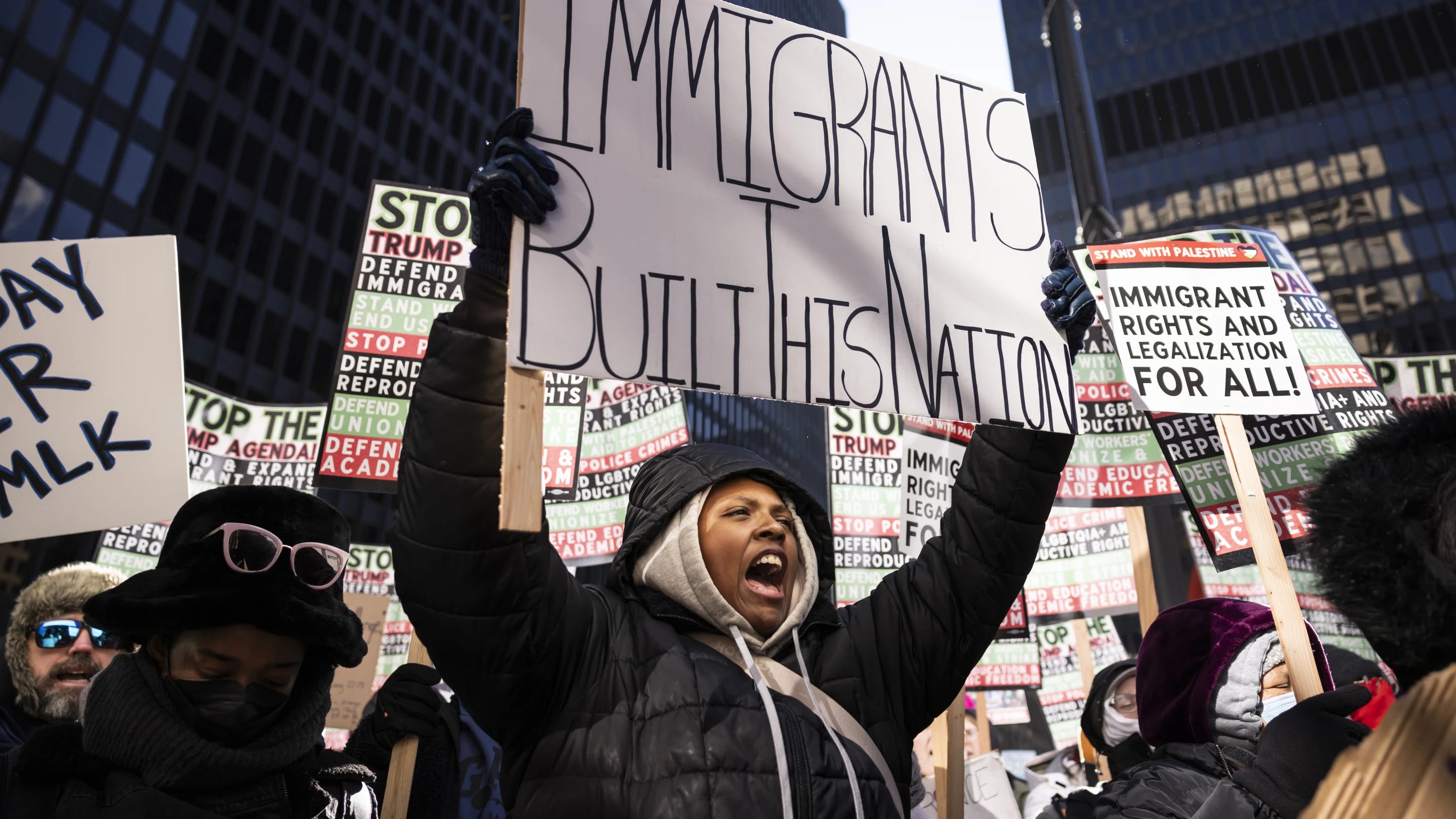
The first executive orders of Trump’s second term should dispel any illusions: this is not a populist movement, but a fascist one. The liberal tendency to call Trump a populist is less about accuracy and more about jealousy—jealousy of his ability to command support while they hemorrhage legitimacy. Rather than fixating on the myth of right-wing populism, the left must reclaim the actual tradition of populism, one rooted in mass mobilization and working-class power.
Trump’s Executive Orders: The Anatomy of Fascist Rule
Populism, in its historical context, is the mobilization of ordinary people against elites. Fascism, in contrast, preserves elite power while redirecting public anger against vulnerable scapegoats. Trump’s executive orders follow the latter playbook: they do not empower the people but instead centralize control, target political enemies, and punish the weak.
Reinstating Schedule F to purge the civil service is not about dismantling the deep state—it’s about enforcing ideological loyalty.
Mass firings of inspectors general dismantle oversight, ensuring that corruption can thrive without scrutiny.
Freezing federal aid under ideological pretexts is a crude attempt to starve opposition forces. (Although the regime has since rescinded this order).
Attacking transgender rights and reclassifying gender serves no economic purpose—it’s purely about wielding state power to enforce a reactionary social order.
This is the machinery of fascism: use the state not to uplift but to terrorize, to control, and to consolidate power.
Liberals call Trump a populist because they need an excuse for their own failure to generate mass support. They cannot comprehend that their lack of appeal is not due to an uninformed public, but because they have abandoned any claim to economic justice. Instead of analyzing how their political project has withered, they paint Trump as a false prophet of the working class, a conman stealing their rightful base.
But a true populist movement, one that mobilizes against entrenched power, would look radically different. Left populism does not punch down—it builds solidarity. Instead of culture wars, it wages class war. Instead of scapegoats, it names the true enemy: the billionaires, the monopolies, the war profiteers. If there is a path forward, it is not in rehabilitating the Democratic Party’s elite-driven centrism but in rekindling the kind of popular politics that once animated labor movements, civil rights struggles, and radical democracy.
Beyond Weimar: The Bureaucratic Resistance to Fascism
The second major misconception about this moment is that it is a simple repeat of Weimar Germany. The analogy is useful to a point—Trump clearly has authoritarian ambitions—but it underestimates the sheer complexity of the modern state.
Germany in the 1930s was a fragile democracy, its institutions still nascent, its bureaucracy small enough to be easily co-opted. The United States in 2025 is another beast entirely. The federal government is a vast, sprawling structure with millions of workers, hundreds of agencies, and layers of procedural inertia. Unlike in a coup, where a regime simply takes over, Trump’s administration is forced to contend with a civil service that is not built for ideological loyalty.
This is precisely why his executive orders are so extreme. They are not merely policy directives—they are designed as intimidation tactics, aimed at scaring bureaucrats into compliance or forcing them out altogether. The goal is to provoke resistance so that opponents can be purged, paving the way for a more obedient government. This is why we should expect further attacks on federal employees, aggressive loyalty tests, and ongoing efforts to dismantle institutional guardrails.
Despite the gravity of the situation, we should not fall into despair. Trump’s path to fully implementing fascism is not as inevitable as some fear. His orders will face lawsuits, bureaucratic slow-walking, and sheer institutional inertia. The civil service, the courts, and public pressure all present obstacles to his consolidation of power. But resistance requires strategy. We cannot rely on institutions alone—mobilization, direct action, and organized opposition will be necessary at every step.
The Trump administration will continue to test the limits of what it can get away with. It will push boundaries, see what sticks, and adapt. The more resistance it encounters, the more constrained it becomes. But passivity is not an option. The civil service must be defended. The legitimacy of mass purges must be challenged. The victims of state violence—immigrants, trans people, dissenters—must be protected. And the left must stop ceding populism to the right.
Trump is not a populist. His movement is not about empowering the people. It is about replacing one elite with another—one that demands personal loyalty and ideological obedience. Understanding this is the first step to fighting back. The second step is organizing to ensure that his vision of America never fully takes hold.