
86: Radio, Podcasting, and the Rise of Fascism
Revisiting Marshall McLuhan's Understanding Media from 1964
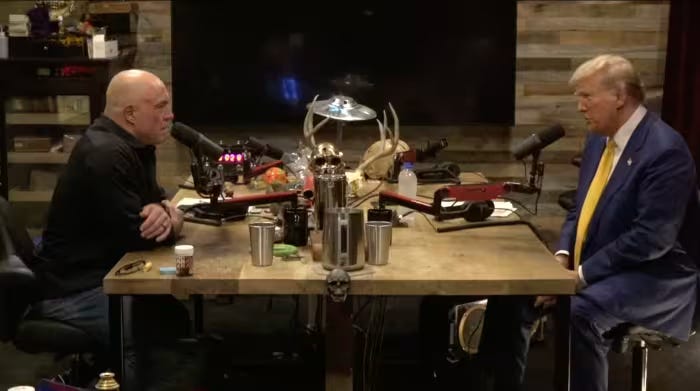
Marshall McLuhan famously wrote, "the medium is the message," and nowhere is this insight more relevant than in the parallel trajectories of radio in the early 20th century and podcasting today. As McLuhan analyzed in Understanding Media, radio's immersive, intimate nature played a critical role in the rise of fascist movements by fostering a sense of collective identity and emotional resonance that authoritarian leaders exploited. Today, podcasting carries similar characteristics, shaping the political landscape in ways that echo the past—particularly in the rise of MAGA-style populism.
The 2024 U.S. presidential election has been dubbed the "podcast election," highlighting how political discourse has moved from traditional media into the on-demand, decentralized realm of podcasting. While podcasting offers unprecedented diversity in voices and viewpoints, its landscape skews heavily to the right—a dynamic that mirrors radio ownership, which was often concentrated in the hands of powerful, politically motivated individuals and organizations.
The Medium's Influence on Political Movements
Radio, as McLuhan observed, is a "hot" medium—one that engages listeners deeply, drawing them into a shared experience that is more emotional than analytical. This quality made it an effective tool for propagandists, who leveraged its power to create a unified ideological front. Similarly, podcasting fosters a parasocial intimacy between host and listener, creating trust and loyalty that political movements capitalize on.
Despite the technological differences, the fundamental audience experience remains the same. Both radio and podcasting operate through a kind of tribal storytelling, where narratives are reinforced through repetition and emotional engagement. This sense of belonging, while not inherently harmful, becomes dangerous when harnessed by authoritarian figures and ideologies that thrive on grievance and division.
The structural conditions that allowed early radio to favor conservative and fascist viewpoints are not entirely dissimilar to those shaping today's podcast ecosystem. Economic barriers to entry may be lower in podcasting, but algorithmic amplification, corporate sponsorship, and listener-funded models disproportionately benefit voices that pander to outrage and reactionary politics.
Moreover, podcasting’s decentralized nature means that content moderation is nearly impossible at scale, allowing extremist narratives to flourish unchecked. Much like the early days of radio, where regulatory frameworks were slow to catch up with the technology, today's digital audio landscape operates in a largely unregulated space, where influence can grow unchecked.
The Fascist Playbook: Then and Now
The parallels between the two mediums extend to the tactics used by fascist movements. In the early 20th century, radio was used to create the illusion of direct connection between leaders and their followers, fostering a sense of immediacy and urgency. Similarly, today's podcast hosts present themselves as truth-tellers and insiders, offering their audience an alternative to mainstream media that often resonates with deep-seated skepticism of authority.
Podcasting's inherent interactivity—with its calls to action, community-building through social media, and direct listener engagement—further enhances this effect, turning passive audiences into active participants in political movements.
While podcasting offers opportunities for democratization and diversity, its unchecked growth and the potential for ideological radicalization necessitate critical engagement. Understanding McLuhan’s insights on media environments allows us to better navigate the risks and opportunities that podcasting presents in the current political climate.
The challenge for the future of authority lies in fostering critical media literacy and leveraging the medium for inclusive, democratic discourse rather than allowing it to become another tool for authoritarian manipulation.
As we move deeper into the podcast age, recognizing the lessons from the past can help us resist the seductive pull of propaganda machines. The responsibility falls on both creators and listeners to ensure that podcasting serves as a platform for enlightenment, not indoctrination.
Ultimately, podcasting is less about ideology and more about methodology. Unlike radio's one-way communication style, podcasting thrives on conversations instead of lectures, offering a participatory dynamic that can be harnessed for greater understanding and collaboration.
Speaking of which, this issue was inspired by a conversation we had on the Metaviews podcast with new member Jason Willis-Lee that will be released in the next couple of days on our YouTube channel and on all audio podcast platforms. We’ve been grinding out episodes for the Metaviews podcast as a kind of warm-up or training routine in advance of an exciting podcast we’ve got cooking with long time Metaviews friend Allan Gregg. As a sneak peak, check out one of the recent Toronto Mike episodes: