
83: AI Nationalism
The Trojan Horse Driving The Fascist Resurgence
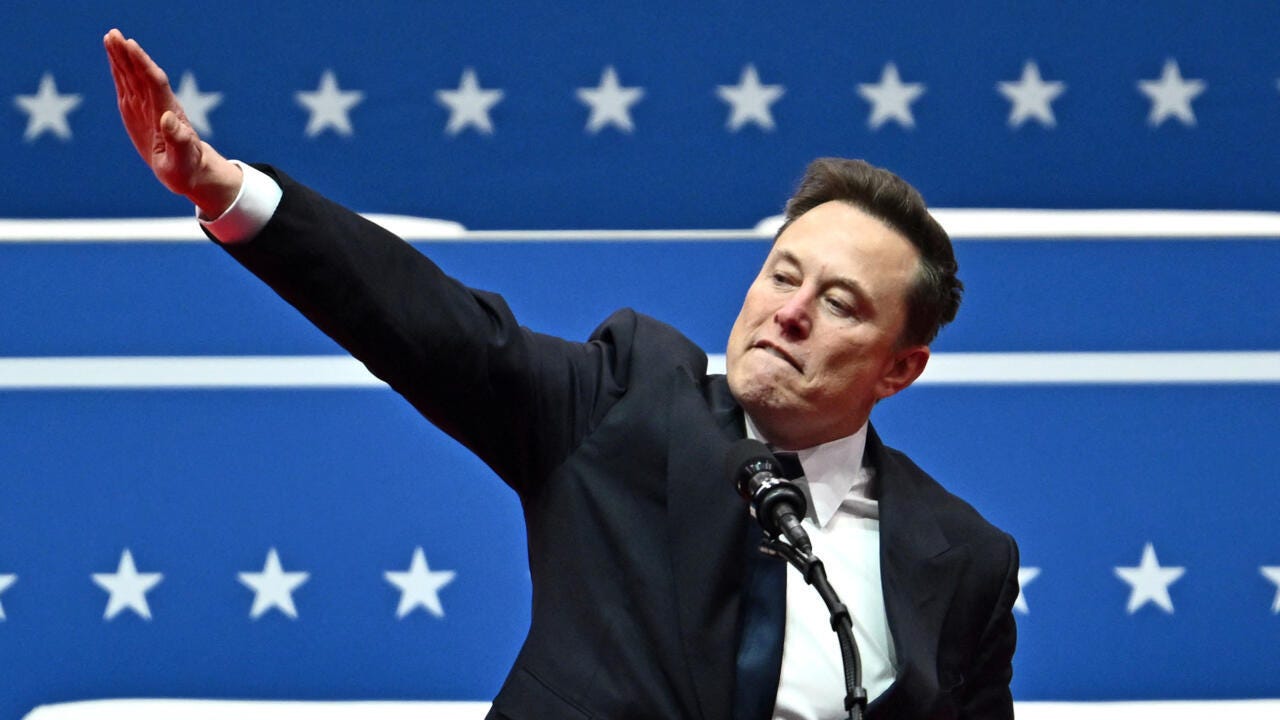
Elon Musk's unsettling Nazi salute at Trump's inauguration serves as a stark reminder of how deeply entangled AI and nationalism have become. This disturbing image encapsulates the growing influence of techno-authoritarian figures who, under the guise of innovation, promote reactionary ideals.
In an era where technology knows no borders, nationalism is making an unlikely and paradoxical resurgence, fueled by artificial intelligence. Across the globe, we are witnessing a disturbing fusion of authoritarian governance, effective accelerationism, pervasive surveillance, and the opaque algorithms that shape our online experiences. This emerging phenomenon—what we might call AI Nationalism—has become the new battleground for power, control, and influence.
At its core, AI Nationalism represents a contradiction. Nationalism, with its roots in an outdated notion of territorial sovereignty and cultural homogeneity, clashes with the inherently borderless and interconnected nature of the Internet. Yet governments and corporations alike are exploiting this contradiction, using AI to reinforce nationalist policies while simultaneously leveraging public resources to subsidize the ever-expanding needs of Big Tech. In this way, AI Nationalism serves as a Trojan horse—smuggling corporate control into the heart of state power under the guise of patriotic necessity.
From China's extensive use of social control to Europe's strategic AI sovereignty initiatives, and the U.S.'s brazen maneuvers, AI is increasingly being weaponized to reinforce national identity and control. Surveillance infrastructures that once seemed dystopian are now becoming normalized, justified through the language of security, economic competition, and cultural preservation. Governments are not just adopting AI; they are bending it to serve nationalistic ends, creating echo chambers that further divide societies and fuel isolationist tendencies.
Social media platforms, with their opaque and unaccountable algorithms, have become critical enablers of AI Nationalism. These systems subtly amplify nationalist rhetoric, reward polarization, and silence dissent—all while maintaining the illusion of neutrality. By engineering algorithmic realities, tech companies are complicit in shaping public opinion in ways that align with state interests or their own corporate ambitions.