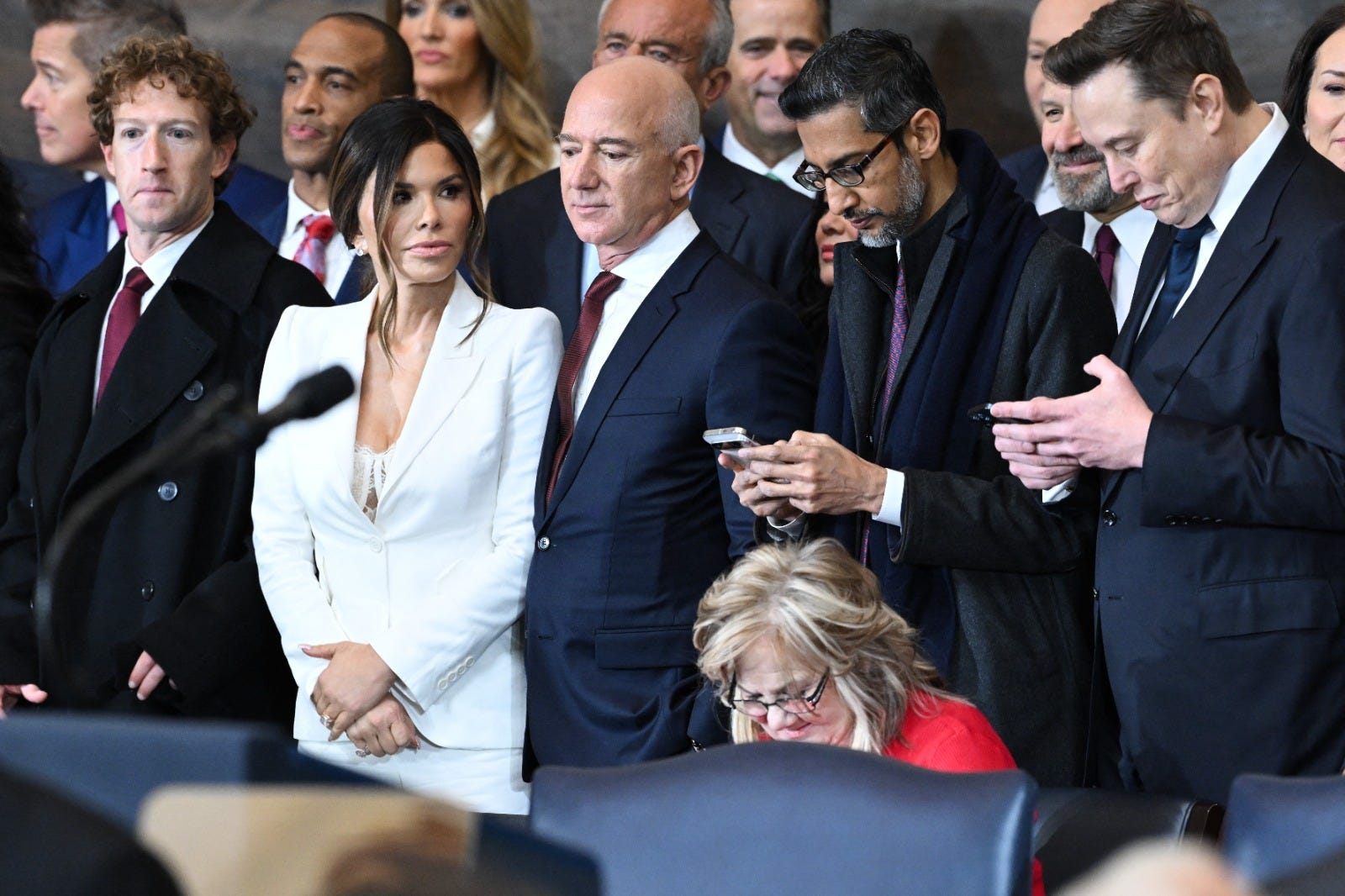
The current bosses of social media The current bosses of social media have been quick to bow to the new president, whose power partly derives from their platforms. As we face this rising fascist threat, we must recognize the role the social media companies played in making it happen. Especially now as they gather to support the new regime and secure their riches.
We're old enough to remember when media wasn't social at all. It was broadcast. One-way. Designed for control, not connection. Participation was an afterthought, if considered at all. The entire system was structured to prevent meaningful engagement, ensuring that media remained in the hands of a few, dictating narratives to the many.
But what if what we call "social media" today isn't actually social media? What if it's media in the process of being socialized? And what if we still have a long way to go?
Today's social media, for all its flaws, is better than yesterday's broadcast media. It allows for interaction, expression, and connection in ways unimaginable a generation ago. Yet, it remains far from truly social. The platforms we rely on are privately owned, controlled by opaque algorithms that prioritize profit over people. They are spaces where engagement is often driven by outrage rather than dialogue, and where the goals of persuasion and monetization overshadow the potential for collaboration and empowerment.
So, what would fully socialized media look like? Imagine a future where media is:
Socialized in Ownership: Platforms owned collectively by users, creators, and communities rather than corporate shareholders and venture capitalists.
Socialized in Control: Decision-making processes that are democratic and participatory, ensuring media serves the public interest.
Socialized in Data: Individuals and communities having sovereignty over their data, with the power to control how it is used and shared.
Socialized in Algorithms: Transparent, community-driven algorithms designed to reflect the values and needs of users, rather than the demands of advertisers.
In essence, media should be created by and for the people, not for the purposes of profit and persuasion. The current system thrives on keeping us addicted, divided, and disengaged from real agency. But we can—and must—imagine something better.
We need a new rhythm to our algorithms—one with a rhyme we can understand, challenge, and modify. Not just transparency, but agency. A media ecosystem where dignity, respect, and dialogue replace the dehumanization, disrespect, and conspiracy that plague our feeds today.
The future of social media is a future where people reclaim their voices, their data, and their communities. It’s a future where media is not a tool of manipulation, but a space for genuine connection and collective empowerment.
The path forward requires us to recognize the unfinished nature of our current media landscape—and to push for the socialization of every layer of it. Because only when media is truly social will it serve the needs of society, rather than the narrow interests of those who seek to control it.
Let's take over our media. Let's make it truly social.