
81: The "Sucks To Be You" Society
The $TRUMP era begins
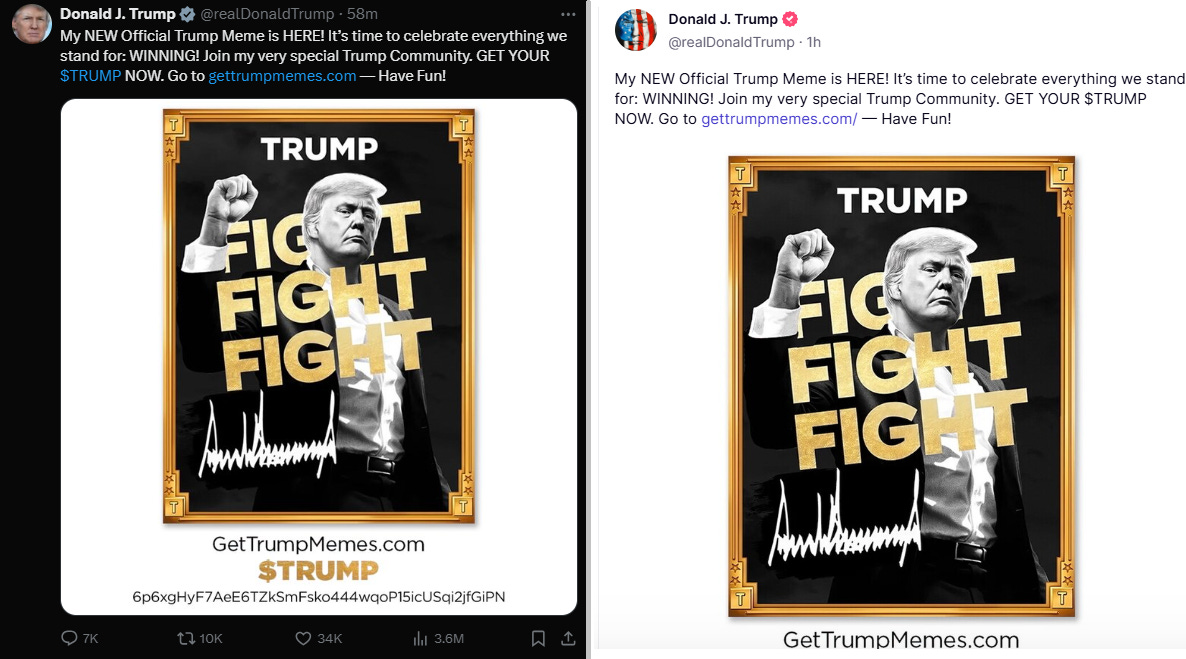
The rise of the $TRUMP memecoin offers a glimpse into the mindset of the incoming ruling elite—a world governed by the ethos of "sucks to be you." In this worldview, power is not about service or stewardship; it's about dominance. You either eat or get eaten, scam or be scammed.
 Tiktok failed to load.
Enable 3rd party cookies or use another browser
This approach to authority is fundamentally transactional, fueled by the belief that success comes at the expense of others. The $TRUMP memecoin embodies this mentality. Launched with a veneer of populist appeal, it quickly became a vehicle for wealth accumulation by insiders, with 80% of the token's supply controlled by Trump-affiliated entities. The coin’s meteoric rise and inevitable crash mirror a broader trend in governance and power—exploit first, abandon later.
What is the $TRUMP Memecoin?
The $TRUMP memecoin is a cryptocurrency token introduced by entities closely tied to former President Donald Trump. It is built on the Solana blockchain, with a total supply of one billion tokens, the majority of which remain under the control of Trump-linked organizations. Initially presented as a way for supporters to engage with the Trump brand financially, it quickly gained traction through speculative trading, driven by hype and political allegiance rather than any intrinsic value.
The memecoin provides a literal expression of the regime's embrace of graft. By using a volatile and largely unregulated financial instrument, those in power can extract wealth from their base with minimal oversight. Investors are lured in with promises of political and financial alignment, only to find themselves at the mercy of those who set the rules. This scheme exemplifies the broader ethos of contemporary leadership—a relentless pursuit of self-enrichment masked as populist engagement.
From Governance to Grift
The new elite see governance not as a duty but as an opportunity. The cryptocurrency market, with its volatility and lack of regulation, offers fertile ground for those who prioritize short-term gains over long-term stability. The memecoin frenzy isn't just a financial phenomenon; it's a cultural signal. Those in power are no longer trying to convince us of their legitimacy through institutions or ideas; they are instead focused on extracting maximum value from the chaos they help create.
In this environment, financial speculation replaces meaningful investment, and influence is bought and sold like any other commodity. Those who get in early profit handsomely, while latecomers are left holding the bag—a metaphor that extends far beyond the world of crypto.
The memecoin phenomenon bears striking similarities to the crypto authoritarianism unfolding in Cambodia. There, the ruling elite have embraced digital currencies as a tool of control, using them to bypass financial regulations and amass wealth while maintaining an illusion of economic modernization.
 Tiktok failed to load.
Enable 3rd party cookies or use another browser
Authority Without Accountability
The emergence of figures like Trump in the crypto space underscores the erosion of accountability in leadership. Unlike traditional financial markets, where some degree of oversight exists, the memecoin market thrives on opacity and hype. The ruling elite, armed with media influence and loyal followers, can dictate the narrative while evading responsibility for the inevitable fallout.
This "sucks to be you" approach is especially dangerous when it seeps into broader policymaking. We see it in how AI is being rolled out in agriculture and healthcare—not to empower farmers or patients, but to centralize control and profits. The lessons learned from the memecoin craze should serve as a warning: if we don't demand transparency and fairness, the same exploitative dynamics will define every aspect of our lives.
Memecoins come and go, but the broader struggle for authority—and who gets to wield it—is far from over. If we can recognize the patterns of exploitation and manipulation now, we can build a future that values mutual aid over individual opportunism.
In the end, authority should not be a game of winners and losers. It should be a shared responsibility. But as long as the ruling class operates under the "sucks to be you" philosophy, the challenge remains to redefine power on our own terms.