
The Medium is the Message: McLuhan and AI
Understanding our media ecosystem
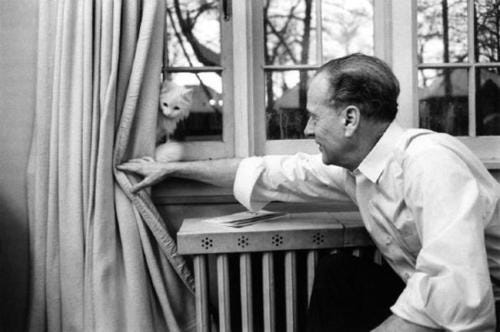
In our contemporary media ecosystem, characterized by the omnipresence of Artificial Intelligence (AI), Marshall McLuhan’s seminal concept “the medium is the message” has never been more relevant. That the impact of any medium itself is far greater than whatever content it delivers.
Similarly by leveraging McLuhan’s tetrad — a framework for examining the effects of technology on society — we can understand the impacts of these media, aiming to provide an accessible, engaging, and enlightening perspective on how they shape our collective consciousness and societal structures.
The Medium is the Message in the Age of AI
AI, as a medium, embodies McLuhan’s adage by fundamentally altering our interaction patterns, information consumption, and even the creation of content. It’s not merely the content AI produces that influences us but the very nature of AI itself — the algorithms, data processing, and interaction modalities redefine our perceptions and interactions with the world.
McLuhan’s Tetrad Applied to AI:
- Enhances: AI enhances our ability to process and analyze vast amounts of data, making sense of complex patterns beyond human capability.
- Obsolesces: Traditional methods of data analysis and manual content creation are becoming obsolete, as AI can perform these tasks with greater efficiency and accuracy.
- Retrieves: AI retrieves the age-old human desire for personalized experiences and tailored content, a notion reminiscent of pre-industrial, artisanal practices.
- Reverses: When pushed to its limits, AI’s ubiquity could lead to an over-reliance on technology, potentially eroding human critical thinking skills and interpersonal connections.
Social Media: The Amplification of the Self
Social media, as a medium, extends McLuhan’s vision by transforming how we communicate, express ourselves, and perceive community and isolation. It’s the structure and features of these platforms — likes, shares, comments — that mold our social interactions, not just the content shared.
McLuhan’s Tetrad Applied to Social Media:
- Enhances: Social media enhances connectivity, enabling real-time communication and the sharing of ideas across the globe.
- Obsolesces: It obsolesces traditional forms of communication, such as face-to-face interactions and snail mail, shifting the emphasis towards digital immediacy.
- Retrieves: Social media retrieves a tribal-like sense of belonging, where communities form around shared interests, regardless of geographical boundaries.
- Reverses: At its extreme, the very connectivity social media provides can reverse into isolation and fragmentation of the self, as individuals curate online personas that may diverge from their authentic selves.

Virtual Reality: Immersive Worlds and Altered Perceptions
Virtual Reality (VR) as a medium takes McLuhan’s concept to new dimensions, literally. It’s not just about the virtual environments but how the immersive nature of VR redefines our experiences and perceptions of space, presence, and reality.
McLuhan’s Tetrad Applied to VR:
- Enhances: VR enhances our sensory experiences, providing immersive environments that can simulate reality or create entirely new worlds.
- Obsolesces: It makes traditional screen-based media consumption obsolete, offering a more engaging and interactive alternative.
- Retrieves: VR retrieves the ancient human practice of storytelling, allowing for narratives to be experienced viscerally, rather than passively observed.
- Reverses: In its extreme form, the immersive nature of VR can lead to a disconnection from the physical world, blurring the lines between virtual and reality.

Traditional Media: The Persistent Echo
Even in an age dominated by digital media, traditional forms — print, broadcast, and the spoken word — remain potent. McLuhan’s insight that the medium shapes the message is evident in the continued relevance of these forms, each with its own unique influence on public discourse and personal identity.
McLuhan’s Tetrad Applied to Traditional Media:
- Enhances: Traditional media enhances the dissemination of information, providing a tangible or direct human connection.
- Obsolesces: The rise of digital media platforms has made certain aspects of traditional media, like print newspapers, less central to daily information consumption.
- Retrieves: Traditional media retrieves the linear narrative structure, offering a counterpoint to the non-linear, hyperlinked nature of digital content.
- Reverses: When pushed to extremes, the authority and gatekeeping role of traditional media can reverse into a mistrust in media sources, driving people towards alternative, potentially less credible, digital platforms.
Through the lens of McLuhan’s “the medium is the message” and his tetrad, it’s clear that our contemporary media ecosystem — dominated by AI, but also comprising social media, VR, and traditional media — profoundly shapes our society, our perceptions, and our interactions.
Each medium, with its unique characteristics and implications, not only transmits content but fundamentally alters the context and meaning of that content, thereby influencing the fabric of our reality. Understanding these dynamics is crucial for navigating the complexities of our digital age, empowering us to engage with media critically and thoughtfully, and to harness their potentials for positive change.