
The Human Core of AI: Navigating Our Anxieties and Ethics in the Digital Age
Reclaiming Humanity: Using AI to Strengthen Ethics and Democracy

Artificial Intelligence (AI) serves as a profound mirror reflecting not just our technological ambitions, but the complex tapestry of human anxieties, ethical dilemmas, and societal challenges. As we navigate the burgeoning landscape of AI, the discourse surrounding it often reveals more about us as a society and as individuals than it does about the technology itself. This is fundamentally about the human condition, our fears, our hopes, and our ethical compass.
AI as a Reflection of Human Anxieties
When we talk about controlling AI, at its core, this discussion encapsulates our fears of losing control — not over machines, but over the humans. The control over AI becomes a metaphor for our collective anxiety about unchecked power, the erosion of privacy, and the potential for new forms of exploitation. It’s an echo of our deeper concerns about how power is distributed and exercised in society.
Guardrails for AI as Guardrails for Humanity
The debate on implementing guardrails for AI is indeed a debate on setting boundaries for human behavior. It’s about creating a framework that ensures AI technologies are used ethically, responsibly, and for the greater good. These conversations underscore a pressing need to manage not just how machines operate, but how people use these tools — in ways that align with societal values and norms. Or perhaps guardrails are the wrong approach, as they limit what humans can do, not what machines can do.
Trust in AI as Trust in Humanity
Discussions about trust in AI often miss the underlying issue: the challenge of trusting one another. Trust in AI is fundamentally about trusting the intentions and competencies of those who design, deploy, and manage AI systems. It’s about believing in the accountability of individuals and institutions behind the technology. The real question is not whether we can trust AI, but whether we can trust each other.
AI Ethics as Human Ethics
The discourse on AI ethics is, at its heart, a discourse on human ethics. It’s a call to examine our values, our decision-making processes, and our responsibilities to each other. AI technologies, being human creations, embody the biases, perspectives, and ethical considerations of their creators. Thus, when we speak of AI ethics, we are really speaking of the need for a deeper understanding and application of human ethics.
Using AI to Reconnect with Our Humanity
Instead of viewing AI as an entity separate from humanity or as a potential threat to our control, it’s imperative to see it as a tool that can help us reconnect with our humanity. AI offers unparalleled opportunities for enhancing democratic engagement, fostering understanding, and facilitating meaningful conversations. It can amplify our abilities to tackle complex global challenges, making it more crucial than ever to approach AI with empathy, ethical consideration, and a deep sense of responsibility towards each other.
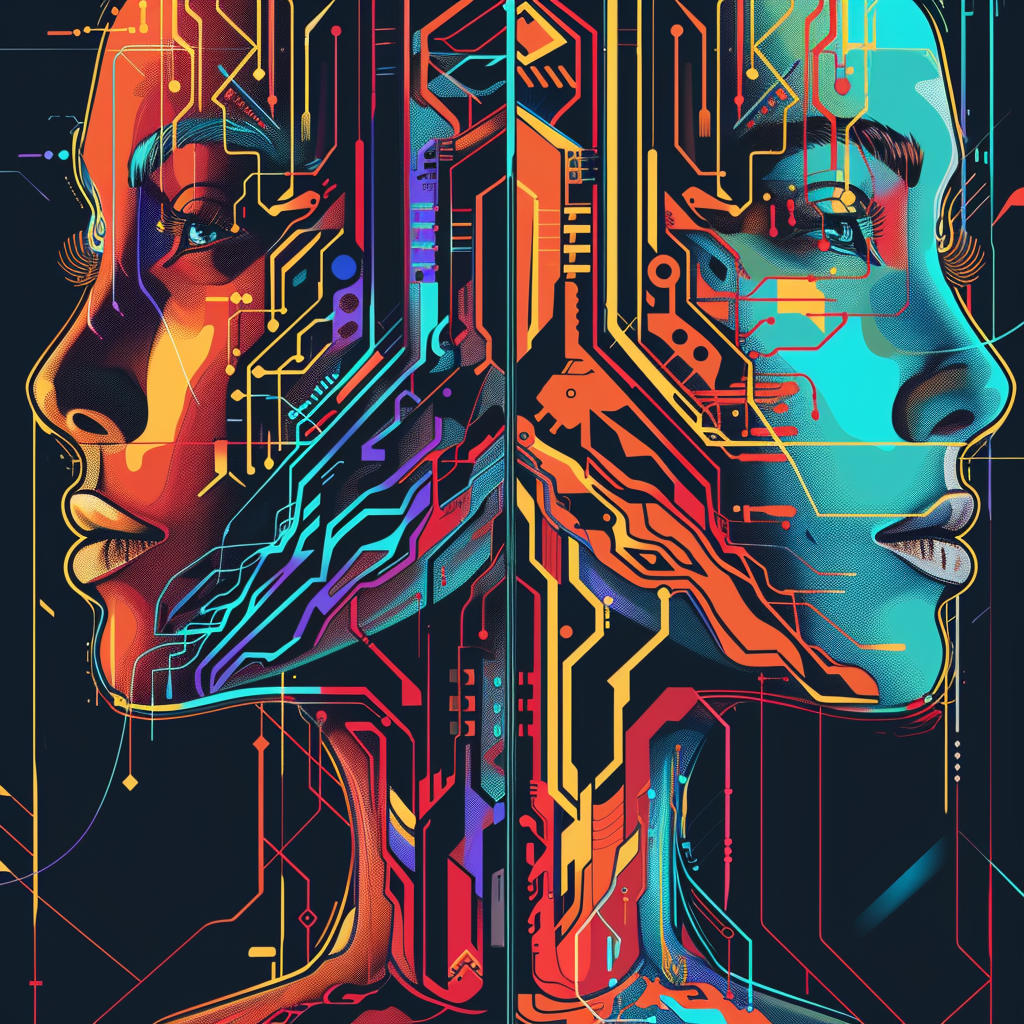
The path forward requires us to shift our focus from projecting our fears onto AI to addressing the underlying human issues that give rise to these anxieties. By embracing AI as a reflection of our collective aspirations and concerns, we can harness its potential to foster a more understanding, democratic, and connected society. The future of AI should not be shaped by fear, but by a commitment to strengthening the fabric of our humanity, reinforcing trust among us, and adhering to ethical principles that guide us towards a more equitable and empathetic world.
In navigating the complexities of AI, we must remember that technology is but a tool in humanity’s hands. The true challenge — and opportunity — lies in ensuring that this tool is wielded with wisdom, compassion, and an unwavering commitment to the collective good. As we venture further into the age of AI, let us not lose sight of the fact that it is our human qualities that will ultimately define the future we create.