
The Essence of Bias in Intelligence
Rethinking Bias: From Human Heuristics to AI Algorithms
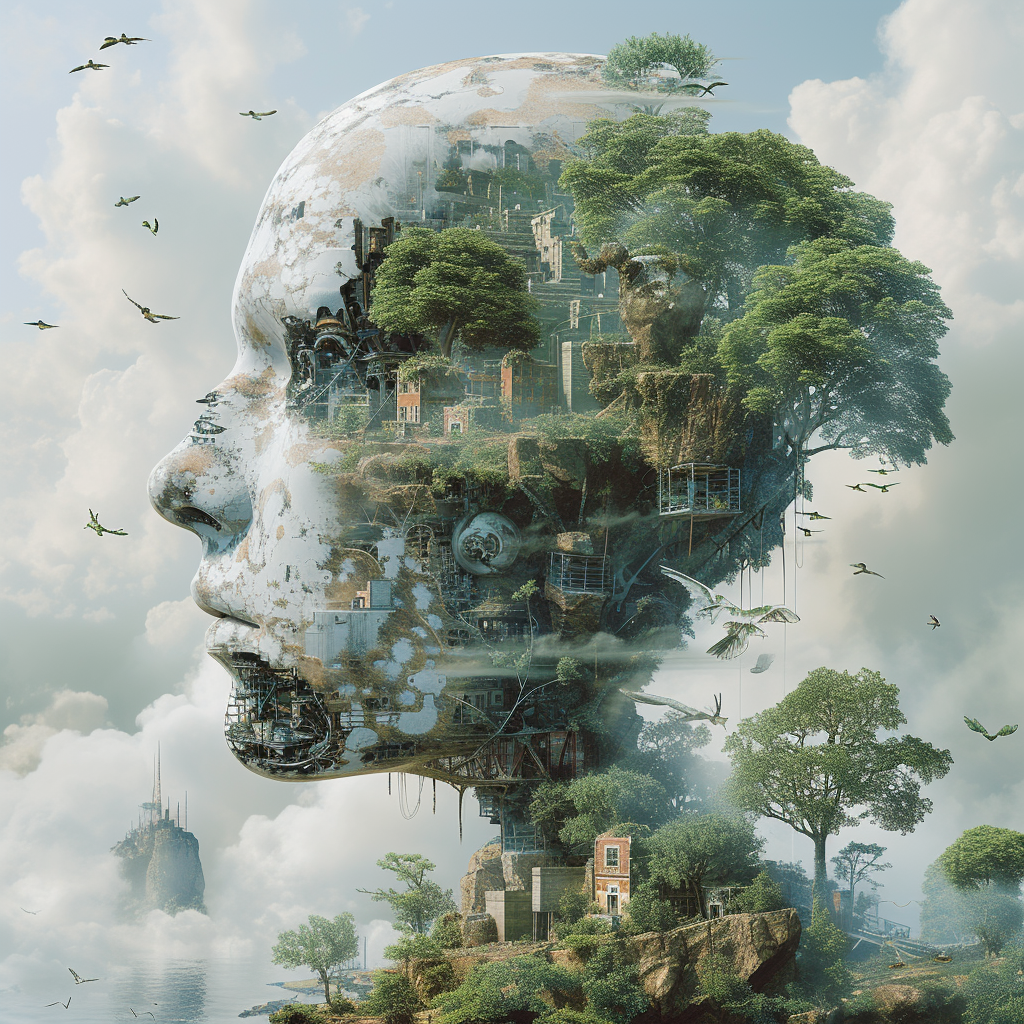
The Intersection of Rationality and Emotion in Human Decision-Making
Recent scholarly research on ecological rationality sheds light on the complex interplay between reason and emotions in human cognition. For instance, V. Smith’s work on “Constructivist and Ecological Rationality in Economics” highlights the delicate balance required in applying different rules to familial and market-based interactions. This balance is a testament to the nuanced nature of human decision-making, where emotions and rationality are not mutually exclusive but are intricately linked.
Similarly, María Teresa Barbato Epple’s study on the “Ecological Rationality of Moral Intuitions” challenges the traditional view of intuitions as irrational, suggesting that they are, in fact, rational responses shaped by evolutionary forces. This perspective is echoed in Yakir Levin and I. Aharon’s “Emotion, Utility Maximization, and Ecological Rationality”, which underscores the role of emotions in economic decision-making.
AI and the Challenge of Bias
When we turn our attention to Artificial Intelligence (AI), we encounter a different landscape of decision-making. AI, by its very nature, is devoid of emotions, relying instead on algorithms and data-driven processes. However, this does not mean that AI is free from biases. In fact, biases in AI are often a reflection of the data it is trained on. The inherent biases in AI are not emotional but are instead a product of the data and the objectives set by its human creators.
Bias as an Essential Characteristic of Intelligence
The research on ecological rationality and emotional intelligence in humans suggests that biases are not errors but are integral to intelligent behavior. Biases in humans often stem from evolutionary adaptations, serving as heuristics or mental shortcuts that enable efficient decision-making. In AI, biases can similarly be seen as an essential characteristic of its intelligence. They guide the AI in making predictions or decisions based on the patterns it has learned.
However, the key difference lies in the nature of these biases. While human biases are a complex blend of rational and emotional factors, AI biases are purely data-driven. This distinction is crucial in understanding the limitations and potential of AI in various applications.
The Future of AI: Learning from Human Cognition
As we advance in developing more sophisticated AI systems, there is much to learn from the human model of cognition. Integrating insights from ecological rationality and emotional intelligence could lead to AI systems that are not only more efficient but also more attuned to the complexities of human behavior and decision-making.
In conclusion, biases in both humans and AI are not flaws to be eradicated but are essential components of intelligence. The challenge lies in understanding and managing these biases to harness the full potential of both human and artificial intelligence.