
Coach Prime and the Ecosystems of College Sports
Clicks really do matter
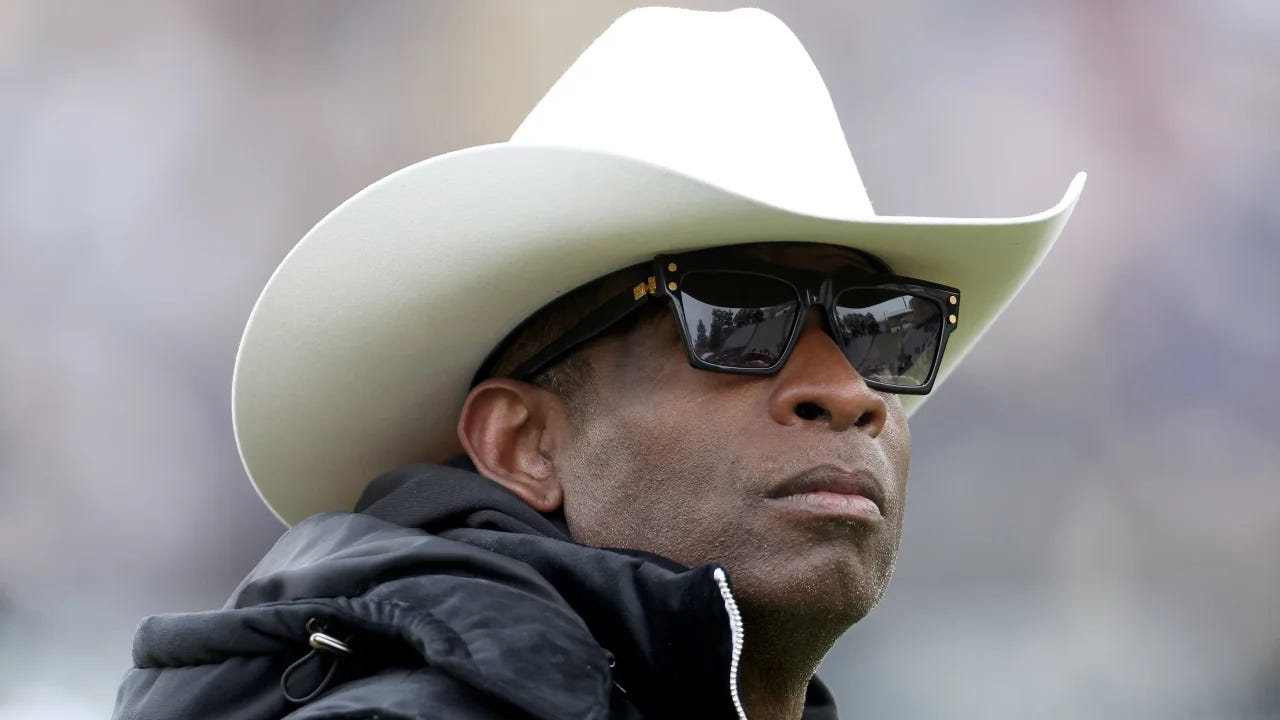
University of Colorado football coach Deion Sanders o/k/a Coach Prime is the man of the moment in professional sports, specifically embodying the transformation happening in US college athletics. He’s not someone playing a game, or just coaching a team, he’s engaging entire ecosystems, quite successfully, and on his terms.
The stakes are high, with the goal being money and attention. In contemporary America, the two are often synonymous. However this isn’t about the large salary Coach Prime is paid, nor even the massive sponsorship and endorsement deals he can attract, but rather his impact on the ecosystems he’s engaging.
In igniting Colorado's football program, Sanders has become an economic force.www.axios.com
Until quite recently, US college sports were a bastion of amateurism and hypocrisy. Athletes were strictly forbidden from making any money or taking any gifts, while vast sums of money were made by the Universities and companies who effectively exploited them.
While college athletes are still not able to receive pay for playing sports, they can no longer be restricted or excluded when it comes to making money from their image or likeness. The more attention they get, the more opportunity they have to endorse or make appearances that pay them money.
Which presents an interesting opportunity for someone like Coach Prime, a premier professional when it comes to gaining and maintaining attention.
When college coaches recruit players, they cannot offer them a salary. In a rather brilliant move, Coach Prime can offer them attention, which can directly lead to that athlete getting paid, if not finding future success as a professional. One of the features his program offers is a social media team to help his athletes build and refine their public persona (and brand). This includes the option to have your social media handle on their jersey instead of their last names.
The Buffs are not only hot on the field this season so far due to Coach Prime and the players on his roster, they're…www.cbsnews.com
Oregon coach Dan Lanning got a lot of attention for criticizing Coach Prime as “fighting for clicks” rather than wins. Oregon then went on to crush Colorado 42–6. Yet in his post-game press conference, Sanders noted that he was building a dynasty over the long term, and that this wasn’t about a single game, but rather the long term.
This is significant precisely because he is taking a different approach, not just when it comes to attention, but also how a team is put together.
Last year Colorado was 1–11 and was largely a white team. When Coach Prime got the job, he took advantage of player’s right to transfer schools, and attracted a wave of new talent to the football team. Most of these new players are black.
Black celebrities from Snoop Dogg to Dwayne Johnson are hyping the Buffs while Black households are glued to Colorado…www.axios.com
In America, it is arguably impossible to escape the role of race, especially when it comes the economics of sports. Lots of black athletes, not a lot of black coaches, and hardly any black executives or owners. We should expect Deion Sanders to help change this. Not just because he will continue to rise, but because he’s making an effort to help others rise as well.
College football has traditionally been led by White coaches who follow a conservative script. But Deion Sanders, the…www.cnn.com
Similarly the backlash against Coach Prime and his methods is also tainted with the racism that permeates US culture. The dismissal of CU as “fighting for clicks” ignores the role that football has played for a lot of black men who felt their opportunities were otherwise limited. This isn’t just about winning, but also getting paid.
The money is certainly there, driven by another major change transforming sports in general, which is the ongoing legalization of gambling in North America. While betting on sports has always been an element of athletic ecosystems, the connection is becoming stronger and more visible. This is one example why attention and money are intimately connected. Attention influences perception and therefore odds.
Hall of Fame cornerback Deion Sanders's much-anticipated first year as Colorado head coach kicks off Saturday as the…www.sportsgrid.com
Ironically if you’re reading this, then I suspect you know that clicks matter. After all, that’s why I wrote and shared this with you. To earn your click, no?
Perhaps this is why we’re so fascinated with Deion Sanders. He understands the larger picture and ensures that he’s part of it, as a player, and as a coach. When he first became a professional athlete, Prime Time as he was then known, used to rehearse lines and catch phrases so that when he spoke to the media he was sure to get their attention and now coverage.
Helping young athletes develop media literacy and savviness may seem superficial, but in our era of attention markets it’s remarkably deep and profound. It also ensures Coach Prime will have an impact that outlives his time in the spotlight.
As Coach Prime says, he’s not the moment, he’s a monument.