
Fame as the path to power
In the future, everyone will be head of state for 15 minutes.
Contemporary politicians are increasingly celebrities. Not so much as a consequence of their political power, but rather as part of their path to becoming powerful.
In an economy where attention is the scarce resource, those who are able to wield attention, are in a position to leverage their fame towards obtaining power.
The influencers of today are the politicians of the future. As creatures of the algorithms, they learn how to succeed in attention markets. How to train and mobilize their followers to vote early and vote often: like, comment, and subscribe!
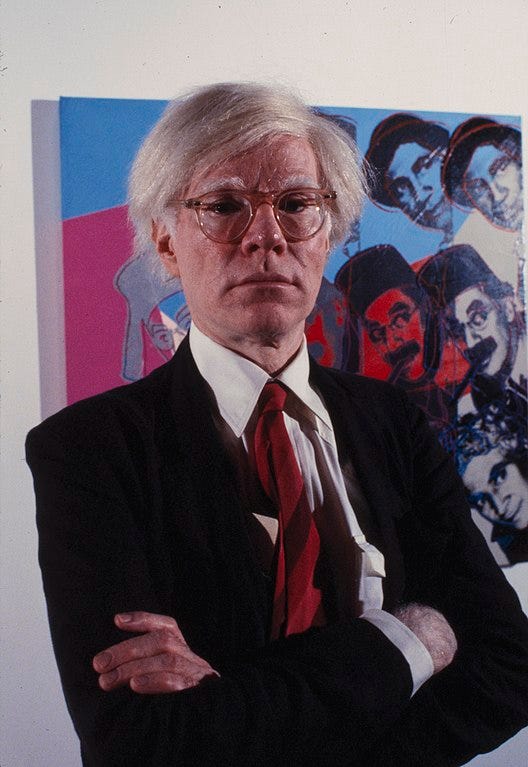
Andy Warhol popularized the line, “in the future, everyone will be world-famous for 15 minutes” and we appear to live in a society where that is true. Fame itself has become somewhat accessible: for many (young) people it is both desirable, and under the right circumstances, obtainable.
Like politicians, we tend to regard influencers with a certain degree of skepticism if not cynicism. Especially the politicians or influencers we disagree with. We like to believe that these groups rise to prominence for reasons of merit, yet their positions are often obtained as a result of privilege, wealth, or plain old corruption (of the algorithm). That doesn’t mean that there are not those who rise up for what we perceive as the right reasons, yet we regard them as the exception to the rule.
Fame as a path to power tends to attract those who are least worthy of it. Attention being the end that is justified by any means.
What if our collective distrust of this tendency leads to a system that is as much random as it is democratized? What would a society with democratized fame look like?
We may be able to see glimpses of that world in our contemporary culture. As we shift from algorithms that rely upon social connections to ones that are based on interest, we start to see the rise of influencers for slightly more random reasons. The ability to tell stories and share spontaneous events starts to create the opportunity for any post, or any user, to go “viral”.
The power that comes with fame could therefore be subject to radical term or time limits. While as players we could engage the game, or perform on the stage, as often as we like, to win the top prize could be limited.
Hence the idea that in the future, everyone could be head of state for 15 minutes. An opportunity to be the President, Governor, or Big Cheese for a period brief enough that as many people as possible get the opportunity.
This begs the question of what could you accomplish in that 15 minute reign? Not much unless you were willing to work with others, as well as stand on the shoulders of giants. This might further entrench the power of political parties and ideological affiliation.
Or perhaps it further erodes the power of the head of state, and further reinforces the power of professionals who wield the mechanisms of government behind the scenes? Or the political parties who organize and enable them.
Could a representative government be possible with a high degree of randomness and dynamism, which is combined with severe limits on duration? Instead of a professional political class could we instead cultivate a political culture that was inclusive and participatory?
It would certainly be difficult, and subject to new forms of gaming the system. However it offers us an opportunity to anticipate the growing power of attention, and recognize that we’re increasingly ruled by celebrities who best understand our society of spectacle.
Instead of worshipping celebrities and the power of fame, could we instead regulate and distribute it? Fame for all, and exclusive power for none?
Or by enabling a wider pool of politicians are we just spreading the pathogen of corruption? 🤷♀️ Power corrupts, absolute power, absolutely!