
Twitter is becoming an arena for gladiators
The dumpster fire is forging even more toxicity
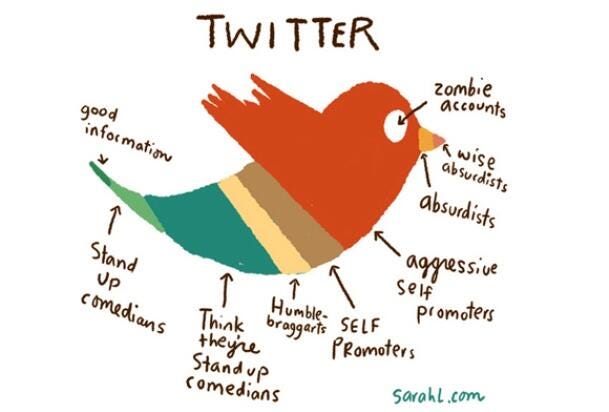
Twitter is not, nor has it ever been a public square. While the platform may be relatively accessible to the public, it is neither public nor a town square. Rather it is a private media company, that has found an effective means of monetizing content that it doesn’t have to pay for.
However Twitter has always had more power and influence than other media companies due to the platform’s ability to attract journalists, politicians, and celebrities.
For example, the New York Times used to be described as the media of record, the agenda setting media, because whatever was published in the Times was de facto news, since all other media outlets regarded that publication with such regard and respect that they would emulate and copy whatever was there.
While Twitter may not be respected or highly regarded, it has become the media of record, as it sets the agenda for all other media. Whatever happens on Twitter is now news, regardless of the post’s accuracy or credibility.
This may be a big reason as to why a notorious billionaire recently bought Twitter for more money than it is worth. The value of Twitter does not exclusively reside in the value of the business behind it, but rather the political and cultural power that the platform currently wields.
As a bully’s pulpit, Twitter has always swung above its weight class. The platform’s ability to amplify some content, especially sensational content, gives it a kind of reach that remains unparalleled in our fragmented and attention deficit society.
This has resulted in the fostering of a relatively toxic culture on Twitter, whether in the form of bullying, narcissism, or just general pettiness. Certainly this was true before the recent change in ownership, but it appears to be getting rapidly and radically worse in the past few weeks.
This has resulted in a lot of laments and concerns that Twitter as we’ve known it is gone, or even more extreme, that Twitter itself will cease to be. While I do not think that Twitter is going away, its role in the larger global politics is quickly shifting from the fly in the ointment that pesters dictatorships to the ointment that enables them.
Instead of an incubator of diverse thought, Twitter seems poised to become an incubator of extremist ideas and personalities.
The new CEO or Chief Extremist Officer of Twitter almost certainly desires this new political role. There is a general perception that the new Twitter boss wants to embrace and amplify the combative culture of the platform, at the very least as a means of greater attention and thereby revenue.
This digital coliseum can provide an arena for gladiators to battle to the death while entertaining the masses, distracting them from the larger dystopia emerging all around us. It provides a false spectacle of freedom of speech that involves very little freedom and no coherent speeches. Unless we define freedom as the ability to attack and speech as the ability to hurl insults.
As a dumpster fire, Twitter remains a compelling drama that can easily absorb our attention. I’ve certainly been paying close attention to the platform since the change in ownership, curious to see how it is changing.
In the last week I’ve noticed a significant modification to the logic behind the algorithm, with a much greater emphasis on popular/sensational tweets from people I don’t follow, but are followed or engaged by people I do follow.
This has resulted in a significant shift in the kind of content displayed, with much greater emphasis on celebrities and melodrama.
I find this to be unfortunate as part of what I loved about Twitter was the ability to genuinely shape the signal we receive amidst the larger noise. When used effectively, social media can be an invaluable educational tool, providing intelligence and diverse sources on a range of subjects.
For example I’ve found Twitter to be an excellent means of accessing credible and reliable research around COVID throughout the pandemic, and I’m worried that will no longer be the case as measures to combat misinformation have been relaxed.
Debate and disagreement are essential elements of both science and politics. Yet I question whether either take place on Twitter as there is far greater reward and motivation for combat and disrespect.
There’s a big difference in wanting to imagine Twitter as a public square with civil discussion (which arguably it has rarely had) rather than fostering the kind of gladiator culture and combat that is now flourishing.
There is considerable power in design, and especially the impact of how an algorithm is configured and engaged. While I remain curious as to how Twitter will evolve, I don’t expect it will produce the kind of discourse that our society needs.
Rather I think it will fundamentally serve the interests of its new owner, and the cult of followers he so desperately needs to achieve his aims and succeed with his scams.
I suppose one of the silver linings of this current episode is that it has caused many people to see this new owner as the incompetent idiot (albeit privileged and wealthy) that many of us have understood him to be. Granted the nature of cults is that the opposite has happened for his true believers. If anything this debacle has reinforced their perception that he truly is the god of Mars and deserves all the power he so visibly desires.
We’re entering an era where myth matters more than accuracy and what people perceive means more than what actually is. Perhaps that’s why Twitter was bought for such an inflated price. It’s value is not as a business per se, but as an engine of myth, a tool of power, and a weapon for bullies that aspire to be dictators.
If anything that is why Twitter is not, nor has it ever been a public square. The public has never had any influence or power to shape what Twitter is or what it could become.
Thankfully that is not the case with Mastodon, a decentralized and open source alternative. While Mastodon certainly has its own issues, I’ve decided to give it a second try (having joined a couple of years ago), in hopes that my friends at nettime.org have found the right mix to make (their instance) compelling and worth engaging.