
What makes a start-up Incubator work?
A conversation between Rough Draft editor-at-large Jesse Hirsh, and Ramona Pringle, director of the Transmedia Zone, an incubator for…
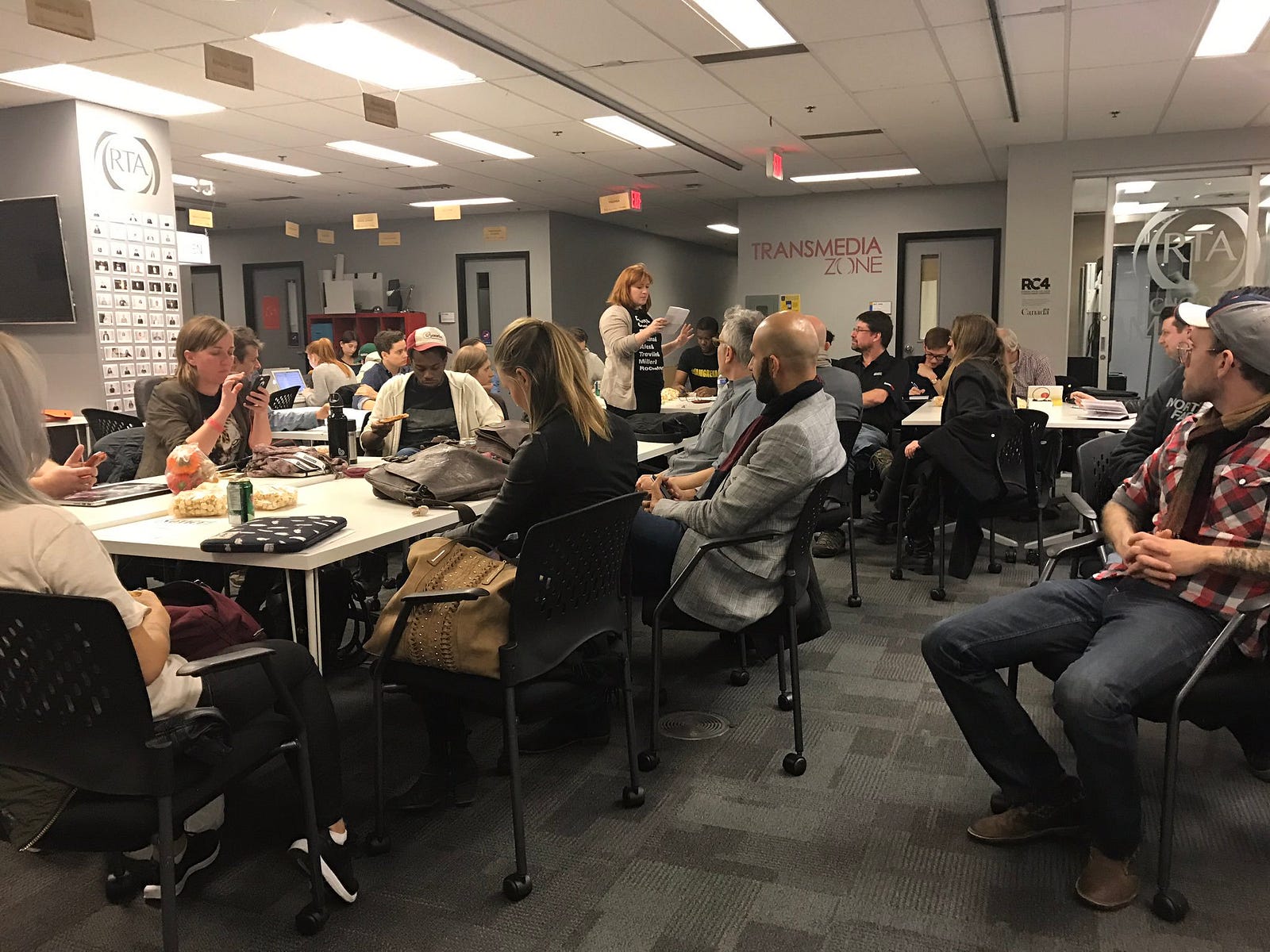
A conversation between Rough Draft editor-at-large Jesse Hirsh, and Ramona Pringle, director of the Transmedia Zone, an incubator for innovation in media and storytelling, at Ryerson University.
The big picture.
Jesse: You and I often spend time talking about the rise and role of incubators, both in the context of education, but also when it comes to fostering innovation. As you know I tend to be fairly critical of existing models, and see an important opportunity in trying to design a better experience for incubators and those who join them.
This is one of the reasons I’m excited to be part of IBM Canada’s Innovation Space, an incubator focused on their supercomputer Watson. What attracted me, beyond my desire to hack Watson, is they have a different model from many of the other incubators in Ontario. Far more open, flexible, and remarkably diverse. Incubators have a tendency to be dominated by dudes and bros who have a rather narrow view of entrepreneurship and innovation. It’s refreshing how many different people are here, and this is reflected in their approaches to starting a business and pursuing opportunities in the marketplace.
Of course one of my reference points is the Transmedia Zone, which I’ve been active in for the past four years. Now that you’re in charge, it’s neat to see a similar kind of diversity and unique strategy towards fostering innovation. I’m curious what you think makes the TMZ different, and the kind of opportunities that arise from fostering a culture that is in contrast to other incubators?
Ramona: I went to grad school at NYU, in a program called the Interactive Telecommunications Program. The mantra there was, its all about people. Design for people, not tech or novelty. That was true of what they expected us to produce, but also, the infrastructure and architecture of the actual space. Every year, they got rid of walls, opening up the space to make it more communal. Sure there were quiet rooms, fabrication rooms and noisey brainstorm rooms, but the shift was away from computer labs, towards communal space. it is interesting to consider that in the last two decades, as computers have gotten smaller and more powerful, the need for computer labs has gone down. So where they were once necessary, more and more so, it is more advantageous to be at a table with colleagues and peers, facing each other and engaging, than it is to be sitting in lab, in parallel, staring into desktop computers. That ethos, people first, connection first, and tech to fulfill a need, to bridge a gap, to solve a problem, has really influenced me. It influences my design process, and my work, but also my approach to the Transmedia Zone.
There’s something in the air.
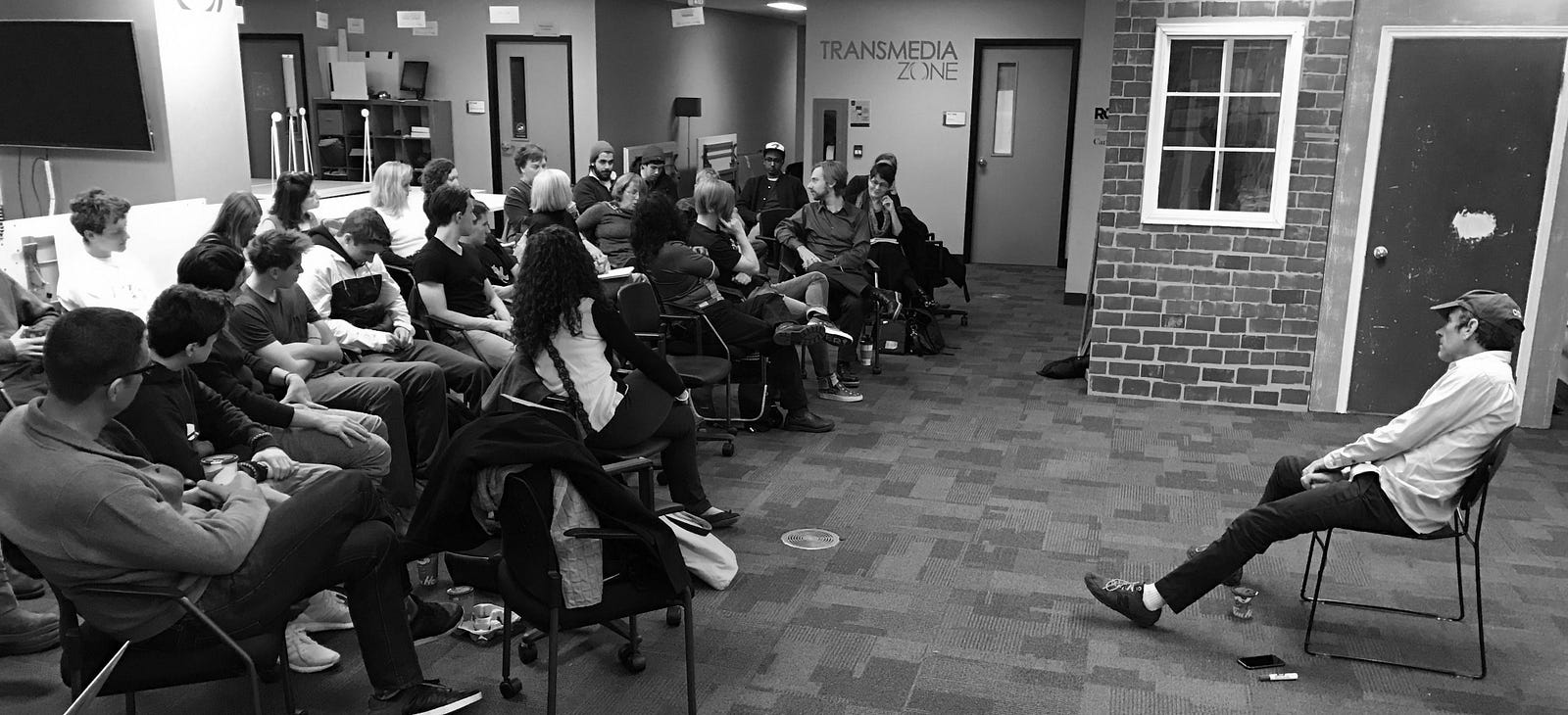
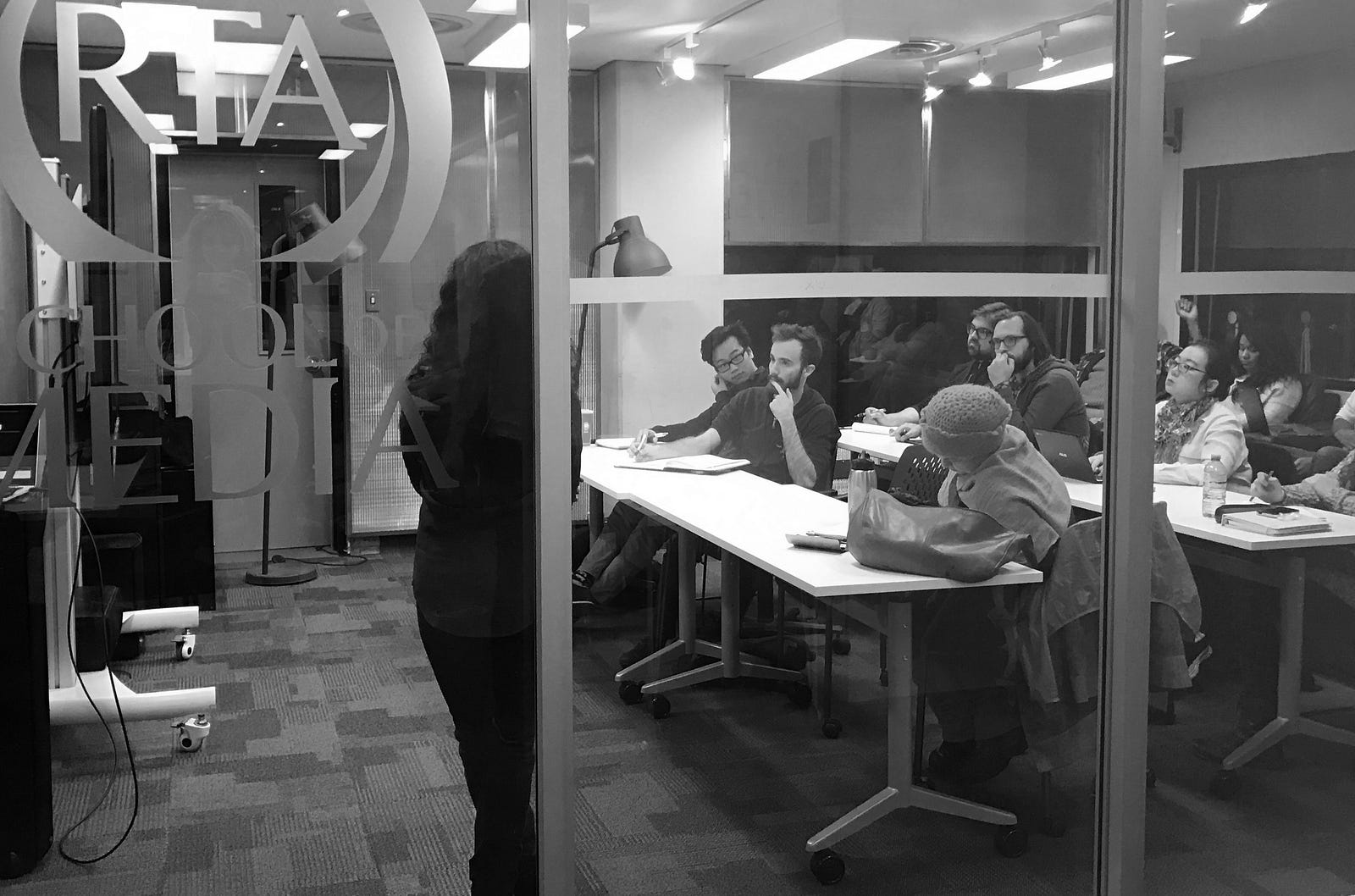
Ramona: Sometimes it feels like magic. As if, by osmosis, just being in this environment is inspiring. As if, just being here, as a member, will make your project more interesting, or more sophisticated. The reason for that, is that it really is “in the air.” The air is what is shared. The conversation space. And that’s a huge, huge part of what makes an incubator successful. The more we can foster engagement, the more successful the individuals become. When I transitioned from being creative director to being director, one of my strategic goals for this year was to focus on the community and culture of the space. Naturally, it is really positive. But I wanted to overtly make it a priority, because an incubator is as strong as its community. People talk, they learn from each other, they collaborate, and because they’re all innovating, experimenting, and taking creative leaps, they problem solve for each other, without even being aware of it sometimes.
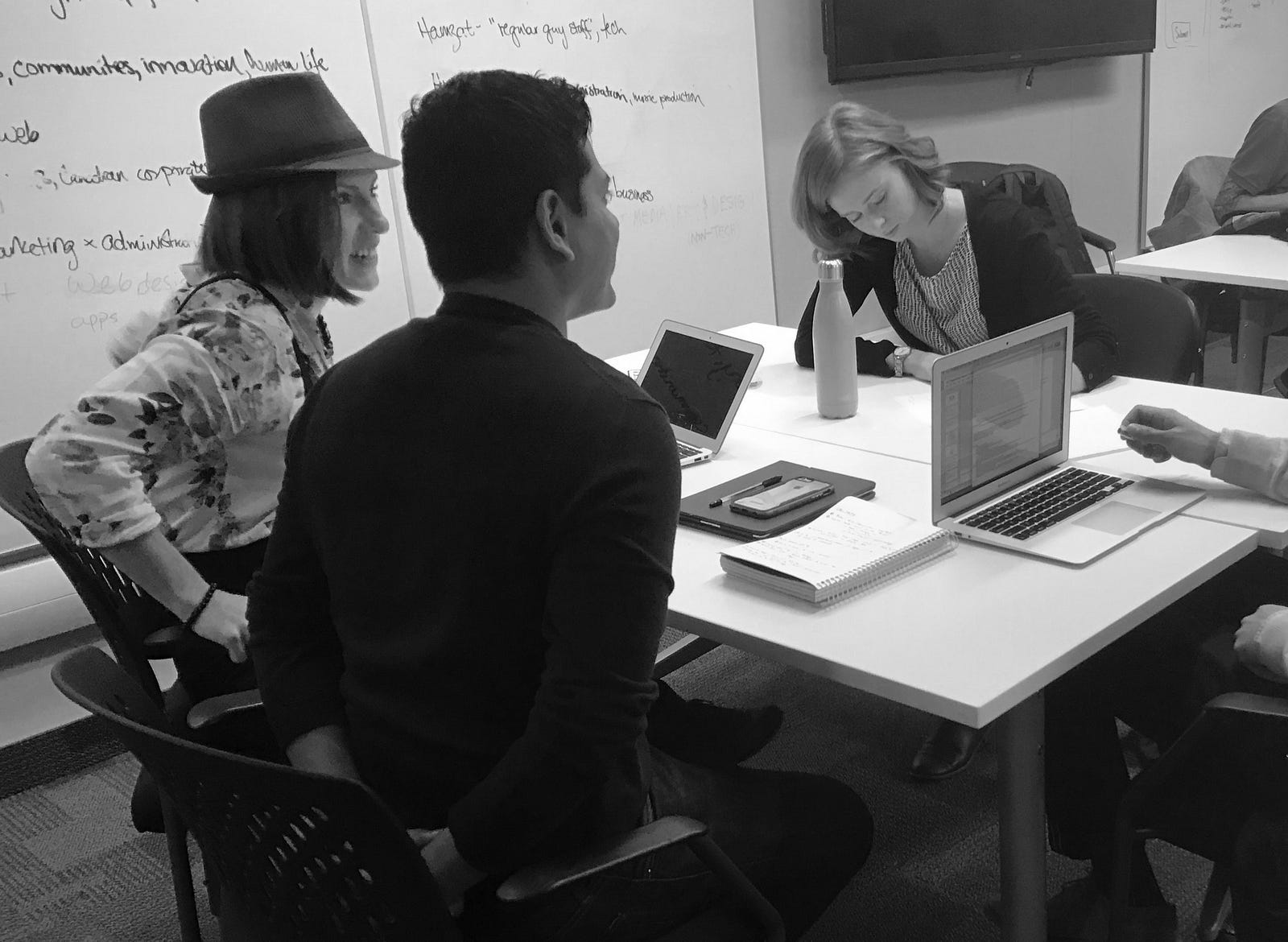
There are ways that we’ve designed for this, too, beyond just the open space and communal tables that are now the signature of cowering spaces, incubators and tech hubs. We operate a sharing economy. I get great joy from this, actually. Contractually, each member needs to contribute 15 hours per session (about 4 months) to the community. That might entail programming, curating or running events and workshop in the Transmedia Zone, or helping us document a visiting speaker. Or, it might mean offering their expertise to another team. People come from all different backgrounds, so someone with a project management background might help out a team that is in the planning stages of a new initiative or project, and someone who knows how to code might help another project code or debug. There are so many benefits that come from this model, but I think more than anything, what it does is give all of the members ownership of the space, and agency. You have a responsibility to your community, and its up to you to make this environment what you want it to be.. but you also have this incredible pool of talent and resources to call upon, and this platform on which to stand, and be heard.
The people make the place.
Jesse: Indeed I find the role of community within an incubator or innovation space to be incredibly important. The irony of course is that community is something that is often scarce in the cut-throat world of capitalism and competition. Yet within startups it is something that is flourishing and distinguishing successful spaces from those that remain stale and static. It leads me to wonder if we’re not seeing a new culture of business emerge, that rather than be arrogant and aggressive, we’re seeing examples of generosity and co-operation. People want to share, and help each other succeed.
Ramona: YES. This is true of digital culture in general. It’s actually a generational divide. I don’t mean generational in terms of age, but in terms of era. The social era of media, is… social. Think of what it takes to be successful on Youtube versus in the traditional realm of broadcast. Opportunities in television are finite. There are limited slots in prime time. That makes people really competitive for those few, highly sought after spots. On Youtube on the other hand, there aren’t the same limits. In fact, the big challenge is the opposite, it’s the fact that there is so much content. One of the main pieces of advice you’ll hear from successful Youtubers is to collaborate. Collaboration videos lead to more “crossover” followers from the other person’s channel. On top of that, because Youtube’s recommendation engine is run by an algorithm, the people who are most like you are likely to lead viewers to you. Where this gets challenging — in Youtube and for this new generation of digital businesses — is where the two models collide. I’ve gotten a bit off topic here, but i think it is interesting and relevant. Good incubators, and the people inside of them, aren’t just developing new products or projects, they’re part of a new kind of ecosystem, a new kind of economy.
Give a little, get a lot.
Jesse: I think one of the reasons this is true within the startup world is due to the growing role and power of open source. As more people recognize the way in which open source software has enabled the rise of the Internet, and how it allows us as entrepreneurs to stand on the shoulders of giants, there is a growing gratitude towards this collaborative culture, and they way in which we should be sharing rather than hoarding, and that knowledge increases in value the more it is shared.
Ramona: YES. Yes, yes. This is the same as the Youtube model, essentially. But it also presents another huge question, how do individuals, especially independent creators, make money? Startups and VCs have this down… when they’re successful. But what about artists and media makers? I think we are in an era of assessing what is valuable, what is of valuable. Time is, no doubt… none of us have enough of it. There is a bit of tension between the ideas of open source/collaboration and “information is meant to be free” (of course, there is a class of elites making a lot of money off of everyone else’s “free” information) and being compensated for your time, ideas, and contributions to your discipline or community. It’s good we are forced to think about this, and how it changes. I think that incubators will play a big role in shaping what value assessment, and even new economies, look like, moving forward.
Jesse: This is why I think there is something to be said about the power of osmosis, and culture of incubation, in so far as we are products of our environment, and in the context of education and entrepreneurship, there is a strong need to nurture a productive culture that fosters innovation. This was lost in the first wave of Internet companies, who wrongly believed that “if you build it they will come”. In contrast our current iteration of startups recognize that culture plays an essential role in how people use their platform, tools, or services, and in particular why they would use them. In this respect, incubators provide an deliberately empathic environment, in which people learn about design thinking, and learn about the importance of empathy when it comes to understanding how people will use your tech and why. This is even more important when it comes to media and narrative.
It also directly influences who is admitted or chosen to be part of an incubator. If we’re now becoming aware of the role of culture, and the power of design, than it means that the projects or companies chosen to be part of an incubator are really important. Old criteria based entirely upon economic performance don’t seem to be as relevant or efficient when it comes to cultivating a larger culture for the incubator. Rather it is important to combine economic, cultural, technical, and even political considerations as to how a community is cultivated and thereby how a culture is grown.
The making of a dream team.
Jesse: What do you think are the key indicators that an incubator should be using when it comes to assessing potential participants and community members?
Ramona: I’m going to break this into two parts. First, our assessment process, and second, our community agreement terms of service.
Teams apply to be in the Transmedia Zone. There is a written application, and then a select number of those are chosen for an interview. This process has evolved over time. We used to do “Dragon’s Den” style pitches, and we used to ask about a business model. But just because that works for other environments, doesn’t mean it works for us.
We still require that at least three adjudicators are present at all interviews, but we don’t run them as pitches in front of a panel anymore. It just doesn’t serve a purpose. In fact, it works against us. Pitching is so one directional. What I have found over the past few years is that the worst quality in a resident is someone who cannot hear, or take, feedback. The best candidates are open and eager. And so, our pitches are now much more conversational. I much prefer to hear someone just talk freely about their project. Why they’re doing it, what problem they’re trying to solve, what hole they’re attempting to fill. Why they’re so passionate. I would much prefer that over a slide deck. And I want to see that they are open and receptive to comments, questions and feedback. This is a development process, which is inherently a learning process. Openness is a good predictor of success in an incubator.
The reason I make sure there are multiple people in interviews is partially accountability, but also, so that we can have a range of expertise in the room, precisely for the purpose of offering feedback. I try to have someone thinking about resources — who is listening to their technical and space requirements to see if a) they know their needs and b) if we can fulfill them. I also try to have someone who has domain expertise that overlap with the project… and someone who doesn’t. That helps gauge how we can help the project, but also, how whether it has more legs than novelty.
As for business models… We are looking for creative innovation. Often, when a team comes in with a robust business model in their power point, the project isn’t as innovative as we might hope. Now, I’m not saying this is always the case. Surely not. Especially with more advanced projects in accelerators. We look for creative, meaningful, unique projects, and then take it on ourselves to help the team identify business opportunities. (I will expand more on this later)
Finally, when new members sign their contract, they have to agree to the terms to staying in good standing. These include:
- Showing up is half the battle. You are required to spend a minimum three days in the zone each week
- You are required to participate in zone events and programming. This includes planning, initiating and hosting events; this is your space, make the most of it!
- You are required to check in with your mentor monthly for an official catch up session.
- You are required to submit a progress survey monthly.
- You are required to provide documentation at the end of your residency: either a short video or 5 high res images.
- You are required to donate fifteen hours of your time to this community
- You are strongly encouraged to contribute to Rough Draft, the Transmedia Zone publication.
- This is a safe space. If you make anyone feel unsafe or unwelcome, your membership will be terminated.
That’s a pretty comprehensive overview of what it means to be part of our community. It requires a lot of respect for the environment as something special, unique and new, respect for each other, and commitment and initiative.
To be continued…